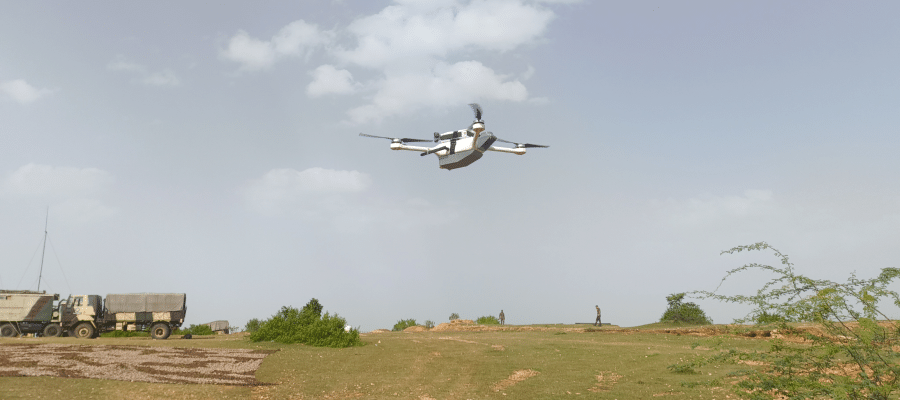

The European drone industry faces a key challenge: Technical excellence alone does not guarantee economic success. To establish complex UAS missions in a scalable and legally compliant manner, companies need more than just prototypes. The EU Drone Port addresses this gap with specialized infrastructure that seamlessly integrates certification processes, operational test environments, and regulatory consulting to significantly accelerate market entry for manufacturers.
The European drone industry has made remarkable technological strides in recent years. However, the economic success of unmanned systems no longer depends solely on their technological maturity. Rather, manufacturers and operators are faced with the question of how to turn a functioning product into an economically viable business model. This is precisely where EU Drone Port comes in, positioning itself as a strategic infrastructure provider for the UAS industry.
More powerful flight platforms, highly specialized sensor technology, and increasingly sophisticated software solutions now open up a wide range of applications—from logistics and infrastructure inspection to security. However, anyone wishing to test new systems, prepare for certification, or
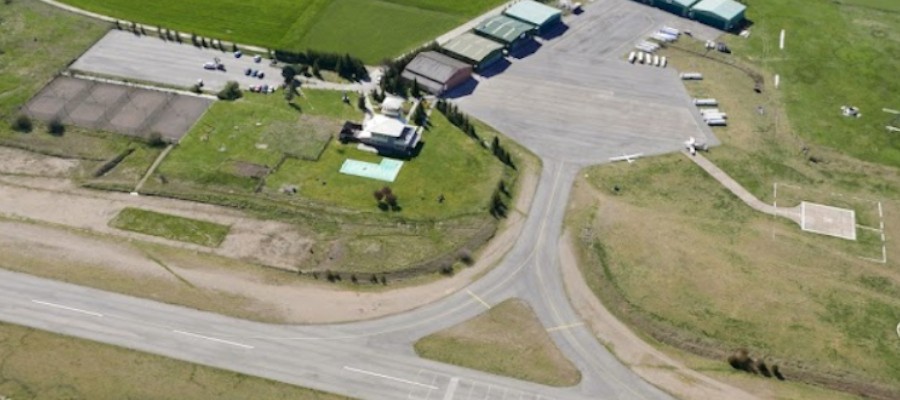
try out new application scenarios often has to search for a long time or travel even farther—for example, to Spain. On the border with Andorra in the north of the Iberian Peninsula lies the small Aeròdrom de la Cerdanya airfield, which also serves as a branch of EU Drone Port, headquartered 150 kilometers away in Barcelona.
Process Accelerator
The company has positioned itself as a service provider at the intersection of technological innovation and market readiness. Its services include providing testing facilities, consulting support for certifying drones for the European market, pilot training, and operational services within an integrated infrastructure. In short: EU Drone Port aims to accelerate the process from development to commercial value creation.
Even at the company’s founding, a structural shortcoming in the industry became apparent: Despite increasingly capable drone systems, many manufacturers stumbled over the same hurdle—pure technical functionality alone does not guarantee economic success. Complex missions, in particular, could not be carried out in a legally compliant or scalable manner without the appropriate permits. At the same time, the European Union established one of the world’s most demanding regulatory systems for unmanned aviation. The European legal framework imposed enormous requirements on manufacturers and operators. For many stakeholders, the challenge lay not only in understanding the requirements but also in integrating them into their own development and operational processes in a way that worked in practice. Traditional consulting services quickly reached their limits in this regard. There was a need for partners who could not only explain regulatory hurdles in theory but also actively support their practical implementation. EU Drone Port’s business model is based on this insight; the company sees itself as a bridge between development and certification, ensuring that products are aligned with European standards at an early stage.

Both the infrastructure and the qualified staff meet professional standards
Strategic Realignment
This holistic approach has evolved over the course of the company’s history, which has at times been eventful. In the early stages, the focus was still on operational drone flights and pilot training, which provided valuable practical insights. However, it quickly became clear that the real bottleneck lay not in flight operations themselves, but in the rocky road toward scalable and certified operations. This insight triggered a strategic realignment: moving away from being a pure service provider for individual operations toward becoming a comprehensive infrastructure provider for the European drone industry. A key milestone in this process was the integration of certification activities with the operation of its own DronePort infrastructure—a unique selling point in Europe. This is complemented by ongoing participation in European committees and close cooperation with regulatory authorities such as the European Aviation Safety Agency (EASA). This regulatory proximity enables the company to anticipate new trends early on and position customer projects for the future.
Today’s portfolio combines certification, test operations, operational support, pilot training, and regulatory strategy. The key lies in the seamless integration of these individual services, creating a synergistic environment from the initial sketch to operational readiness. At the heart of it all is the physical infrastructure of the Drone Port—a test center for testing, validation, and preparation for certification under controlled conditions. Airside facilities include several runways, a dedicated drone landing pad, and areas for vertical takeoff and landing procedures. Thanks to a paved main runway, a grass runway, and other paved surfaces, a wide variety of system configurations can be tested flexibly. Hangars, workshops, and modern offices round out the facility, allowing OEMs to efficiently consolidate their testing programs in a single location. They are supported on-site by a highly qualified team of test pilots, engineers, and logistics staff. Customers also benefit from optimal climatic conditions. A high number of days with weather conditions ideal for test flights and excellent visibility minimizes downtime and ensures continuous testing operations.
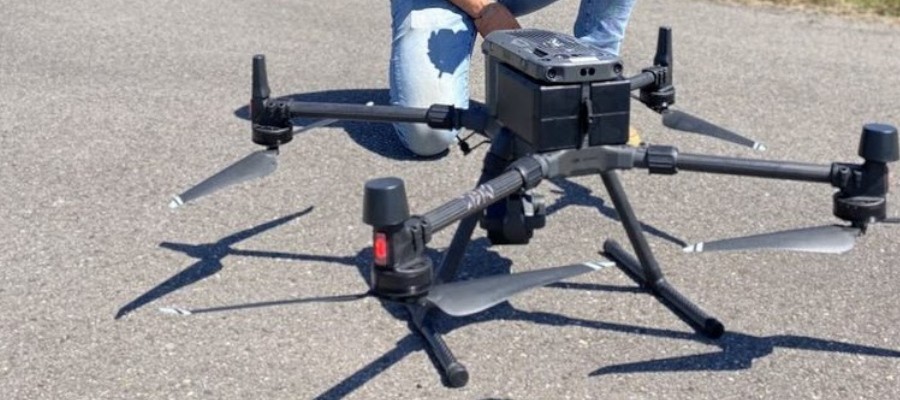
Not least due to its stable weather conditions, northern Spain is an ideal location for test campaigns
Growth Catalyst
The company’s philosophy is particularly evident in the area of compliance. While regulatory requirements are often perceived as a burdensome cost or time factor, EU Drone Port views certification and compliance as fundamental catalysts for economic growth. For manufacturers, successful certification is the key to entering the European market, as sophisticated applications are legally prohibited or cannot be approved without the appropriate documentation. UAS operators, in turn, benefit from minimized regulatory friction, as flight authorizations and airspace coordination processes are efficiently prepared from the outset. This enables faster commercial operationalization and reduces regulatory risks. This also pays off for industrial end users: more efficient inspections, lower operating costs, and faster data collection only realize their full potential within a legally compliant framework. Or, as Managing Director and Co-founder Marc Beltran puts it: Certification and compliance are not merely cost centers, but the fundamental drivers of growth.
EU Drone Port’s identity stems directly from this holistic understanding. This gives rise to an integrated certification and testing ecosystem that combines infrastructure, regulatory expertise, operational experience, and in-depth training to optimally prepare companies for market demands. In doing so, the company draws on an unwritten law of aviation: technical excellence and regulatory approval are inextricably linked. EU Drone Port therefore brings both worlds together on a single platform. This prevents a gap that would otherwise be created by an operational separation of technology and regulation. The approach is consistently practice-oriented—well-suited for an industry that is evolving from experimental niches toward industrial operating models. This enables customers to overcome regulatory hurdles more quickly and avoid costly delays. Furthermore, certifications and legally compliant operating procedures pave the way for major contracts in the industrial or military sectors.
More News


Foundation for Scaling
A key operational focus is on supporting manufacturers with demanding European certifications, which can pose an enormous hurdle, particularly for non-European players. The company also provides support for complex operational scenarios such as beyond visual line of sight (BVLOS) flights. Another pillar of the company’s operations is professional pilot training. In light of the industry’s ongoing industrialization—which is characterized by stricter requirements regarding processes, supply chains, and documentation—EU Drone Port is also continuously expanding its expertise and international collaboration. True competitiveness arises only from the triad of technology, regulation, and operational implementation. EU Drone Port impressively demonstrates that infrastructure and consulting are not merely support functions, but can serve as the foundation of a scalable business model.
If you use Google as your search engine, you can set Drones as your preferred source so that our content appears more frequently in your search results. Add Drones as your preferred source.