Autonomy instead of Exception
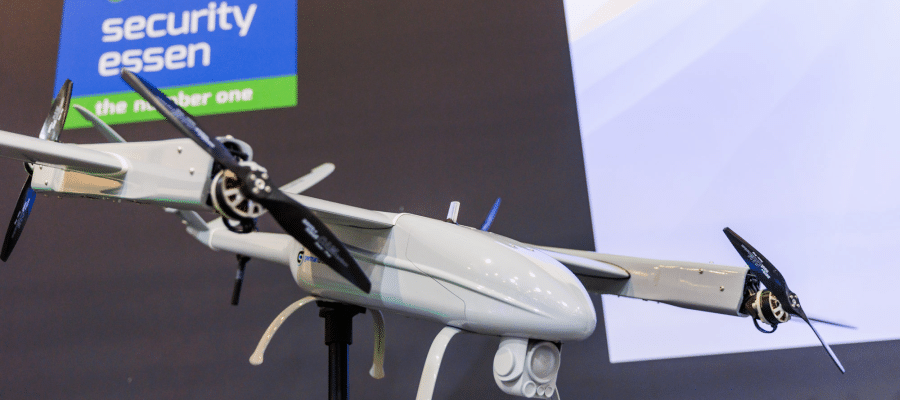

Unmanned aerial traffic is no longer growing linearly; it’s growing exponentially. This is the central finding of the Security Essen trade show. The simultaneously held European Drone Conference of the Federal Association of Security Industry (BDSW) and the premiere of the Euro Defence Expo (EUDEX) further underscored an irreversible convergence: Civil critical infrastructure security concepts, governmental threat prevention, and military multi-use technologies are seamlessly merging.
While evolutionary optimizations dominate traditional aviation, a significant shift in transport and security policy is occurring elsewhere. Unmanned aerial systems are rapidly becoming a leading pillar of air traffic. The consensus across all fair forums was clear: Human oversight is quickly giving way to autonomy. At the Digital Networking Security (DNS) conference, discussions focused on agentic AI, robot resilience, and integrating IT with physical protection, while the Security Experts Forum criticized failures in nighttime response chains. In contrast, the drone conference provided the technological answers. Fully automated “Drone-in-a-Box” solutions for perimeter protection, automated BVLOS missions for infrastructure monitoring, and sensor-based situational assessments marked the state of the art. Today, autonomous systems can fly, patrol, and detect without manual control commands, minimizing human oversight.
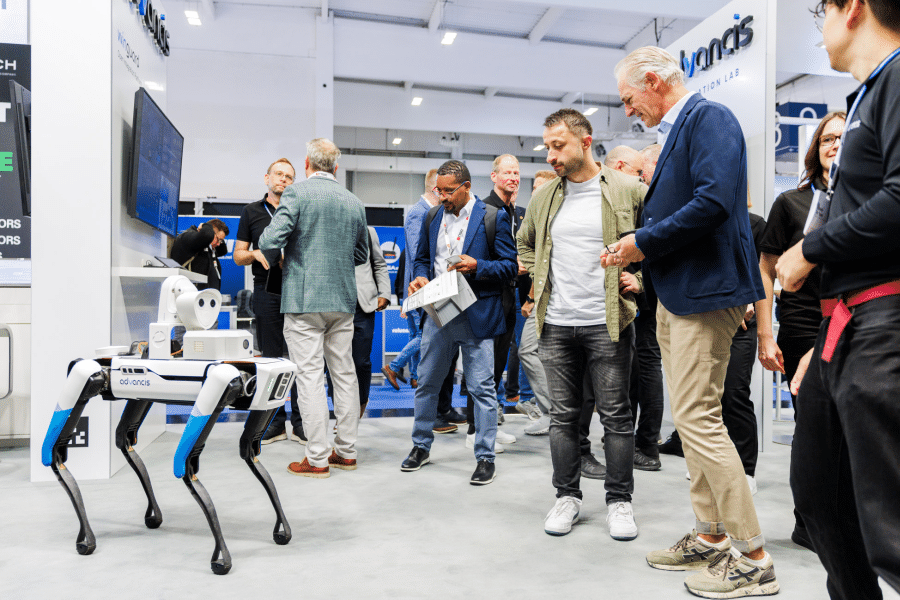
Whether in the air or on the ground, unmanned systems have become an indispensable part of the security industry (Source: MESSE ESSEN / Armin Huber)
At the same time, the trade show program highlighted legal issues. As my presentation on the legal frameworks for managing drones in critical infrastructure demonstrated, regulation lags far behind practice. The KRITIS law and NIS-2 directives impose strict resilience and monitoring obligations on operators. However, if certified control centers detect an unauthorized flying object, protection obligations collide with authorities: Existing laws remain mired in rigid public-authority responsibilities; private-law emergency and self-defense rights do not support systematic detection and defense management.
Hasty Criminalization Concerns
On the other hand, operators of regular automated flights quickly come under suspicion of criminalization under § 315 of the German Penal Code. This is due to investigative authorities resorting to criminal law out of legal uncertainty instead of clearly assessing the aviation sector. As North Rhine-Westphalia’s Interior Minister Herbert Reul and representatives from the European Commission noted during the EU Drone Action Plan, reliable interfaces are needed.

Prof. Dr. Martin Maslaton is a specialist lawyer for administrative law and a Board Member of BVZD
If Europe’s economic and security position is to keep its innovative momentum, lawmakers must have the courage to follow technical realities: move away from regulatory oversight of exceptions and toward a coherent traffic law for autonomy. What was presented in Essen in Halls 5 and 7 as a symbiosis of robotics, AI, and detection demonstrates that the technology is ready for deployment. A future-proof law does not differentiate based on a pilot’s physical presence but instead scales requirements, technology-open, based on specific operational risks and traffic tasks.
Technology has delivered in Essen – now lawmakers must follow reality.
More News


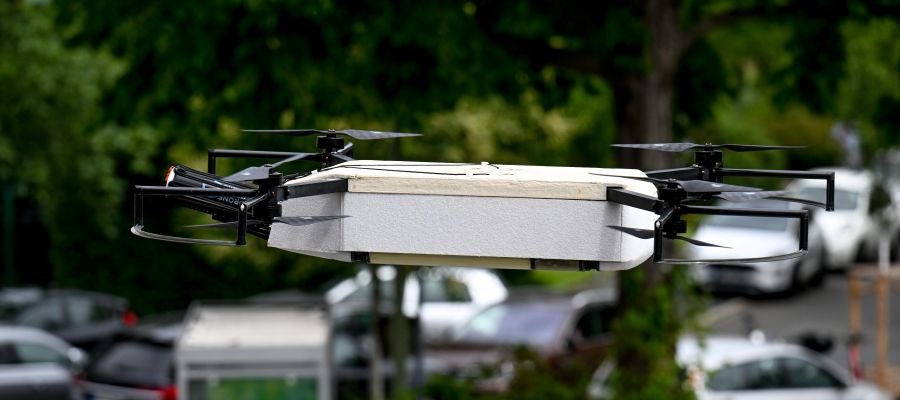
Main Image: MESSE ESSEN / Armin Huber
If you use Google as your search engine, you can set Drones as your preferred source so that our content appears more frequently in your search results. Add Drones as your preferred source.