Built on trust


Sometime this afternoon, a delivery drone will lift off from a store in North Texas, fly several kilometers beyond line of sight, lower a package into a backyard, and fly back to the store. Nobody at the FAA will be asked whether it should, and nobody in the surrounding suburb will even look up, because it’s a daily occurrence here – and in numerous metros across the U.S. Walmart alone is closing in on 2 million drone deliveries this year after passing the 1 million mark in May, and Amazon said in August that Prime Air will reach nearly 500 U.S. cities and towns by year-end.
Where the service exists, drone deliveries have become as ordinary as the landscaper and the mail truck. The odd part, from a European perspective, is that none of it runs under a standing rule for flying beyond visual line of sight (BVLOS). Europe has had one for years. The U.S. built the world’s largest drone delivery operations without one, on a decade of waivers and exemptions, each earned once and repeated until the FAA trusted the pattern. That track record is what the U.S. is about to write into law.
Where it stands
BVLOS is that law. Congress ordered it in the 2024 FAA Reauthorization Act. The FAA and TSA jointly proposed it in August 2025, and AUVSI, with more than 8,000 members across uncrewed systems, filed detailed comments last October. The final text has been with the White House regulatory review office, the last stop before publication, since July 10, 2026. That review runs up to 90 days, and is often longer, so the realistic window for finalization is late this year or early next. AUVSI is pushing for year-end and plans to mark it at our Drone & AAM Policy Symposium in Washington, November 9-10.
Behind on paper
In our comments to the FAA, AUVSI said plainly that the EU’s full implementation of JARUS SORA and the UK’s authorization of BVLOS corridors since 2021 put the U.S. behind its peers. What the U.S. has is volume under an improvised system: more than 26,000 BVLOS approvals issued, according to the Department of Transportation (DOT) inspector general, and operators who have scaled inside them. Unless an operator changes something drastic about the aircraft or its technology, there is little left for the FAA to review at a new site. Part 108 exists to make that the rule.
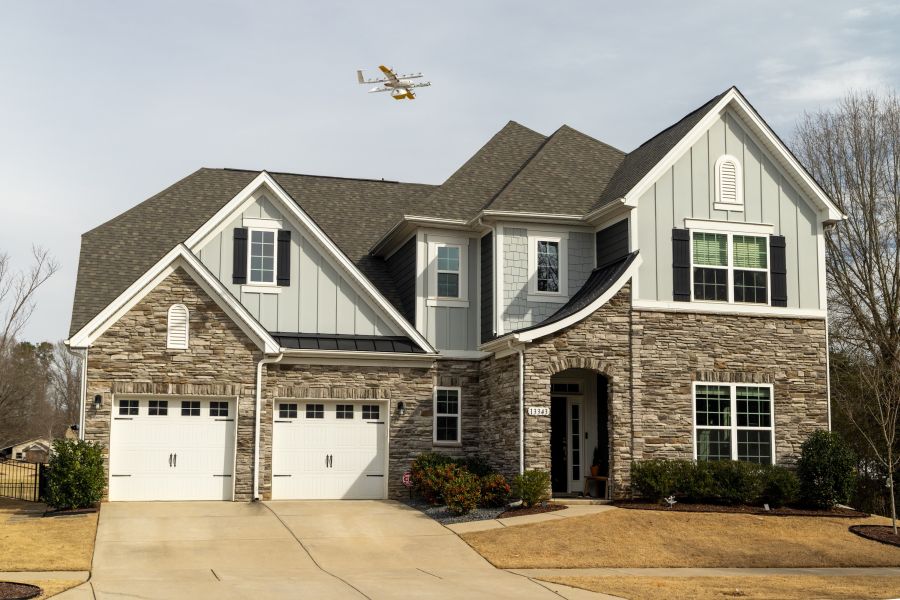
After a decade of successful waivers and exemptions, drone delivery is a daily occurrence in some parts of the US (Source: Wing)
What AUVSI asked for
The rule is performance-based and covers aircraft up to 1,320 pounds. It offers a permit for lower-risk operations, an operating certificate for larger-scale ones, and a new Part 146 for automated data service providers. AUVSI asked the FAA to go further: let operators with an accepted concept of operations fly nationwide, the way airlines and charter carriers do without route-by-route approval, and credit years of waiver data so proven operators are not asked to demonstrate the same thing twice. Demonstrated safety should travel with the operator.
The open fight
More than half of the roughly 3,100 comments addressed right of way, and the FAA reopened the docket in January on right-of-way and electronic conspicuity. The proposal gave Part 108 aircraft right of way over crewed aircraft except when the crewed aircraft is broadcasting ADS-B Out or an approved electronic conspicuity device, in Class B or C airspace, near airports and heliports, or over the densest population category. AUVSI’s view: the equipage test is right; the population test isn’t. Those zones are not charted, shift over time, and can be crossed in seconds. What AUVSI proposed: tie the rule to who is broadcasting, mandate low-cost EC for crewed aircraft below 500 feet, and drop the onboard detect-and-avoid mandate in the population-based clauses. Every ounce added to a drone means it flies for less time, costs more, or requires a redesign. The rule should state the safety outcome and let ground-based sensors, service-based detection or operational design meet it.
Mutual recognition
For European operators and manufacturers, the most consequential ask in our comments is our urging to accept SORA-based evidence as an optional input to a Part 108 safety case, to use existing bilateral agreements to recognize findings from partner authorities, and to allow reciprocal recognition for data service providers holding comparable foreign authorization. If the final rule adopts that, a safety case built under EASA rules would have a defined path into the U.S. market.
More News

That path will only be as good as the evidence behind it. AUVSI will keep pressing the FAA on foreign recognition after publication. The strongest case we can make rests on a European operator or manufacturer with a SORA-based approval, real flight data, and a concrete plan for the U.S. market. Europe reached routine BVLOS first through methodology, and the U.S. is getting there through miles flown. The operators who can speak to both will shape how quickly the two systems learn to trust each other.
If you use Google as your search engine, you can set Drones as your preferred source so that our content appears more frequently in your search results. Add Drones as your preferred source.