UAS detection and countermeasures: Stress test failed


Federal Interior Minister Alexander Dobrindt (CSU) refers to a „hybrid attack scenario“, while Saxony’s Interior Minister Armin Schuster (CDU) labels the events as a „very serious security incident“. Most notably, the appearance of a drone fitted with explosives at Leipzig/Halle airport brutally exposes the current deficits in monitoring the lower airspace. It appears that the responsible authorities were not adequately prepared, either technically or organizationally.
It was a narrow escape. Near four transport aircraft of the Ukrainian state airline „Antonov Airlines“ at Leipzig/Halle airport, a multi-rotor drone fitted with the explosives PETN and Semtex was found during the night from Tuesday to Wednesday. During the subsequent closure of the airport, a DHL cargo plane allegedly collided with another drone just a few hundred meters above. A DHL spokesperson confirmed that the aircraft, after landing safely in Hannover, showed slight damage that could indicate a collision with a small drone.
Blind in the lower airspace
It is clear that neither the airport’s protective mechanisms nor the Federal Police’s „Drone Defense Unit“ (Drohnenabwehrzentrum), which was opened in December 2025, nor the „Joint Center for Countering Hybrid Threats“, inaugurated by Minister Dobrindt in June 2026, passed the current stress test. According to the latest findings from security authorities, a devastating explosion was avoided only because the ignition mechanism failed. This raises questions. „The fact that a drone was apparently able to reach the airport apron undetected – only to be discovered there by chance – highlights the core of the problem“, states Dr. Gerald Wissel, Chairman of the Executive Board of UAV DACH – European Association for Unmanned Aviation.

Dr. Gerald Wissel, Chairman of the Executive Board of the UAV DACH Industry Association
For a long time, there has been a discussion about how airports and other critical infrastructure facilities can be efficiently protected against threats arising from illegal UAS use. However, significant questions regarding responsibilities and funding continue to obstruct practical solutions. The exclusive focus on state intervention measures no longer does justice to today’s threat situations, emphasized the Bundesverband Zivile Drohnen (BVZD) in response to the recent events in Saxony. Operators of critical infrastructure must be empowered, both technically and legally, to act independently or to deploy qualified private security companies with the necessary authority for active countermeasures in order to avert specific dangers to human life or air traffic.
Don’t forget the friend-foe-distinction
Building a technical infrastructure for comprehensive monitoring of the lower airspace is not only significant from a security perspective but ultimately also facilitates the extensive use of commercial UAS applications. „With modern drone detection technology, previously unnoticed activities can now be recognized and evaluated much earlier“, explains Jan-Eric Putze, CEO of Droniq, a company specializing in UAS services. However, mere airspace surveillance can only be the first step. „It’s important not to rely solely on detection systems, as they can’t determine which drones are cooperative or uncooperative or pose a potential danger. Instead, operators of critical infrastructure and geozone operators, who sometimes also use drones for their own purposes or allow drone flights on their premises, must have a technical infrastructure that allows them to determine which flights are registered and which drones are therefore operating legally.”
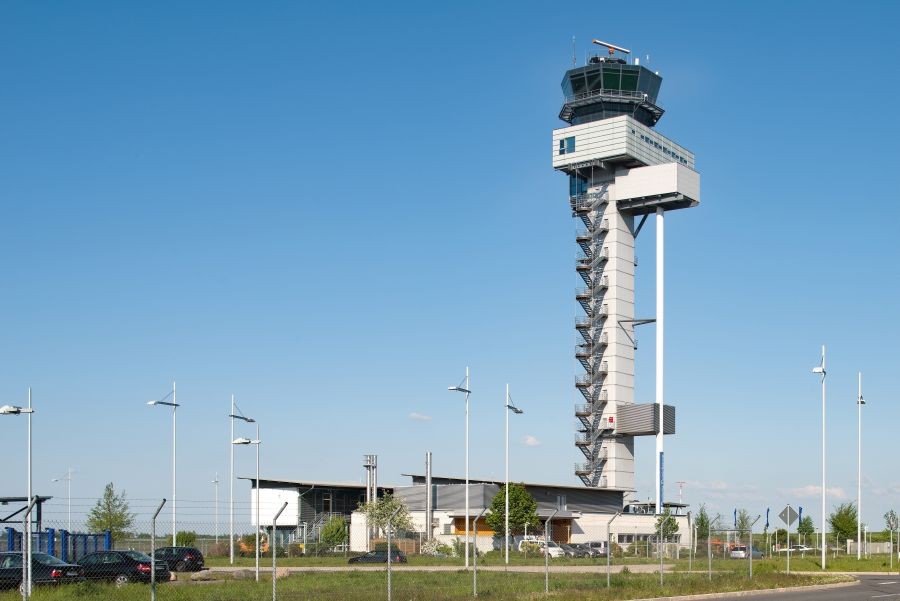
The incident at Leipzig/Halle airport is likely to reignite the debate regarding protection against illegally operated drones (Source: DFS – German Air Traffic Control)
More News
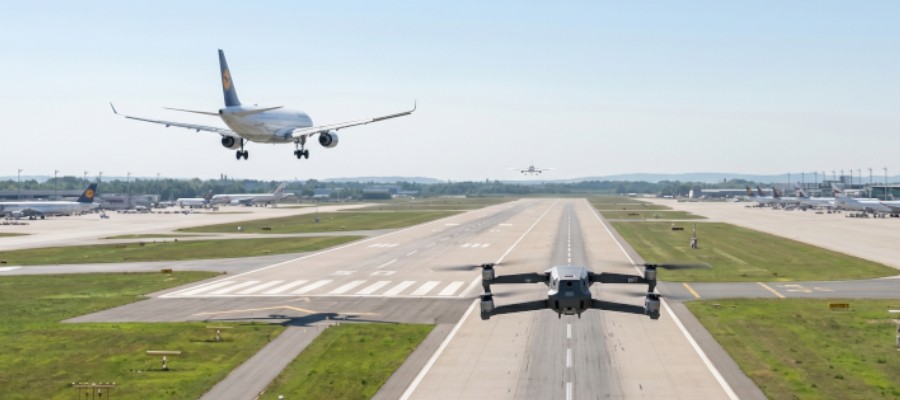
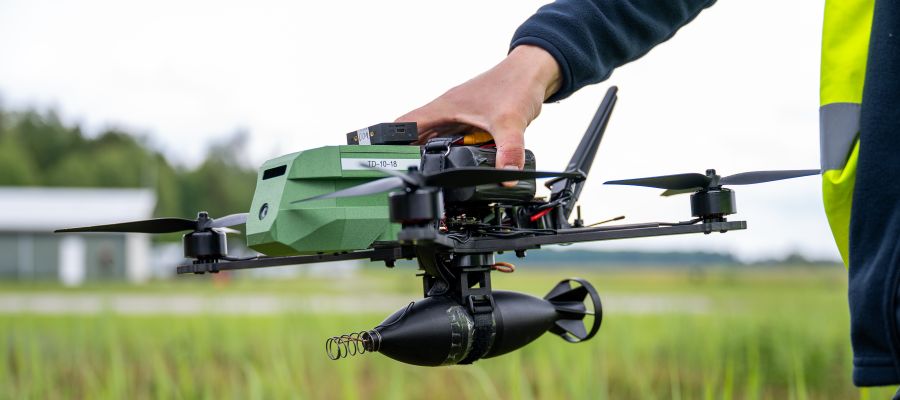
The public debate concerning the protection of critical infrastructure against drones operated either inadvertently or deliberately illegally – which had recently quieted down somewhat – is likely to gain significant momentum again due to the new nature of the threat posed by an explosive-laden UAV. Furthermore, the responsible authorities must face the question of why significantly more progress has not already been made in this area. „We presented a catalog of measures regarding drone detection and defense as early as last December. Two of the key demands are the establishment of real-time situational awareness for lower airspace and the mandatory electronic identification of all airspace users via ADS-L“, explains Dr. Gerald Wissel of UAV DACH. „Only when authorities know at all times which aircraft systems are operating legally in an area can appropriate countermeasures be taken and safety ensured for both crewed and uncrewed airspace users, as well as for people on the ground.”
If you use Google as your search engine, you can set Drones as your preferred source so that our content appears more frequently in your search results. Add Drones as your preferred source.