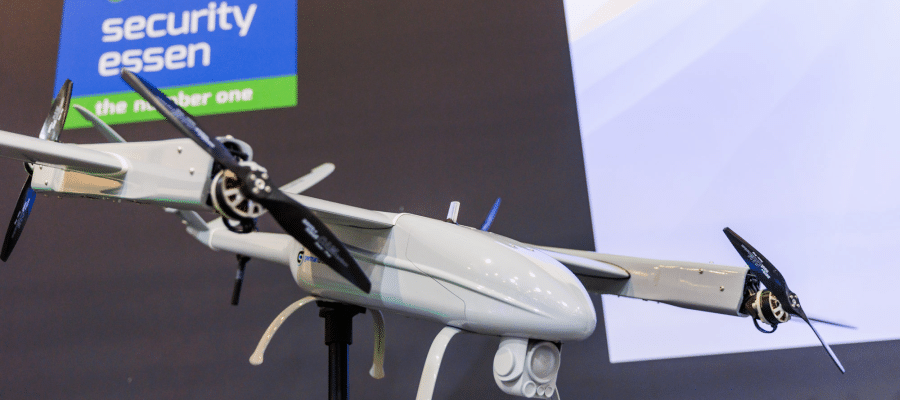
Drone detection and countermeasures in the defense alliance
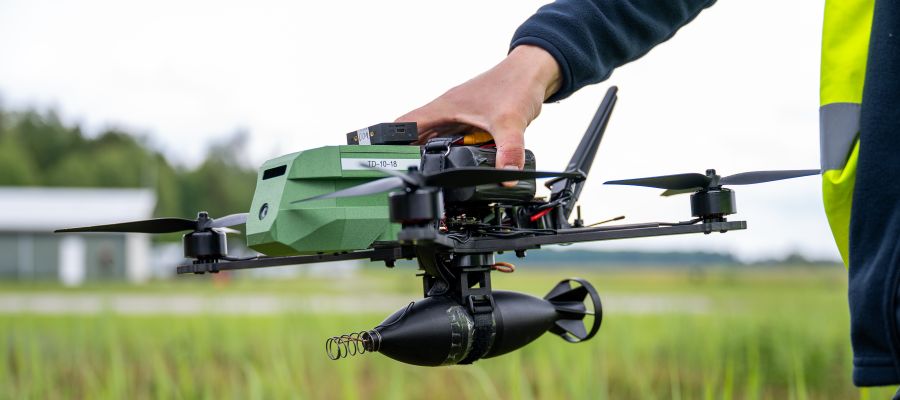

Anyone looking to efficiently protect themselves against potential drone attacks must develop appropriate technical and conceptual solutions. This is, of course, well known at NATO. During the „Technical Interoperability Exercise“ (TIE) held at the Royal Netherlands Aerospace Center in Marknesse, 40 companies from 11 NATO countries, as well as from Ukraine and Australia, demonstrated nearly 100 products for detecting unmanned aerial systems and implementing countermeasures.
The challenge of keeping pace with the short development cycles of unmanned systems in drone defense is significant. In a multinational alliance like NATO, the integrated systems must also be compatible with the shared technical and organizational infrastructure. To gain an overview of the offerings and capabilities of the systems available on the market, NATO’s Communications and Information Agency (NCIA) organized TIE 26, hosted by the Netherlands Aerospace Center.
Focusing on the efficiency of the action chain
In a controlled environment, the goal was to determine, under as realistic operational conditions as possible, which solutions could meet the challenges posed and be integrated into NATO’s defense architecture. Key assessment criteria included the stability of target tracking, meaningful integration into the command-and-control (C2) structure, identification performance, and the efficiency of the action chain against potential threats from unmanned aerial vehicles.
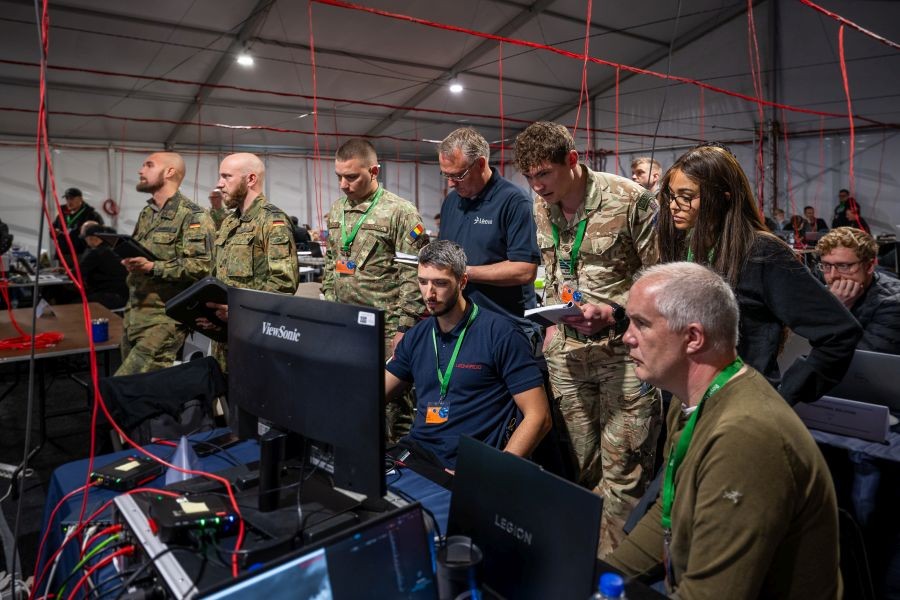
Both technical and operational qualities of the presented counter-UAS solutions were evaluated by more than 300 participants at TIE 26
„TIE 26 demonstrates that interoperability in modern multi-layered C-UAS operations is no longer optional, it is essential!” states Florin Chiper, Test and Evaluation Chief from NCIA. „The exercise enables radars, radiofrequency sensors, and C2 solutions from multiple nations and industry partners to exchange data in a common and operationally meaningful way. This approach supports the development of a truly integrated and multi-layered C-UAS architecture, where detection, tracking, identification and mitigation capabilities operate together seamlessly to enhance situational awareness, interoperability and operational effectiveness.”
Technologies and companies that demonstrated their technical and operational quality during TIE 26 will qualify for participation in the „Baltic Trust 26“ exercise, which will take place in August in Latvia.
More News



Images: NCIA
If you use Google as your search engine, you can set Drones as your preferred source so that our content appears more frequently in your search results. Add Drones as your preferred source.
-City-outdoor-3.jpg)