Drone Incidents Cause Millions in Damage at Airports
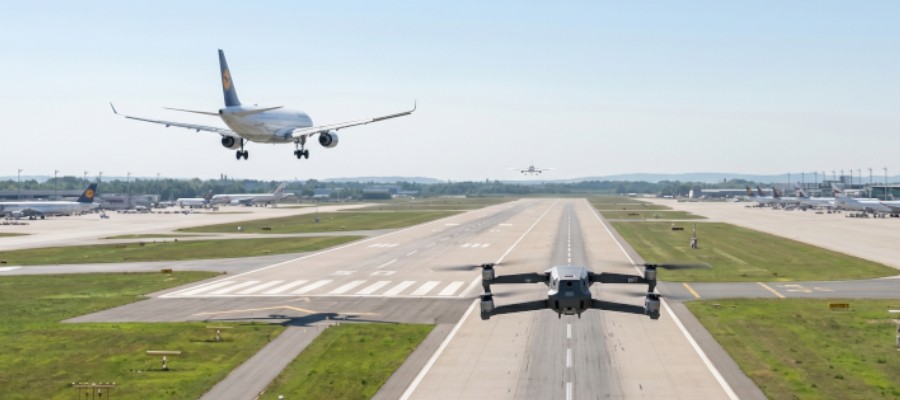

Unauthorized drone flights in the vicinity of commercial airports have become a widespread problem by 2025. A recent analysis by the German Aerospace Center (DLR) shows that 116 relevant incidents at 25 locations significantly disrupted flight operations. The resulting economic losses amount to at least 60 million euros, although costs could rise to as much as 160 million euros when network effects are factored in.
The DLR study is based on a dataset from the Federal Aviation Authority, which recorded a total of 226 drone incidents for the year 2025. From this, 116 relevant incidents were identified at a total of 25 commercial airports. Large international hubs are particularly affected, accounting for about 70 percent of the roughly 200 drone-related flight diversions. While large airports often close individual runways when drones are sighted, the lower infrastructure capacity of regional airports often forces them to completely suspend flight operations during incidents.
What airport closures mean for stakeholders
The economic consequences for airlines and airport operators are severe. Airlines are grappling with additional operating costs due to fuel consumption during holding patterns, diversions, and passenger care. Airports are experiencing direct revenue losses from lost fees as well as declines in non-aviation revenue (such as retail, food service, and parking). Dr. Florian Linke, acting director of the DLR Institute of Air Traffic, emphasizes that costs rise rapidly once systemic buffer capacities are exhausted. In extreme cases, there is also a risk of fuel reserves falling below safety-critical levels.
In light of the growing threat, the DLR is accelerating the development of specialized detection and defense technologies. Under the leadership of the Institute of Flight Systems, solutions are being researched and tested under realistic conditions at the National Test Center for Unmanned Aerial Systems in Cochstedt. The goal is to sustainably strengthen the resilience of the air traffic system against the growing variety of unmanned systems.
The DLR expert warns against this
“Even brief disruptions trigger significant knock-on effects in the highly interconnected air traffic system. Especially in the case of prolonged incidents or repeated disruptions, the economic impact increases significantly once systemic buffer capacities are exhausted. In these cases, costs rise dynamically and erratically. On individual flights, fuel reserves may also fall below safety-critical levels. The results can also serve as a basis for cost-benefit analyses, for example to evaluate investments in drone detection and defense systems,” says Dr. Florian Linke.
The high costs of damage illustrate that the market for detection and defense systems (Counter-UAS) is growing massively in importance. Manufacturers and developers face the challenge of delivering not only high-performance but also highly reliable systems that can operate efficiently and in compliance with legal requirements in complex airport environments. At the same time, the analysis underscores the need for closer collaboration between drone manufacturers, regulatory authorities, and airport operators.
The DLR’s findings serve as a sound basis for decision-making regarding investments in security infrastructure. For companies in the industry, this presents an opportunity to position themselves as partners for safe airspace integration, while at the same time pressure is growing to establish technical standards that effectively prevent unauthorized intrusions into controlled airspace.
More News


Photo: AI-generated
If you use Google as your search engine, you can set Drones as your preferred source so that our content appears more frequently in your search results. Add Drones as your preferred source.