Reduce Costs, Optimize Returns, Strengthen Sustainability

Perhaps the best-known application of drones in society is in agriculture. However, the rescue of fawns is by no means the only use for uncrewed systems in the agricultural sector. There are numerous other ways UxS can help optimize yields and reduce reliance on expensive fertilizers and pesticides. In short, Precision Farming can help increase the profitability of agricultural operations.
The harsh reality of farming has little to do with the common romantic notions of rural life. Ultimately, agriculture is a tough business driven by economic pressures. Bureaucracy, cost pressure, and labor shortages are just as present here as in many other sectors. It’s no wonder that farmers are always looking for ways to cut costs and increase efficiency to boost yields in the fields and in their balance sheets. Drones — both flying and ground-based — are an excellent solution.
More News
-City-outdoor-3.jpg)

Reducing Personnel Costs
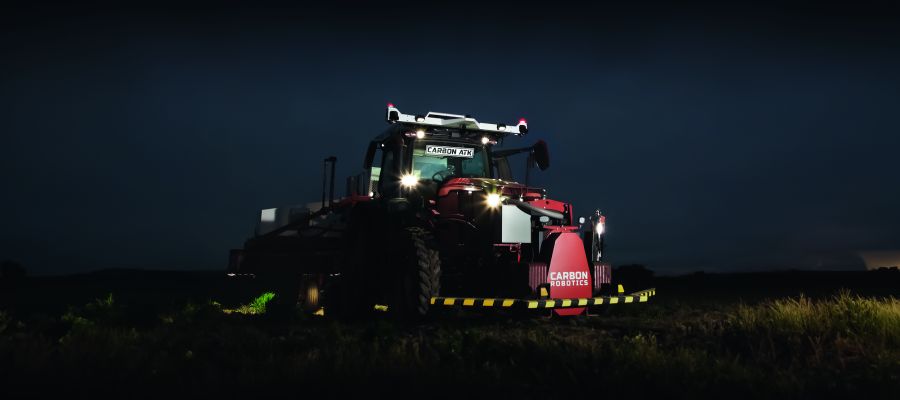
On one hand, a higher degree of automation helps to reduce personnel costs. While the investment in technologies such as the Autonomous Tractor Kit (ATK) from Carbon Robotics may initially strain the budget, the need for operators to drive the tractor is eliminated. Not to mention that automatically navigating vehicles, equipped with a range of sensors for environmental monitoring and collision avoidance, can, in theory, operate around the clock. This not only allows for long-term savings in personnel costs but also enables employees to be deployed in areas where they can work more effectively than behind the wheel of a tractor. With increased operational time, a business might even manage with fewer tractors to farm the same area as before.
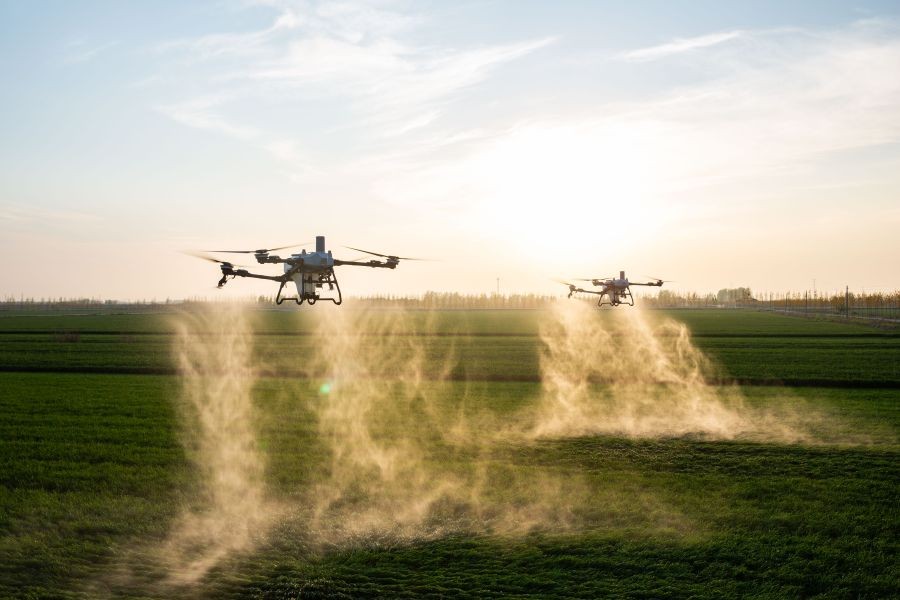
Due to the downwash from the rotors of multirotors like DJI‘s Agras drones, pesticides also reach the undersides of leaves (Source: DJI)
In fact, the potential of Unmanned Ground Vehicles (UGVs) for agriculture is often underestimated. Automated harvesting robots can be deployed during the harvest. Other systems can be used to independently take soil samples. This allows for the creation of geo-referenced profiles of the fields, and fertilizers or water are applied only where truly necessary. This benefits both the farmers’ budgets and the environment. A similar effect is achieved by UAS that fly over the crops, collecting not only optical data for stock monitoring but also multispectral images. These enable conclusions about plant condition, pest infestations, or nutrient deficiencies. Again, this allows targeted action where it is necessary, rather than applying resources uniformly across entire fields.
If you use Google as your search engine, you can set Drones as your preferred source so that our content appears more frequently in your search results. Add Drones as your preferred source.