How AI and Unmanned Systems Could Revolutionize Agriculture
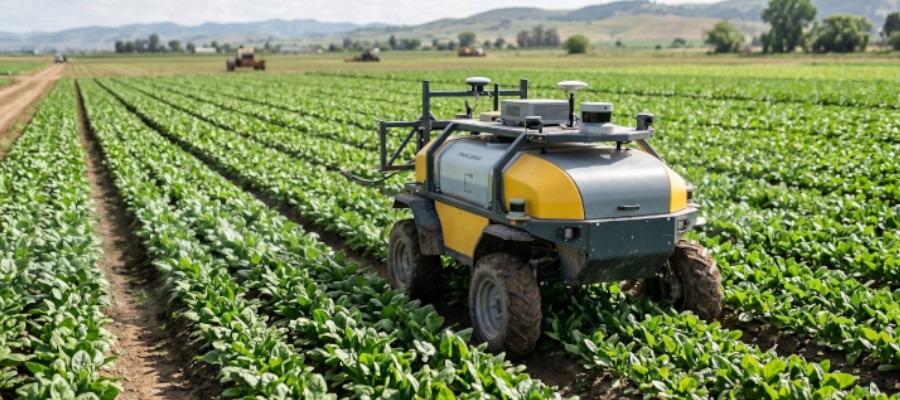

From pesticide residues in vegetables to rising fertilizer prices due to geopolitical instability—the agricultural industry is under pressure. But companies like Burro and Carbon Robotics have developed technical solutions in which unmanned systems, aided by AI, could increasingly make pesticides and herbicides obsolete in the field. And it’s not just consumers who stand to benefit.
It’s a troubling report for health-conscious consumers: The latest “Shopper’s Guide to Pesticides in Produce 2026” shows that despite thorough washing, pesticide residues were detected in 96 percent of samples from the so-called “Dirty Dozen”—including spinach, strawberries, and apples. The chemicals, which are actually intended only to protect crops, have long since become an integral part of the human food chain.
What the Iran War Has to Do with Rising Fertilizer Prices
But it’s not just environmental concerns that are growing; on another front, unmanned systems could also advance agriculture. The blockade of the Strait of Hormuz, one of the world’s most critical arteries for trade in fossil fuels and raw materials, threatens to significantly drive up prices for synthetic fertilizers and agricultural inputs. Farmers are thus facing problems from multiple directions.
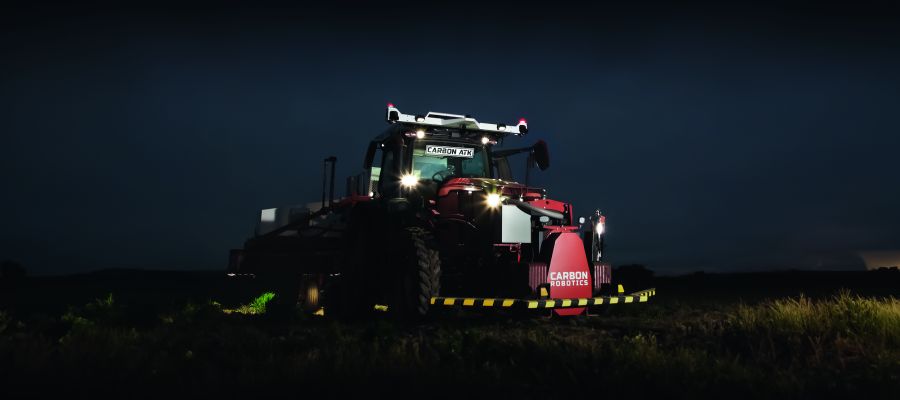
Companies like Carbon Robotics and Burro have now shown a way out of this impasse. Their vision: The use of herbicides should not only be reduced but, ideally, completely replaced by intelligent machines. To achieve this goal, Carbon Robotics has introduced the “LaserWeeder.” Equipped with 24 NVIDIA graphics processors, this machine analyzes thousands of plant images per second in real time. AI precisely distinguishes between crops and weeds. Instead of flooding the entire field with chemicals, a thermal laser targets the weed’s growth center with pinpoint accuracy and destroys it without leaving any residue.
This demonstration video shows the LaserWeeder selectively destroying weeds using a high-energy light beam. In this case, the device was still being pulled across the field by a manned tractor
More News

Significant potential for savings on crop protection products
In addition to laser technology, the industry is focusing on increasing efficiency through autonomous spraying systems. In times of labor shortages and cost increases fueled by the Hormus crisis, more precise application of pesticides and fertilizers can help significantly reduce chemical consumption and allow labor resources to be used elsewhere.
The operating principle is comparable to that of the Laser Weeder: systems such as Sprayito or the modular robot Burro Grande use infrared chlorophyll sensors to identify weeds. Unwanted plants are then treated with pinpoint accuracy. The result: a 75 percent reduction in chemical use. In addition, personnel can be removed from the spraying zone and instead take over remote control and monitoring of the systems from a safe distance.
Future-proof through AI and UGVs
The advantages of precisely targeting unwanted plants in agriculture through AI analysis combined with unmanned ground vehicles are obvious. However, we must not forget that the introduction of such technology is far beyond the investment capabilities of most farmers. Nevertheless, given the uncertain global situation and rising environmental protection requirements, the path forward seems clear: The future of agriculture is not chemical, but digital. If lasers and AI take over the work, the “Dirty Dozen” report of the future will hopefully tell a much cleaner story.
Photo: AI-generated
If you use Google as your search engine, you can set Drones as your preferred source so that our content appears more frequently in your search results. Add Drones as your preferred source.