How FlyingBasket Is Revolutionizing Supplies to Remote Mountain Huts
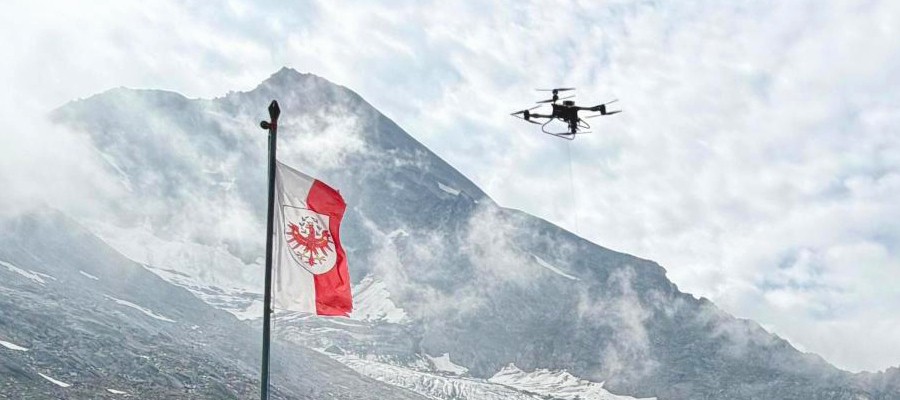

South Tyrol has already drawn a positive conclusion regarding the first systematic supply season for mountain huts using cargo drones. During the test period from June 1 to October 13, 2026, the company FlyingBasket has already completed a total of 189 flights to supply eight mountain huts in the Alps. Over 8.5 metric tons of cargo were transported, with the FB3 drones not only carrying food and building materials up to the huts but also transporting waste and equipment back down to the valley on their return flights.
The missions took place under challenging alpine conditions. The routes covered distances of up to 10.7 kilometers and involved elevation changes of up to 1,500 meters. The Becherhaus, located at an altitude of 3,156 meters, in particular, placed high demands on the aircraft and the crew. To ensure connectivity in difficult terrain, FlyingBasket relied on Starlink satellite connections or 4G cellular networks as needed. The regulatory framework for these operations was established in close collaboration with the Italian Civil Aviation Authority (ENAC), which provided the necessary framework for operations in complex environments.
Efficiency Through Integrated Logistics
The project, funded by the Autonomous Province of Bolzano, showed a significant increase in scale compared to the previous year: While four huts were supplied with one metric ton of cargo in 2025, the volume rose to over 8.5 metric tons in 2026. The mountain hut operators benefited from more flexible planning and the ability to receive fresh products such as vegetables, bread, or frozen goods more frequently. The logistical support also included picking up goods from local suppliers, which noticeably reduced the workload for the huts’ daily operations.
This field test marks the transition from a technical feasibility study to operational integration into existing logistics chains. The successful season proves that cargo drones can serve as a reliable tool for the supply infrastructure even under adverse weather conditions and in difficult terrain. For manufacturers and operators, the project underscores that the combination of robust hardware, intelligent connectivity solutions, and close coordination with regulatory authorities is the key to commercializing unmanned logistics services.
In addition, the project provides valuable data for the further development of the next generation of drones. The experience gained is being directly incorporated into the optimization of the FB3 for high-mountain operations. As a result, the South Tyrolean model serves as a blueprint for other regions where remote locations without road access or cable cars rely on efficient, sustainable, and flexible transportation solutions.
If you use Google as your search engine, you can set Drones as your preferred source so that our content appears more frequently in your search results. Add Drones as your preferred source.