Cast off!
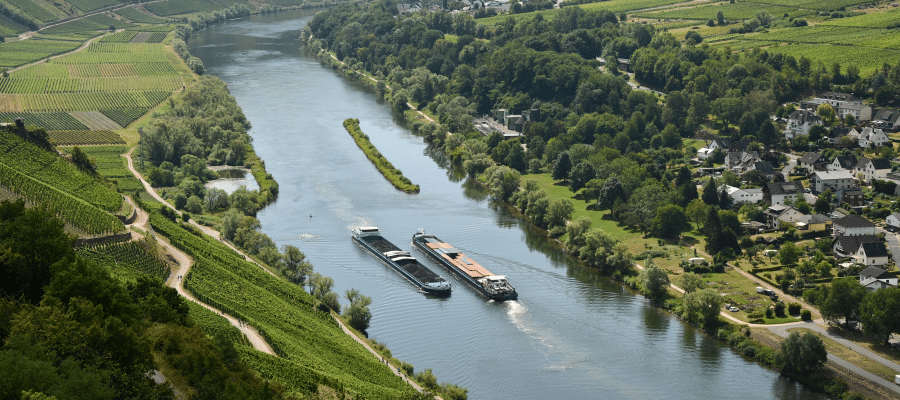

As water levels in shipping routes decline, land logistics become unstable. The extremely low water levels on the Rhine, Danube, Elbe, and Moselle in the summer of 2026 vividly demonstrated how vulnerable the interconnected “just-in-time” industry is when it relies on traditional supply channels. At the same time, many road networks are on the brink of collapse. Autonomous or teleoperated transport ships could be part of a more resilient future.
Back in 2019, the German government set an ambitious goal in its “Master Plan Inland Navigation” to double the share of inland shipping in freight transport performance. While an increase from about six to twelve percent might not represent a paradigm shift, it would still have noticeable effects. This would also benefit the environment: According to the Federal Ministry of Transport, a single motor freight ship can replace up to 150 trucks. However, just as there is a growing shortage of skilled workers on the roads, there is also a tightening skills gap on waterways. Unmanned, teleoperated, and eventually fully autonomous systems could therefore bring significant advantages for society, the environment, and the economy, much like they can on highways and local roads.
Initial Approaches
And they already partly do. Even before goods are transported driverless on a large scale, uncrewed surface and underwater vessels can already make a significant contribution by precisely surveying the riverbed and fairways. A concrete advantage for shipmasters and shipping companies is that they can adjust the loading—and thus the draft—of the ships precisely according to prevailing conditions, maximizing trip efficiency. Furthermore, these systems help protect critical structures in ports and canals. Inspections and maintenance can take place much more frequently without costly personnel involvement, allowing for early detection of material damage before expensive total refurbishments or even demolition becomes unavoidable.
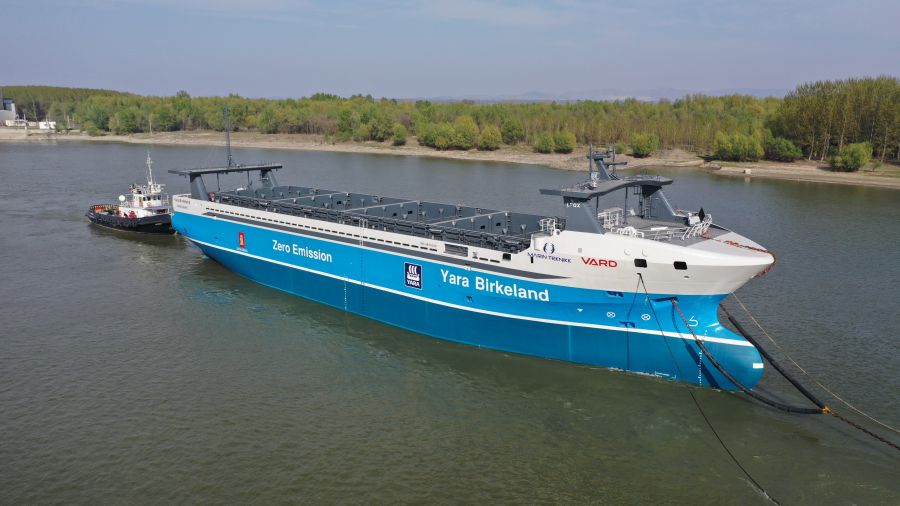
The Yara Birkeland is considered one of the flagship projects for the future of ship transport (Source: Yara International ASA)
The path toward driverless freight transport on water is, however, still long. On one hand, the maritime industry traditionally thinks in long investment cycles. Additionally, existing port infrastructure is not designed to handle many uncrewed, typically smaller vessels compared to current ships. Moreover, the onboard technology is still not fully developed. While simple assistance systems for navigation and course-keeping are already standard, the most innovative systems are currently designed for teleoperation or — similar to assistance systems in cars — to drive semi-autonomously.
Lack of Legal Framework
Beyond technical maturity, the lack of a suitable legal framework is primarily hindering initiatives and investment in the uncrewed future. While aviation already has regulations for UAS, shipping currently relies on exemptions, which delays the collection of essential real-world data.
To harness the immense opportunities of autonomous fleets for clean and crisis-resistant logistics, rapid, close dialogue among all stakeholders is needed, along with initial financing and support instruments. Only if legislation and infrastructure keep pace with technological advancements will the hoped-for shift from road to water succeed.
If you use Google as your search engine, you can set Drones as your preferred source so that our content appears more frequently in your search results. Add Drones as your preferred source.