Drones in Medical Applications
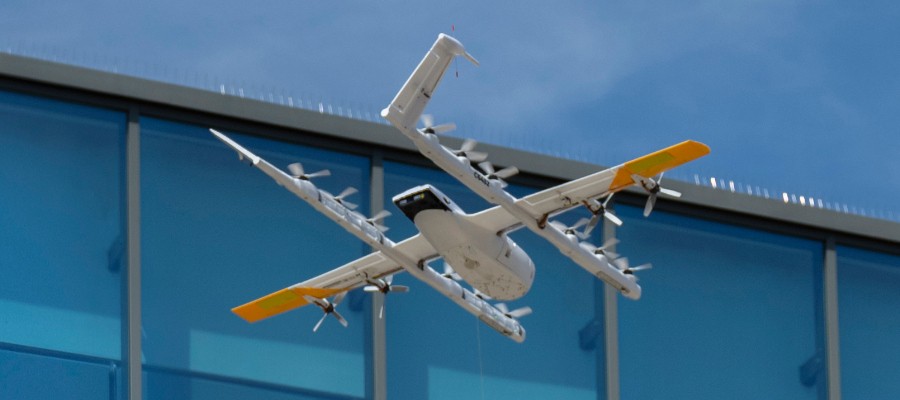

The British National Health Service (NHS) is integrating drones into its logistics processes to optimize medical care in southwest London. Through a partnership with the startup Apian and the operator Wing, lab samples are now being transported by air. This project drastically reduces delivery times, relieves pressure on the road network, and simultaneously lowers operating costs and CO2 emissions, paving the way for a nationwide expansion of the technology.
Faster Delivery to the Lab
Since February 2026, UAS have been flying samples regularly from the Nelson Health Center in Raynes Park to St. George’s Hospital in Tooting. While ground transportation is often time-consuming due to heavy traffic in London, the unmanned systems cover the route in just over three minutes. To date, over 2,000 patients have already benefited from this medical transport service, which reduces delivery times by up to 85 percent compared to traditional courier services.
Sustainability and Cost Efficiency
In addition to saving time, the switch to electric drones offers environmental and economic benefits for urban logistics. Compared to delivery vans, the drones emit 98 percent less carbon dioxide per delivery. Furthermore, costs on some routes are already up to 23 percent lower than with conventional couriers. Since the NHS processes 51 million samples annually for 1.8 million people in southwest London, South West London Pathology (SWLP) is now planning to connect additional locations, such as St. Helier, Croydon, and Kingston hospitals.
The project is seen as a blueprint for shifting medical services from hospitals to the community. The inclusion of the Nelson Health Center, which serves 27,000 patients, marks a milestone: It is the first time that drones have routinely picked up specimens directly from an NHS primary care facility. Those involved describe the technology as reliable and unobtrusive, which promotes acceptance among staff and patients.
Scaling Through Strong Partners
Behind the technical implementation is Apian, a startup co-founded by NHS doctors, which partners with the global drone operator Wing for operational services. Wing, a company within the Alphabet Group, has already completed over 1,000,000 commercial deliveries worldwide. While Wing is expanding rapidly in the retail sector in the U.S., the company views the British healthcare sector as a strategic partner for the further expansion of its medical logistics services.
This initiative underscores the shift of drone deliveries from a technological novelty to a critical component of infrastructure. For the industry, the project demonstrates that unmanned systems can thrive in highly regulated environments such as healthcare, provided they deliver demonstrable efficiency gains and environmental benefits.
More News



For manufacturers and operators in particular, integration into existing hospital logistics networks sends an important signal. It demonstrates that success depends not only on the hardware, but also on seamless integration into complex, digitized workflows. Scaling up the NHS model could serve as a blueprint for other European healthcare systems and provide a lasting boost to the market for medical drone logistics.
If you use Google as your search engine, you can set Drones as your preferred source so that our content appears more frequently in your search results. Add Drones as your preferred source.