Naio Oz: An Autonomous Assistant for Crop Farming
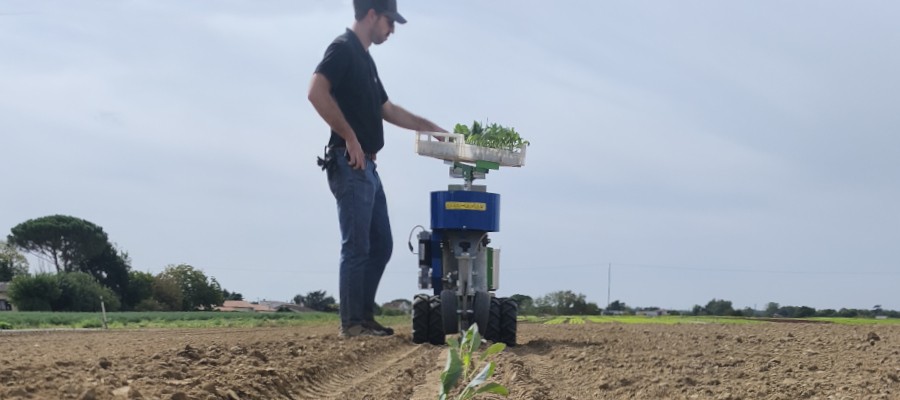

Naio presents the latest evolution of its autonomous agricultural robot, Oz. Originally known as a specialist in mechanical weed control, the company is now expanding the robot’s range of applications to include a planting solution for vegetable seedlings. This transforms the system from a dedicated weeding machine into a versatile assistant that supports the entire growth cycle, from planting to harvest.
Precision as the Foundation for Success
For Naio, the new planting module is far more than just an additional tool. It follows the agronomic principle that efficient mechanical weed control begins with the correct placement of the plants. Only with precise planting distances and exactly defined rows is automated maintenance possible as the season progresses. Matthias Carriere, CEO of Naio, emphasizes the synergy: The robot lays the foundation for the crop and later returns to the same areas to perform mechanical maintenance.
With more than 35 compatible attachments, Oz is now able to cover a wide range of tasks. In addition to planting, these include seeding, tilling, mowing, and transporting harvested crops. Thanks to RTK navigation, farmers can create field maps and reuse them throughout the season for various work steps. The compact, electrically powered robot has a runtime of up to 8 hours and can process an area of just under 0.4 hectares daily.
From Specialist to All-Rounder
The further development of Oz is a direct response to the challenges in vegetable farming, where many work steps are repetitive and physically demanding. Instead of developing a separate robotic system for each task, Naio relies on a multifunctional platform. This strategy allows agricultural operations to flexibly adapt the robot to their specific needs. With 15 years of experience integrating autonomous systems into agricultural processes, Naio is positioning Oz as a comprehensive assistant for the entire growing cycle.
This article highlights a key trend in the robotics industry: the shift from specialized, single-purpose systems toward modular, multifunctional platforms. This approach is particularly relevant for the drone industry, as it highlights the importance of interoperability and software ecosystems. The ability to create a seamless workflow between different tasks using precise geodata (RTK) is a model that can also be applied to the use of UAVs in precision agriculture.
Furthermore, the example of Naio shows that the economic value of autonomous systems increases through high utilization rates throughout the entire season. Manufacturers who open their platforms to a wide range of sensors and attachments foster greater customer loyalty and offer farmers a faster return on their investments. The integration of planting and maintenance data into a unified digital field management system is the key to the scalability of autonomous solutions in the agricultural sector.
If you use Google as your search engine, you can set Drones as your preferred source so that our content appears more frequently in your search results. Add Drones as your preferred source.