With a drone over the „Island of Beauty“
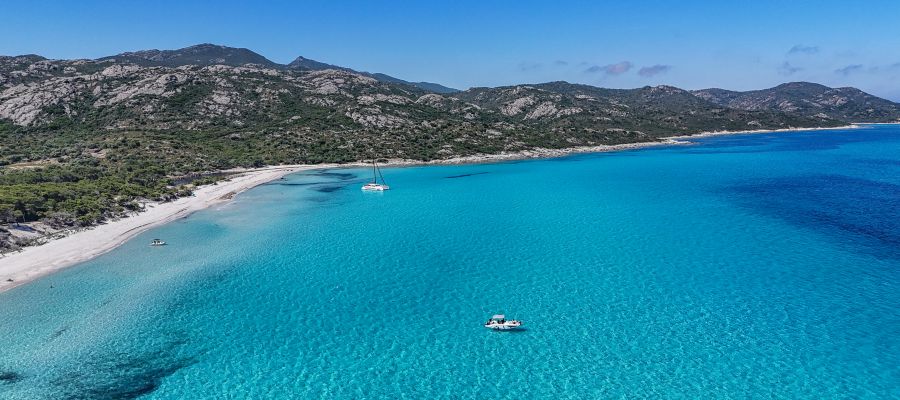

As one approaches the French Mediterranean island of Corsica, it quickly becomes apparent that much is different here compared to other vacation destinations in Southern Europe. Rugged mountain ranges rise directly from the sea, ancient mountain villages cling to the slopes, and amidst dense Macchia landscapes, bays with crystal-clear water open up in nearly surreal colors. These contrasts make Corsica a paradise for photographers and videographers, especially from the air.
Corsica boasts about 1,000 kilometers of coastline and undoubtedly ranks among the most diverse islands in Europe. This variety is especially impressive from the air. Turquoise lagoons alternate with deep blue bays, light sandy beaches suddenly give way to dark pebble shores, and right behind the coast, forested mountains rise up. These contrasts make the island particularly fascinating for drone photography.
Distinctive red rocks
Our journey took my wife and me first to Balagne in the northwest of the island – a region often referred to as the „Garden of Corsica“. Here lie some of the most beautiful coastal towns on the island, nestled between mountains, olive groves, and the sea. We were particularly impressed by L’Île-Rousse. The town owes its name to the distinctive red rocks that spectacularly glow, especially under low sun. From the air, there is an impressive play of colors between the red granite formations, turquoise water, and the light facades of the old town. The small lighthouse on the nearby peninsula provided one of the most beautiful motifs of our entire trip.
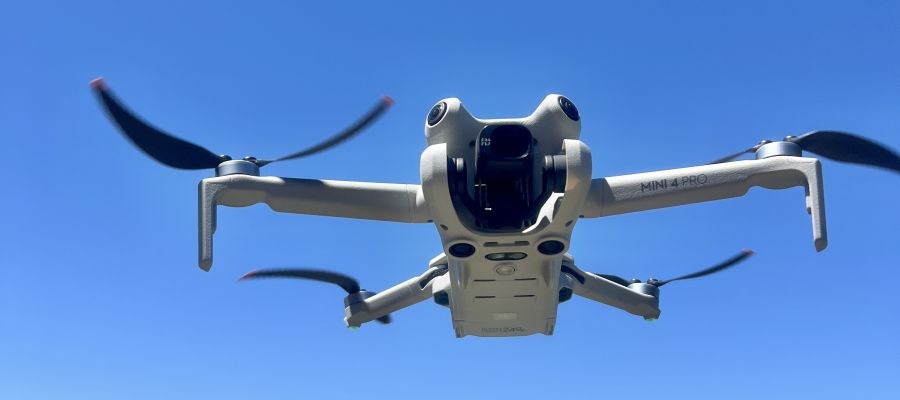
The images of the „Island of Beauty“ were captured using a DJI Mini 4 Pro
Just a few kilometers away is the mountain village of Monticello. While the coastal towns are lively and touristy, one experiences traditional Corsica here. Narrow streets, ancient stone houses, and fantastic views of the coast characterize the landscape. Especially in the early morning hours, a nearly meditative calm enveloped the village. With the drone, perspectives open up that perfectly capture the unique location between mountains and sea.
The scent of the island
Corbara also left a lasting impression. The small mountain village is an ideal starting point for hikes through the typical Corsican landscape. The scent of the maquis hangs in the air everywhere – a blend of herbs, wildflowers, and fruit trees that is omnipresent on Corsica. This fragrance is as much a part of the island as the sea itself, accompanying you almost everywhere you go.
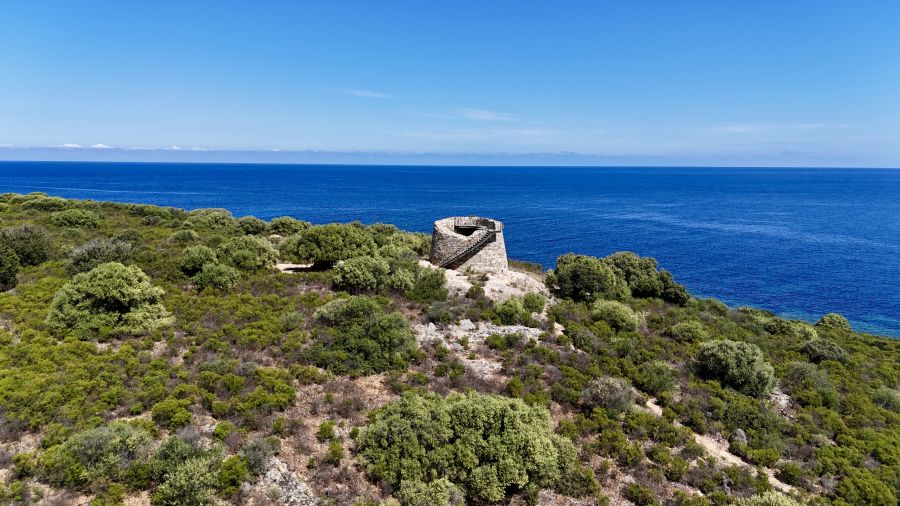
Maquis landscape of Balagne – typical Corsican vegetation with intense scents of herbs and fruit trees
Another highlight of our trip was Calvi. The city is one of the most well-known places in Corsica, combining historical charm with a Mediterranean lifestyle. Particularly spectacular from the air is the mighty citadel that looms high above the bay. Early in the morning, when the first rays of sunlight illuminate the fortress walls and the yachts in the harbor still lie peacefully in the water, unique shots can be captured there. At the same time, Calvi also shows the other side of Corsica: elegant cafés, vibrant promenades, and a relaxed atmosphere right by the sea.
Caves and bizarre rock formations
We experienced pure nature in the UNESCO World Heritage Site of Scandola. The nature reserve on the west coast is among the most impressive landscapes in the Mediterranean. Enormous red rock formations drop steeply into the sea. Caves and bizarre rock formations alternate with small bays. The water glows in intense shades of blue and green. Many areas are only accessible by boat, preserving the landscape’s authenticity. Seen from the air, the shapes and colors appear almost surreal.
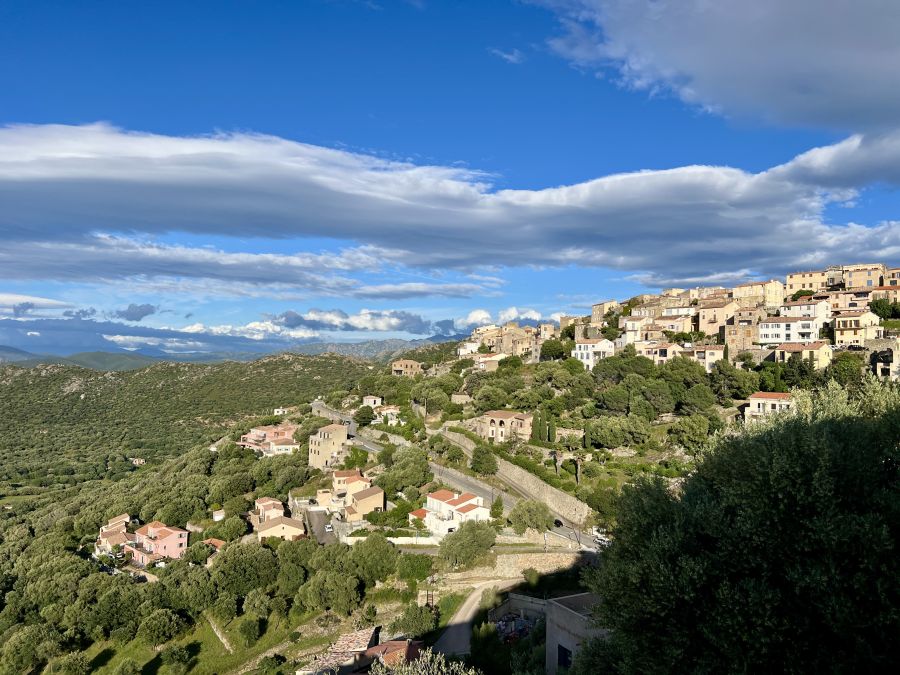
The mountain village of Monticello offers spectacular views of the coast and the Mediterranean Sea
Corsica is primarily known for its beaches – and indeed, the island boasts some of the most beautiful in Europe. Particularly impressive is Plage de Saleccia. The beach is secluded in the Désert-des-Agriates region and can only be reached by boat or via a challenging off-road track. This very seclusion adds to its unique charm. Seen from above, Saleccia looks almost Caribbean: white sand, crystal-clear water, and dense pine forests right behind the dunes.
Insider tip with fine sand and turquoise water
But even lesser-known spots captivated us. Plage de Bodri turned out to be a real insider tip with fine sand and intensely turquoise water. The curved coastline offered ideal motifs for calm, cinematic shots. Equally impressive was Plage de Lozari, which was pleasantly quiet in May. The horseshoe-shaped bay reveals its full beauty, especially from a greater height.
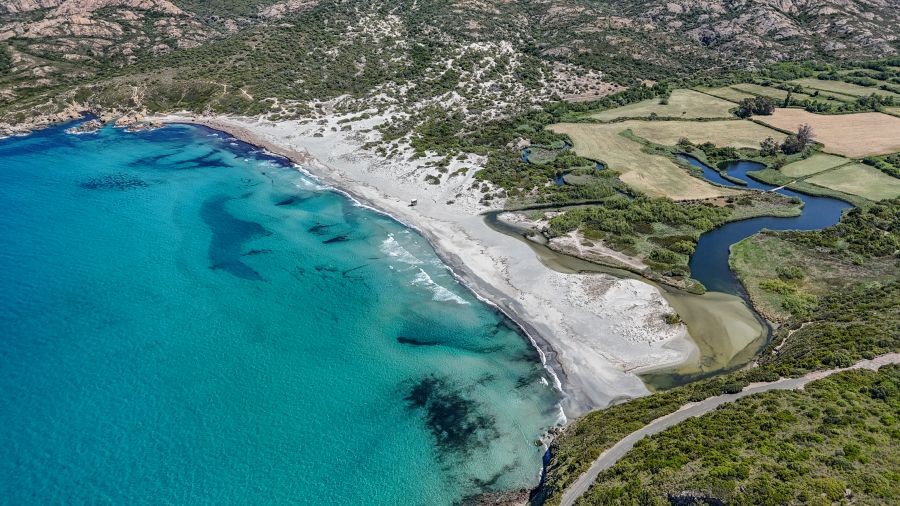
Plage de l’Ostriconi: Where freshwater and sea meet, fascinating patterns in the sand are created
One of the most striking beaches of the trip was Plage de l’Ostriconi. Here, a freshwater stream meets the sea, creating fascinating structures in the sand. From the air, this results in almost abstract landscape forms that are constantly shaped by the water.
Rugged, original, and almost untouched
Besides the coastal regions, we also wanted to experience the wild heart of Corsica. Therefore, our journey took us inland to Corte and the Restonica Valley. The mountains of Corsica appear rugged, original, and almost untouched. Narrow roads wind through deep gorges while crystal-clear mountain streams flow through the valleys. The Restonica Valley is considered one of the most spectacular natural regions on the island and offers countless opportunities for landscape photography. Particularly, the combination of granite rocks, forests, and waterfalls creates impressive contrasts when viewed from the air.
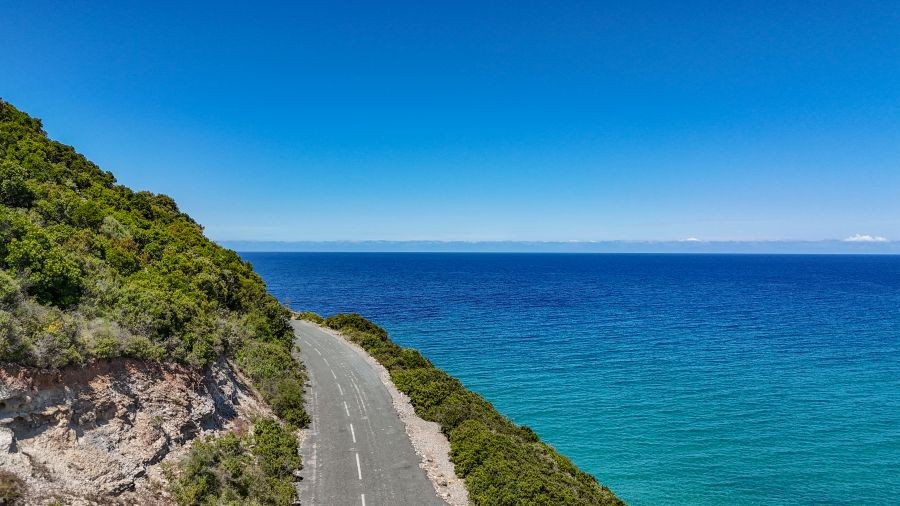
Coastal road of Balagne – breathtaking panoramas accompany nearly every drive along the coastline
Corte itself is known as the historical capital of Corsica and has a unique atmosphere. The citadel rises high above the town, conveying the pride and independence of the Corsicans to this day. Here, one truly feels that Corsica, though part of France, possesses its own distinct identity.
Automatic deceleration
However, what ultimately makes Corsica so special for us is not just the landscape. It’s the mix of authenticity, tranquility, and a nature that still appears untamed in many areas. The island almost automatically forces one to slow down and pay closer attention. This is also where the special appeal of aerial photography lies: capturing landscapes not just as images but also making their structures, colors, and dimensions visible.
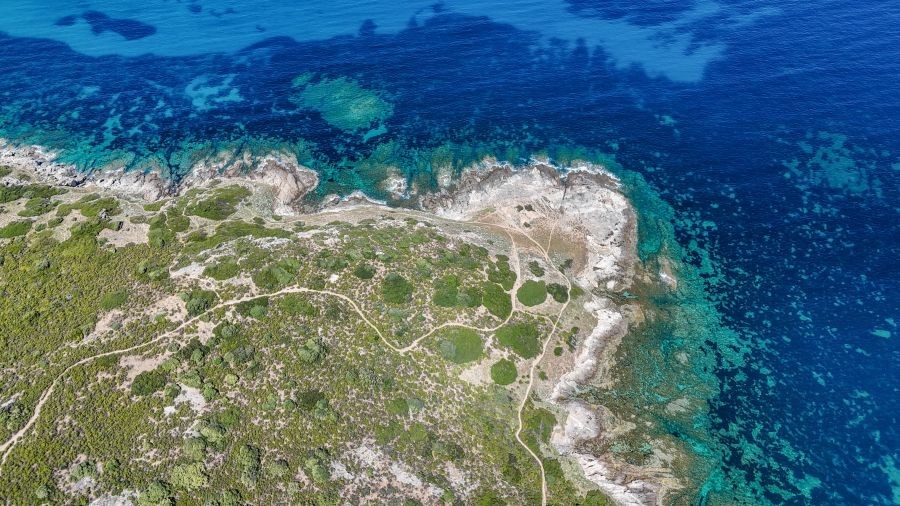
Corsica’s color palette from the air: turquoise blue water, bright beaches, and red granite rocks make the island unique
Corsica is a place full of contrasts – between sea and mountains, wilderness and Mediterranean elegance, calm and adventure. For photographers and videographers, the island offers countless opportunities to discover new perspectives. And anyone who takes even a little time will realize that Corsica rightfully earns its nickname „Island of Beauty“.
DRONE REGULATIONS IN FRANCE
More News
The requirements for UAS operation in France essentially align with those in other European countries where the relevant EU drone regulations have been transposed into national law. Pilots must be registered unless the drone they operate weighs less than 250 grams and is not equipped with sensors for capturing personal data. A certificate of knowledge A1/A3 is also required for operating UAS with a take-off mass of at least 250 grams. Generally, flying is permitted up to 120 meters above ground, always within visual line of sight and only outside of no-fly zones such as above national parks, historical monuments, or around airports. Recommended information sources for pilots wishing to operate a drone in France include the online platforms https://alphatango.aviation-civile.gouv.fr and https://www.geoportail.gouv.fr/
If you use Google as your search engine, you can set Drones as your preferred source so that our content appears more frequently in your search results. Add Drones as your preferred source.