Overcoming the boundaries of physics with innovation


Quieter, more efficient, more flexible: The company Flargo seeks to enter market segments where helicopters have been predominantly used, with an innovative heavy-cargo drone. The goal is to offer significant advantages over helicopters. To tackle existing challenges with range, the German-Lithuanian startup is not relying on advancements in battery technology but instead exploring innovative solutions in aerodynamics and mechanics.
Internationally connected industries, „just-in-time“ logistics, and increased demands for more resilient supply chains have led to an unprecedented high in the demand for fast, reliable, and cost-effective transport options. Price pressures, ecological imperatives, and complex international relations have prompted a reassessment of traditional transport routes, and the growing shortage of personnel has further unsettled past certainties. As a result, gaps are increasingly emerging, especially in the last and second-to-last mile of local and regional goods transport, which unmanned systems could potentially fill. However, it’s important to note that they could close these gaps; so far, the UAS industry has yet to deliver the revolution in the logistics sector that many have hoped for and some have promised.
Physical challenges
Apart from regulatory and economic challenges in individual goods delivery – think „pizza drone“ – it is primarily the physical and structural challenges that currently make it impossible for purely electric drones to transport heavy loads over long distances. Their real-world operational capabilities are limited by constraints on energy density, the enormous power requirements during hover, and, consequently, the restriction of payloads to relatively light cargo in short-range applications. As a result, battery-electric systems can only reach destinations within a radius of about 40 kilometers.
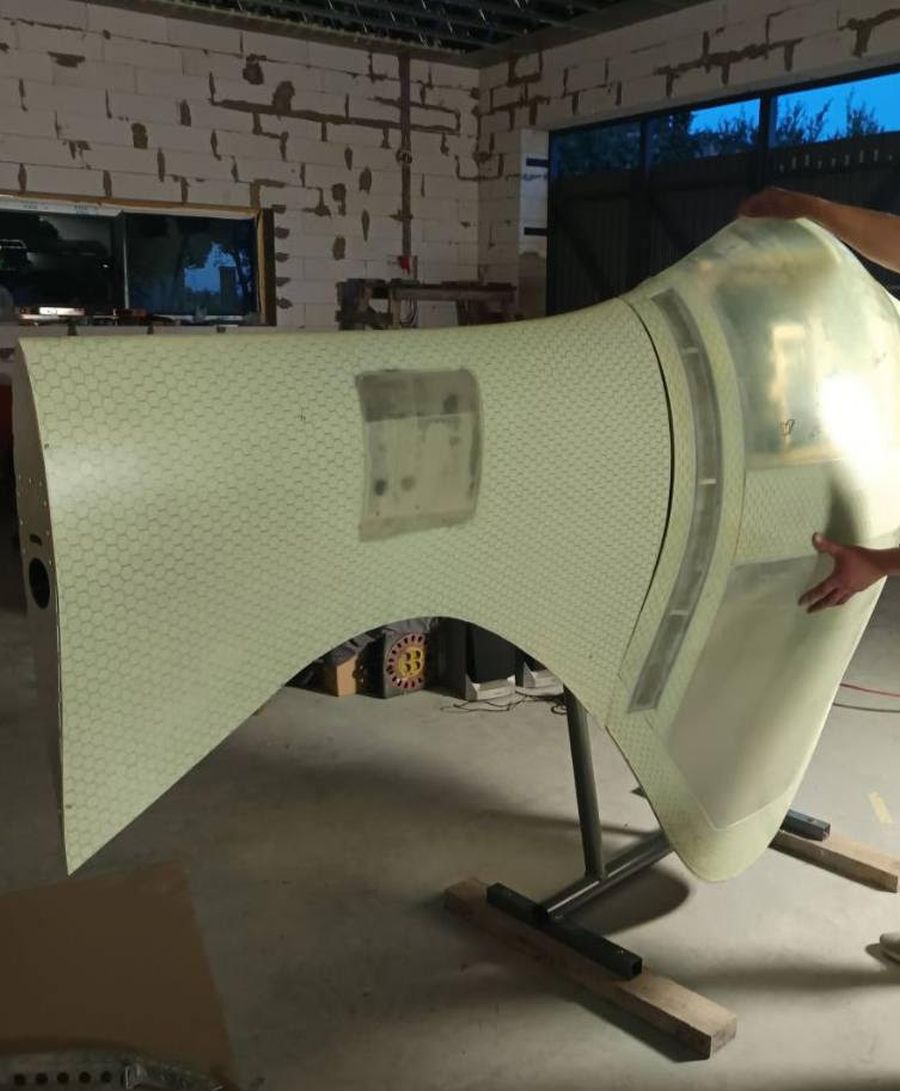
Clever design and well-thought-out mechanics are intended to help bypass current limitations of battery technology
The young company Flargo is now attempting to address the mission profiles currently covered mainly by helicopters, ranging from 50 to several hundred kilometers, with a particular focus on the challenging environmental conditions in offshore wind farms as a potential business field. To this end, the startup is developing an unmanned heavy load platform for cost-efficient cargo transport. The strategy aims to deliver helicopter performance parameters while significantly reducing operational complexity and costs..
The importance of strategic flexibility
Rather than relying on potential future improvements in battery technology, the focus is on using existing propulsion technologies. The system’s previous technical development impressively demonstrates how crucial strategic flexibility is in the engineering process. Flargo started as a small engineering team that initially assessed the feasibility of an unmanned heavy cargo aircraft and validated fundamental design principles and propulsion concepts during the early development phase. In 2021, the team built the first prototype of a cargo drone, powered by a Lycoming O-360 engine from a retired Cessna. This early platform primarily served as proof of concept and provided the engineering team with valuable insights for further work.
As the company gradually realized that many emerging drone manufacturers were pursuing similar approaches, the developers showed courage by changing direction and decided in 2023 to fundamentally rethink the platform architecture to significantly enhance both operational efficiency and reliability, while also creating unique selling propositions. The technical requirements established by the energy company EnBW for the Offshore Drone Competition 2023 served as a stable design framework. These requirements reflect the challenging operational conditions associated with the actual supply of offshore infrastructures, such as extreme endurance, high payload capacity, and absolute reliability under difficult weather conditions.
Technology demonstrator
By 2024, the company had completed the full system design for its hybrid-powered aircraft. The following year, Flargo tested key subsystems and built a technology demonstrator named SM300. This aircraft is currently undergoing ongoing ground tests and optimizations in Lithuania as part of the so-called „Minimum Viable Product“ phase. The entire development process remains typical of an agile startup environment, as the team has reinvested a large portion of their private savings into development to advance the prototype toward practical flight tests.
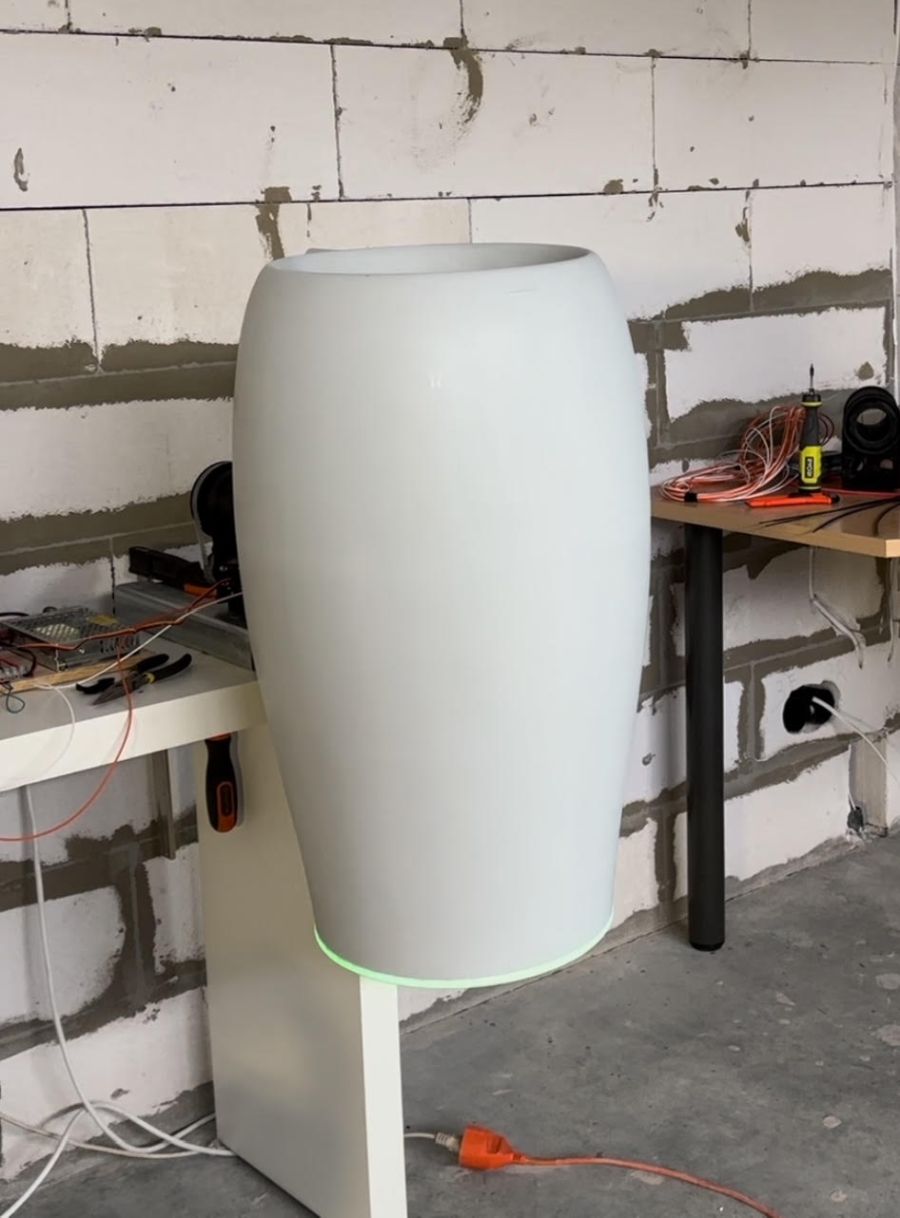
Thrust vector control is one of the key features of Flargo’s SM series
Although Flargo is still in the particularly critical phase for companies before generating actual revenue, the concrete promise of economic benefits is already solidly at the center of the future business model. The company’s aircraft are specifically designed to replace certain helicopter missions with a system that operates entirely without a pilot on board and does not require the extremely expensive infrastructure needed for traditional helicopter operations. Specifically, efforts are underway to reduce the platform’s pure operating costs to about 80,– euros per flight hour. If successful, according to Flargo, transporting 100 kilograms of cargo over a distance of 300 kilometers could lower operating costs compared to a conventional helicopter or small aircraft by seven to eight times. The massive cost savings logically serve as the central argument for the platform’s future marketing.
Exceptionally high overall efficiency
This is to be made possible primarily by a specially developed gimbal, which forms the heart of the aircraft’s drive and control architecture. It is designed to be extremely lightweight while reliably supporting four rotor blades. During rigorous bench tests, the system exhibited energy losses that were only four to five percent below the theoretical ideal values. Combined with the platform’s aerodynamic architecture, this design enables exceptionally high overall efficiency and robust performance characteristics.
Another economically significant design aspect is the consistent prioritization of noise reduction without compromising essential lift performance. The engineers reduced the blade diameter and increased the rotational speed to compensate. This led to the drones emitting significantly lower noise levels compared to a comparable helicopter without the complex implementation of active noise reduction systems. A lower noise level can, in practice, lead to less stringent operational requirements and increase the chances of societal acceptance.
Dual thrust vector control
Another technological unique selling point of the Flargo platform lies in its control concept. Many unmanned aerial vehicles rely on ailerons or similar control surfaces in forward flight. The Flargo SM300 features dual thrust vector control to maintain full maneuverability under all conceivable flight conditions. In the event of an engine failure, the aircraft can seamlessly transition to autorotation mode. According to the manufacturer, this enables a controlled descent while fully preserving directional stability.

As promising as this approach may be, Flargo is still a classic startup in a critical phase of its development
The demonstrator platform SM300, which is fully operational, is designed for payloads of up to 150 kilograms and serves as a starting point for the gradual development of larger, more powerful platforms. The SM series is based on a hybrid VTOL design that unites the efficient forward flight of a fixed-wing aircraft with the powerful vertical lift of a helicopter in a closed flight cell. Designed for professional use in logistics, inspections, and special mission profiles, it can flexibly transport loads in the fuselage or via a winch in pure helicopter mode.
Highly relevant market demand
More News
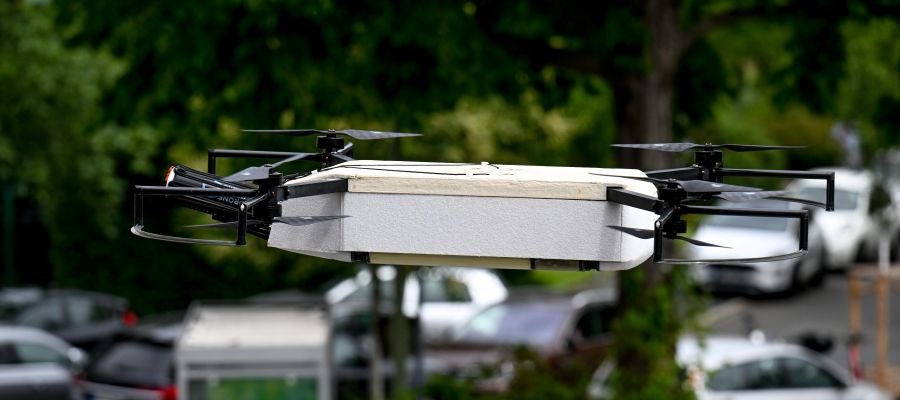

In the next 12 to 18 months, new drive configurations are expected to be added to increase the payload capacity to up to 300 kilograms. In the long term, the load capacity will be increased to 500 kilograms, and there are plans to develop a drone for the combined transport of goods and people. Following the conceptual approach to establish an entirely new class of unmanned aerial vehicles specifically for regional freight missions, Flargo addresses a highly relevant market need with its independent technological approach and aims to demonstrate that existing limits of physics can be circumvented through clever mechanical design.
If you use Google as your search engine, you can set Drones as your preferred source so that our content appears more frequently in your search results. Add Drones as your preferred source.