Skypuzzler: Automatic Flight Control for Multi-Drone Operations
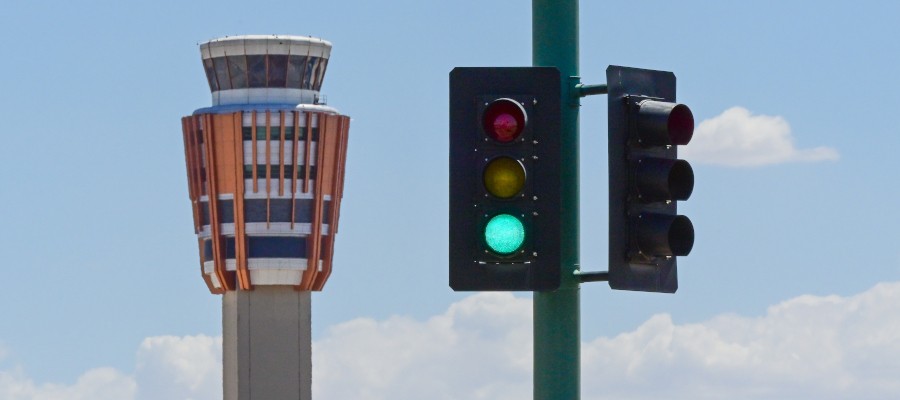

Whether it’s a logistics application, a rescue mission, a surveillance task, or an inspection flight: if the UAS industry has its way, the skies above cities, ports, and industrial areas will soon be bustling with activity. To ensure all of this can take place safely in general airspace, technical solutions and practical, everyday processes are needed—including a kind of digital nervous system capable of responding to potential hazards in real time. A system like the one offered by Skypuzzler.
Skypuzzler was founded in Denmark in January 2022—driven by the realization that airspace is changing faster than the regulations governing it. While more and more unmanned aerial vehicles were already appearing in the sky, existing air traffic control systems were still geared toward entirely different challenges. And, in essence, they still are today. Skypuzzler’s founders—Ronni Winkler Østergaard, Morten Skov, and Jesper Skou—are convinced that
without a fundamentally new approach, comprehensive UAS operations would either be nipped in the bud by regulatory authorities or involve accepting avoidable risks. So they set out to close this potential gap before it could actually become a problem.
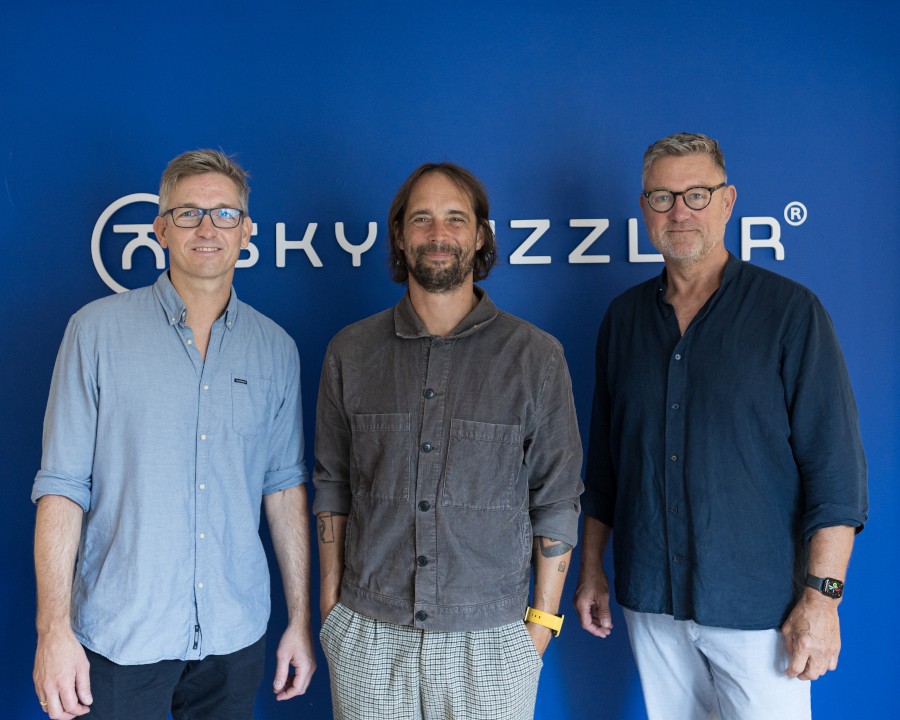
Skypuzzler’s founding team (from left): Ronni Winkler Østergaard, Morten Skov, and Jesper Skou
When Density Meets Complexity
For commercial drone operations to become economically scalable, the one-to-one relationship between pilot and flight system must be broken for many application scenarios. From a control center—far beyond the direct line of sight of the personnel in charge—it must be possible to monitor multiple UAS and even coordinate entire swarms in order to truly reap the full benefits of unmanned systems. BVLOS (Beyond Visual Line of Sight) is the key catalyst that unlocks the economic potential of drone operations. If a single qualified pilot can monitor five drones simultaneously instead of just one, this revolutionizes the cost structure of the entire operation. However, BVLOS in general airspace requires a level of automated coordination that existing infrastructures simply could not provide just a few years ago. And it is precisely this market gap that Skypuzzler aims to fill.
Integrated Digital Air Traffic Control
Skypuzzler’s Integrated Digital Air Traffic Control (iDATC) is an AI technology certifiable for aviation use. It offers real-time coordination, automated conflict detection and resolution, and enables a single pilot to control multiple drones simultaneously or oversee their automated flight. The system creates a comprehensive digital situational picture, monitors positions and flight paths in shared airspace, and proactively identifies impending conflicts—such as when two UAS are heading toward the same point or a drone is flying in a way that would violate the safety zone around a manned aircraft. As soon as a potential conflict is identified, the system resolves it dynamically: It adjusts flight routes, maintains safety distances, and schedules flight times so that each aircraft reaches its destination without endangering the safety of other airspace users. Crucially, iDATC supports both individual BVLOS missions and complex swarm operations. For UAS operators seeking 1:n mission control, this is the essential foundation.
The Skypuzzler solution also supports flight prioritization. This is indispensable in day-to-day commercial operations, where different mission types—such as emergency response, time-critical cargo, or routine inspections—simultaneously utilize the same flight corridors. In this way, the system enables the safe scaling up of autonomous operations without violating regulatory requirements or compromising operational integrity.
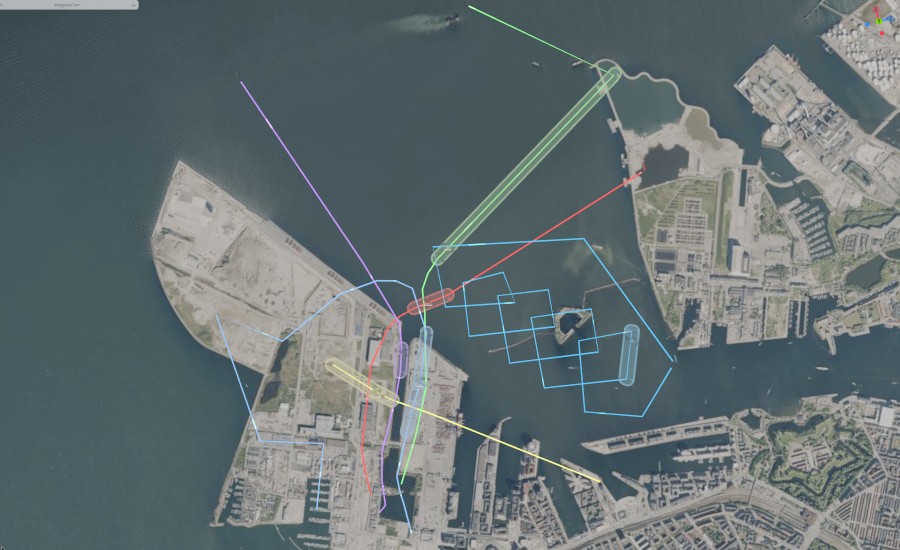
The Danish company Skypuzzler specializes in developing AI-based technology for the automatic conflict avoidance of autonomously operating flight systems
Determinism Instead of Probability
What sets Skypuzzler apart from some other technology startups is the founding team’s in-depth practical operational knowledge. CEO Jesper Skou and COO Ronni Winkler Østergaard are former air traffic controllers with many years of experience in both military and civil aviation. CTO Morten Skov brings top-tier computer science expertise to the table. All three are actively involved in European standardization initiatives and expert working groups of the International Civil Aviation Organization (ICAO)—including those focused on AI governance.
Aviation authorities require systems that can be verifiably certified. Certification involves demonstrating, in accordance with strict guidelines, that technologies behave exactly as intended under all foreseeable operating conditions. Many existing solutions rely on data-driven AI models. However, artificial intelligence that derives patterns from existing data based on probabilistic reasoning has so far been difficult to certify. Its logic is not fully transparent, and its behavior in exceptional situations cannot be predicted with the precision required by regulatory authorities. Skypuzzler therefore chose a deterministic approach that provides the AI with clear guidelines, thereby eliminating the “element of chance.” When iDATC makes a decision to resolve a conflict, that step can be fully traced back to a defined set of rules and parameters. Every decision can be reviewed, tested, validated, and certified.
In addition to this technical differentiation, Skypuzzler has made a deliberate architectural decision that ostensibly limits its market position but actually expands it. While UTM platforms are designed to offer as many functions as possible from a single source, Skypuzzler focuses entirely on actual flight operations and the automated avoidance of airborne conflicts. The architecture is platform-independent: Like a plug-in nervous system, it can be seamlessly integrated as a specialized solution into various UTM ecosystems.
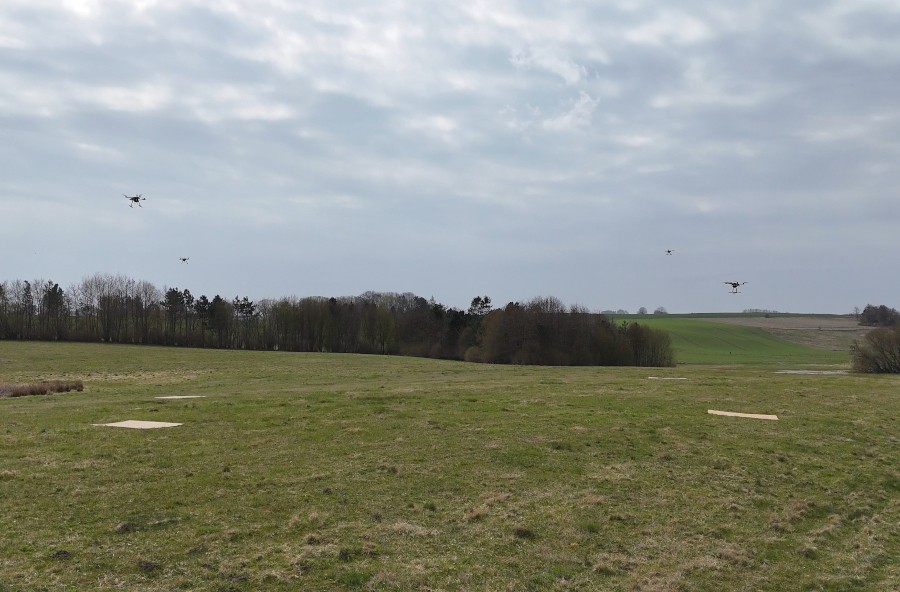
The denser the traffic in lower airspace becomes, the more important it is for unmanned systems to be able to coordinate autonomously without the need for human intervention
Enabling others to scale
Skypuzzler serves two key customer categories. The primary market is in the B2B sector and targets companies that want to scale drone operations involving multiple aircraft in complex environments. The secondary market (B2G) addresses UTM system providers, air navigation service providers (ANSPs), and national authorities that are establishing and expanding airspace infrastructures. The economic benefits for customers are directly measurable. The transition from a 1:1 model (one pilot per drone) to an iDATC-supported 1:n principle can reduce direct personnel costs per flight hour by up to 80 percent. In addition to these savings, higher aircraft utilization results in more revenue-generating flights per operating period. Furthermore, the optimized use of existing flight corridors reduces the need for costly capacity expansions. For government agencies and UTM providers, the value proposition is equally compelling: a certifiable, digital air traffic management solution that enables complex drone traffic.
Recognition
For a young company, Skypuzzler already has an impressive track record. In 2023, the company won the “Air Traffic Management Award 2022”—the first startup in the award’s history to do so. This was a remarkable achievement in an industry traditionally dominated by established industry giants. In 2024, the company secured funding from the European Innovation Council (EIC), beating out more than 900 competitors. This underscores both Skypuzzler’s technological excellence and the confidence leading innovators have in the company’s market potential. In addition, Skypuzzler received support from the European Space Agency’s Business Incubation Center in Denmark (ESA BIC DK), which opened up new avenues into the satellite and aerospace sectors. Through its subsidiary in Toulouse, founded in December 2024, the company is also a member of the Aerospace Valley Cluster—the heart of Europe’s largest aerospace ecosystem.
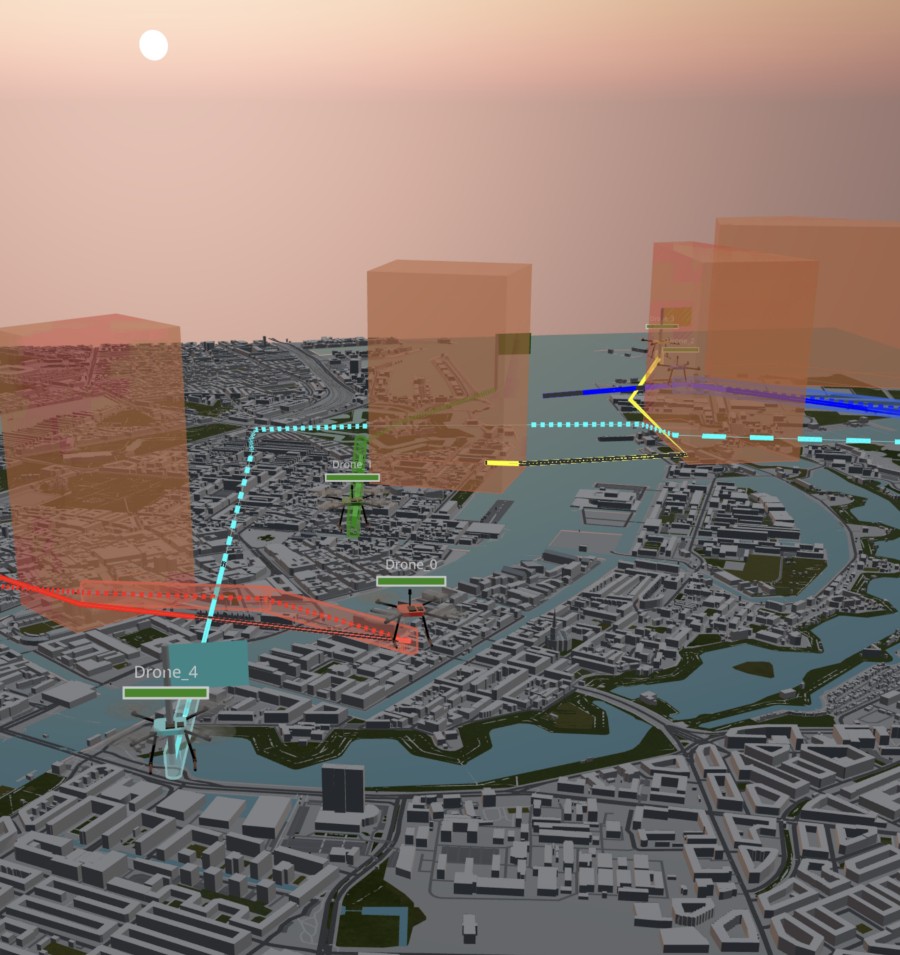
Air traffic is expected to increase steadily in the coming years, particularly over port facilities, making suitable technologies essential to ensure safe operations
From Theory to Practice
Skypuzzler’s development did not take place behind closed laboratory doors. Between 2023 and 2025, the company led a Eurostars project in collaboration with the Belgian UTM provider Unifly to develop automated conflict avoidance for BVLOS drone operations. The focus was on dynamic, real-time route adjustment when multiple unmanned aircraft share the same airspace without direct human control. In 2024, Skypuzzler completed an ESA-funded feasibility study on performance-based navigation and developed a high-precision module for conflict avoidance in densely trafficked airspace. This work also laid the foundation for the company’s ambitions in the space sector, as the increasingly congested near-Earth orbit requires flight control and collision avoidance technologies comparable to those used in lower airspace.
Growing Rapidly, Acting Strategically
Between 2024 and 2026, Skypuzzler’s workforce grew from seven to 20 employees. This growth reflects both market dynamics and the company’s increasing operational maturity. With locations in Denmark and Toulouse, Skypuzzler is firmly established in two key European aerospace hubs. As part of the intensified commercial scaling planned for 2026, the team is set to expand continuously—not least because the company’s expansion strategy is also set to extend to North America in the near future.
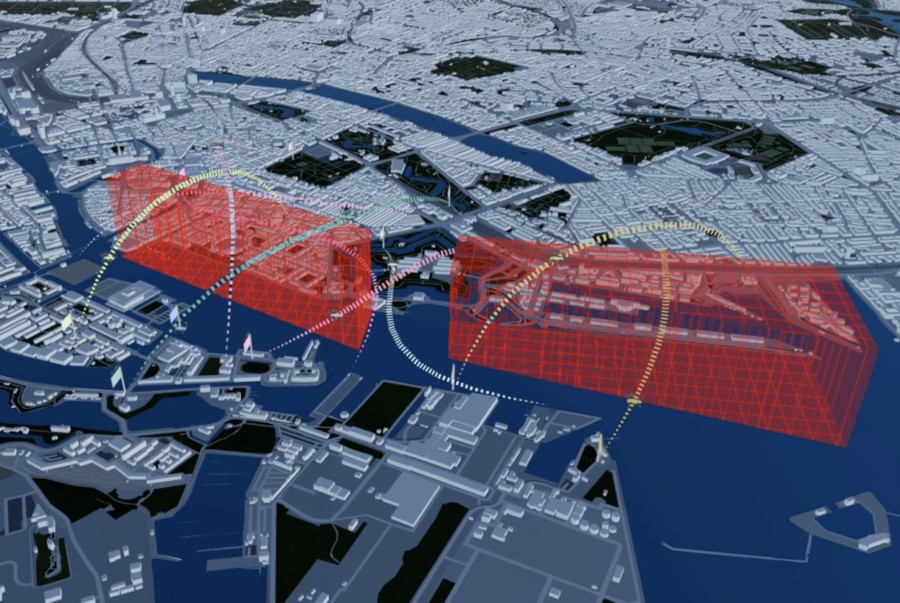
Skypuzzler’s iDATC platform can be used not only for conflict avoidance but also for prioritizing certain airspace users, such as rescue helicopters or police drones
If you use Google as your search engine, you can set Drones as your preferred source so that our content appears more frequently in your search results. Add Drones as your preferred source.