Zero-emission flight around the world with hydrogen propulsion

Those who can read wind and weather conditions can not only fly safely but also particularly energy-efficiently. These skills are essential for the „Climate Impulse“ project, which aims to achieve the first emission-free non-stop circumnavigation of the globe using a hydrogen-powered flight system. Unisphere will be responsible for optimal mission planning and monitoring, providing software for automated flight planning and weather risk management.
World circumnavigations seem to be his forte. In 1999, Bertrand Piccard and British pilot Brian Jones achieved the first non-stop circumnavigation of the globe in a balloon. In 2016, Swiss pilot Piccard was part of the team that made the first flight around the world with a solar airplane using the „Solar Impulse“. Unlike ten years ago, when several breaks had to be taken during different stages, the hydrogen-powered aircraft „Climate Impulse“ is now set to make the first emission-free non-stop circumnavigation in aviation history.
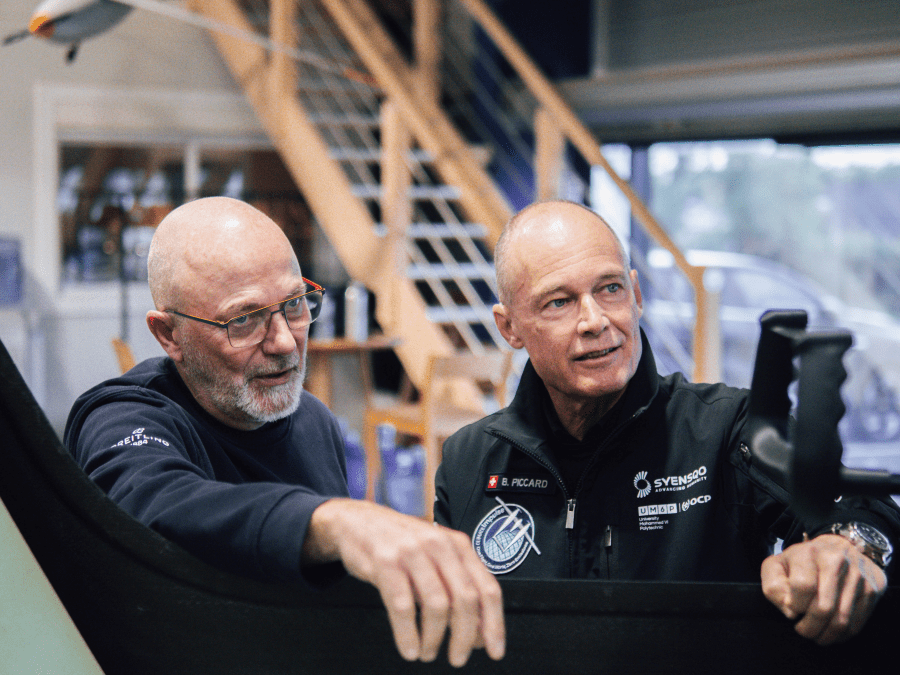
Bertrand Piccard (right) and Raphaël Dinelli are the driving forces behind the ambitious „Climate Impulse“ project (Source: Climate Impulse)
As with the globally recognized „Solar Impulse“ project, Piccard and his current partner Raphaël Dinelli are once again relying on expertise from uncrewed aviation. Unisphere, based in Constance on Lake Constance, will again be responsible for flight planning and weather risk management.
Automated mission planning via software solution
While ten years ago multiple teams collected the necessary data regarding weather developments, potential flight restrictions, aircraft performance, and especially energy management, this process will now largely be automated. This is precisely what Unisphere offers with the Nova platform to safely operate UAS, eVTOLs, and other innovative flight systems.
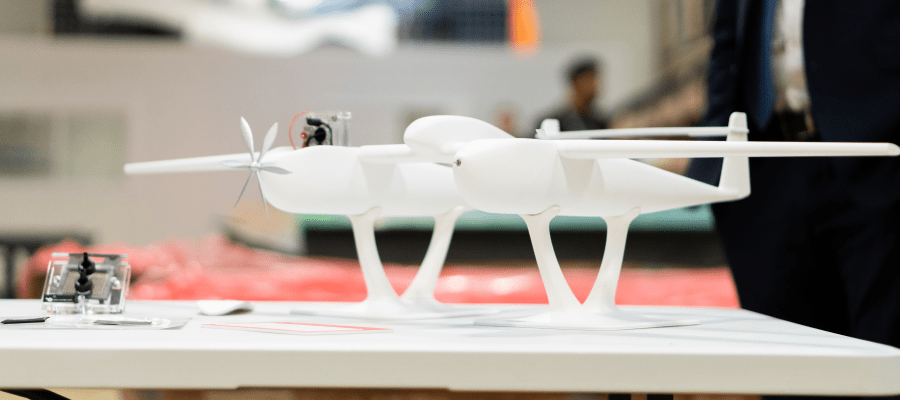
The dual fuselages will primarily provide space for hydrogen tanks, while the cockpit is located in the middle of the structure (Source: Anthony Beranger / Climate Impulse)
„Working on Solar Impulse was a once-in-a-lifetime experience“, says Christoph Schlettig, CEO of Unisphere. „The mission fundamentally changed the way we think about flight planning. Every operational lesson we learned – from energy management to weather decision-making – has been incorporated into the software we build today. It is incredibly rewarding to see this knowledge now supporting Climate Impulse.”
With the help of digital twins of the aircraft, high-resolution weather forecasts, and advanced optimization algorithms, Unisphere’s software continuously assesses how internal and external factors impact aircraft performance, energy consumption, route guidance, and overall mission safety, thus enabling real-time optimization of flight plans.
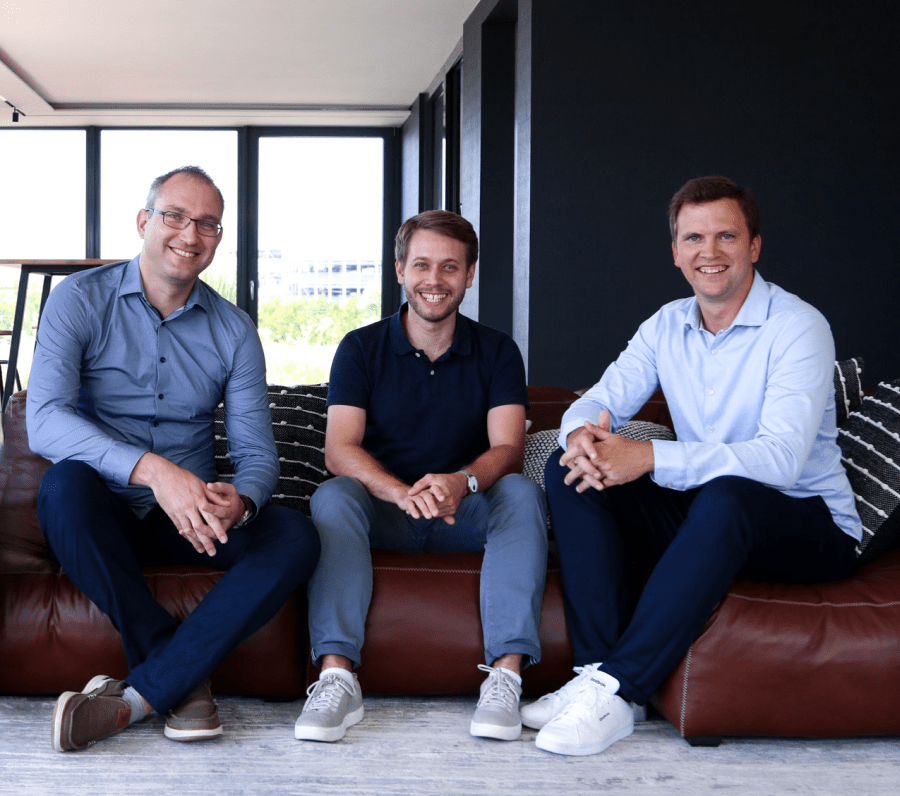
For Christoph Schlettig, Christoph Selig, Michael Anger (from left to right), and the whole Unisphere team, „Climate Impulse“ completes a circle (Source: Unisphere)
„Climate Impulse introduces a completely new propulsion technology with hydrogen, bringing its own operational challenges“, explains Michael Anger, CTO of Unisphere. „Our software continuously evaluates how weather affects aircraft performance and energy consumption, helping determine the safest and most energy-efficient flight profile throughout the mission.”
Testing and trial missions for the project, which is under the official patronage of the EU Commission, are set to begin this year. The actual circumnavigation is planned for 2030.
Main image: Anthony Beranger / Climate Impulse
If you use Google as your search engine, you can set Drones as your preferred source so that our content appears more frequently in your search results. Add Drones as your preferred source.