UAS data on tick habitats
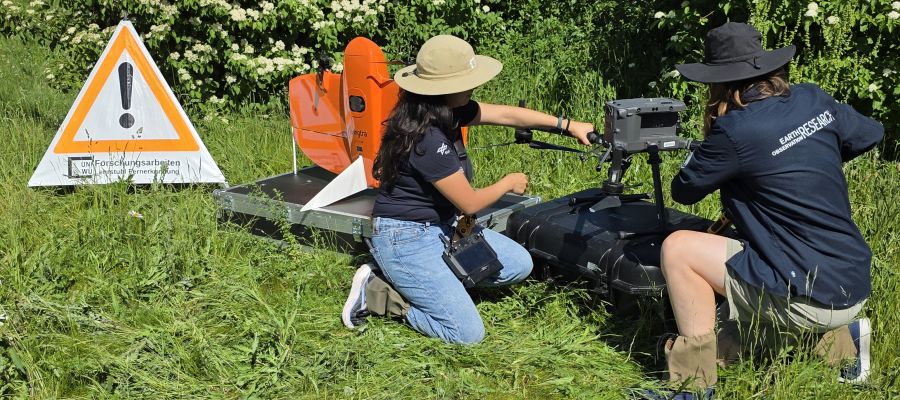

They can be found in Austria and Switzerland, as well as parts of Scandinavia and Eastern Europe. The tick-borne encephalitis (FSME) is also on the rise in Germany. However, predicting exactly how this spread occurs remains quite challenging. Researchers from Munich and Würzburg are working together to determine the living conditions under which FSME viruses and Borrelia bacteria thrive, utilizing UAS support in their efforts.
If you live in or vacation in an FSME risk area, you should consider getting vaccinated against tick-borne encephalitis. In severe cases, infections can have serious health consequences. The FSME virus primarily replicates in small rodents such as mice, and transmission to humans usually occurs via the common wood tick. This tick species is native to large parts of Europe and prefers habitats at the edges of forests.
Vertical and horizontal structure of the forest
For instance, in Amberg-Sulzbach and Schwandorf in the Upper Palatinate. These two districts are among the FSME hotspots in Germany, making them an optimal area for investigation. While researchers from Ludwig Maximilians University of Munich collect ticks on the ground and subsequently test them for FSME viruses and Borrelia bacteria, a remote sensing team from the University of Würzburg gathers thermal, multispectral, and LiDAR data of the respective locations using surveying drones. By analyzing the vertical and horizontal structure of the forest, the participants in the Monid Habitrack project (Habitat Prediction and Surveillance of Tick-borne Diseases using Modeling and Imaging Technology) hope to identify which environmental factors and microhabitat characteristics promote the presence of FSME viruses and Borrelia bacteria in ticks.
More News
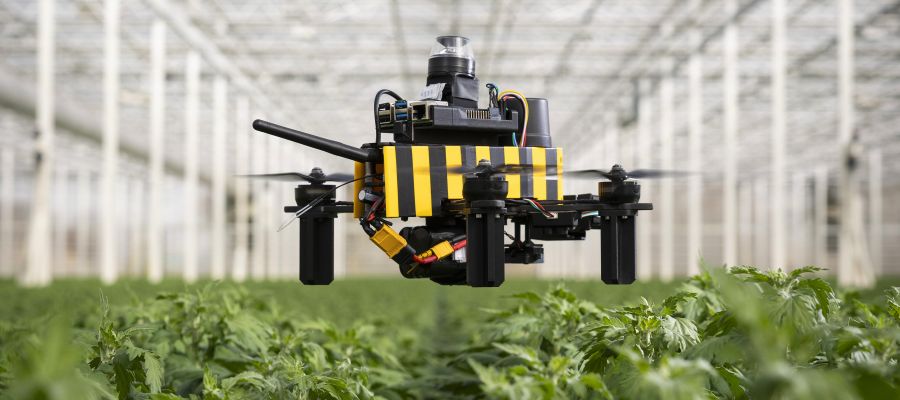
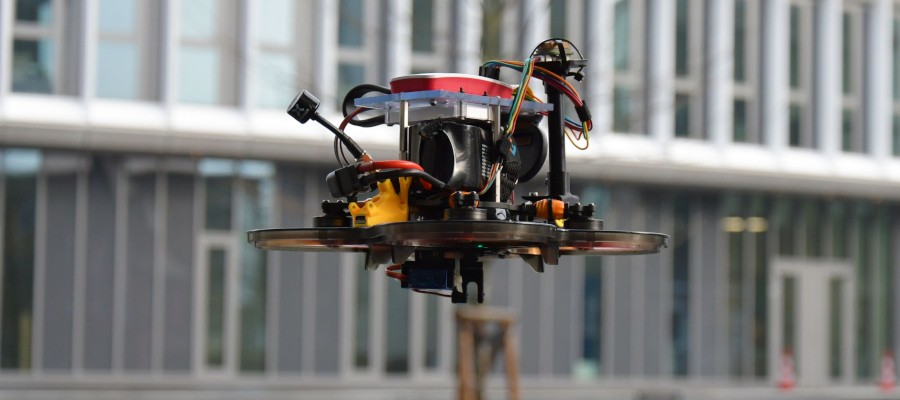

„Our highly accurate Earth observation methods allow us to initially capture in detail and on a small scale where health hazards lie and to derive larger statements from that“, explains project lead Dr. Ariane Droin from the Earth Observation Research Cluster (EORC) at the University of Würzburg. The analyses aim to generate precise predictions of when and where the risk of encountering a tick and possibly contracting a dangerous infectious disease is particularly high in the Upper Palatinate districts. Ultimately, they hope to predict how the virus will continue to spread in Germany and across Europe and what preventive measures may be possible.
If you use Google as your search engine, you can set Drones as your preferred source so that our content appears more frequently in your search results. Add Drones as your preferred source.
-City-outdoor-3.jpg)