“Those who view autonomy only from an airborne perspective fail to see the full scope of its potential”


XPONENTIAL Europe brings together robotics, drones, physical AI and autonomous systems for air, land, water and space. In this interview, Malte Seifert, Director of XPONENTIAL Europe, explains why these technologies are increasingly a matter of security, cybersecurity and public trust, and how innovation can be turned into reliable, real-world applications.
Mr Seifert, can you recall the moment when you realized that autonomous systems would have a lasting impact on our economy?
I do not think there was one defining moment. Rather, the transformation is evident in many individual developments: systems that navigate reliably in challenging environments, companies turning research into market-ready products and users applying autonomous technologies to tasks that were previously too dangerous, too costly or simply not feasible.
That is precisely where the significance of these technologies lies. Autonomy is no longer an abstract vision of the future. It becomes relevant when it reliably supports concrete tasks and earns trust in both practical applications and society at large.
Drones have long since become more than flying machines. What needs to happen for individual innovations to develop into a sustainable market?
Technology alone is not enough. We need functioning ecosystems that combine sensors, software, connectivity, secure operating processes, clear rules and users who are prepared to integrate new solutions into their operations.
Those who view autonomy only from an airborne perspective fail to see the full scope of its potential. Drones are an important and highly visible part of this field. But the development extends far beyond them, encompassing autonomous applications on the ground and at sea, as well as in logistics, industry and space.
Above all, we need to focus more closely on the entire life cycle of an application, from the initial test through day-to-day operations and ultimately to the scaling of these systems. XPONENTIAL Europe is designed to highlight these connections and bring the relevant stakeholders together, helping individual innovations evolve into entire industries.
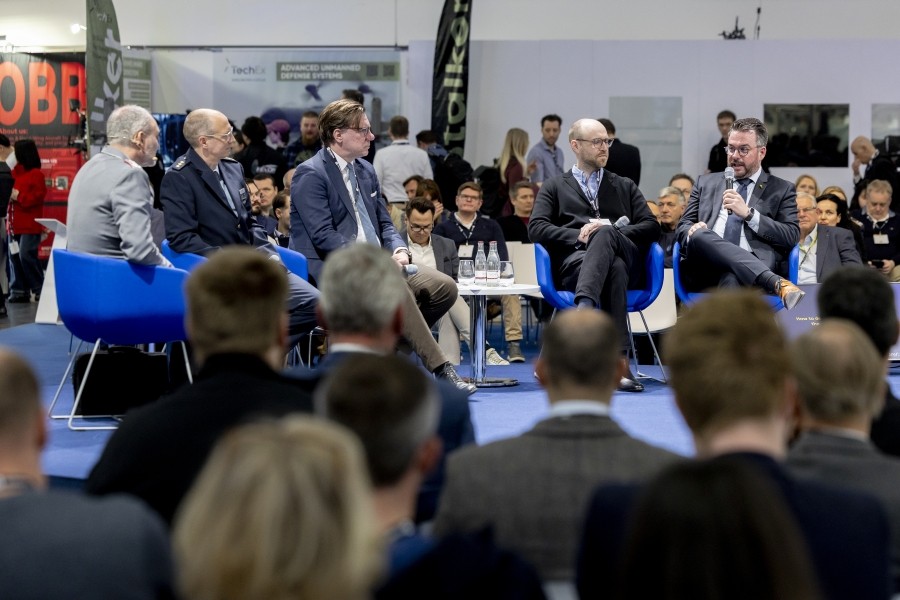
Knowledge exchange is at the heart of XPONENTIAL Europe, where experts discuss the technological, regulatory and societal questions shaping the future of autonomy
Recent incidents have shown how quickly autonomous and connected systems can become a security issue. What can we learn from drone sightings at airports and the attack on internet-connected refrigeration systems in French supermarkets?
Both cases show that we need to take a more comprehensive approach to security. Airports, ports, energy facilities, logistics centers and the food supply increasingly depend on connected and, in some cases, autonomous systems. As soon as technical systems process data, support decision-making or control physical processes, they can also become targets for attack.
This applies to drones just as much as it does to industrial control systems or connected refrigeration units. Cybersecurity and physical protection therefore need to be considered together. Operators need a reliable overview of the situation, clearly defined responsibilities, up-to-date systems and processes that can detect threats at an early stage and enable an appropriate response. Counter-UAS is not an isolated specialist issue; it is part of the broader protection of critical infrastructure.
The development of physical AI will further reinforce this connection. Artificial intelligence will no longer be limited to digital applications but will increasingly operate in the physical world, in robots, autonomous vehicles, drones, production facilities and logistics systems, for example. This creates new opportunities, but also new requirements in terms of security, regulation and trust.
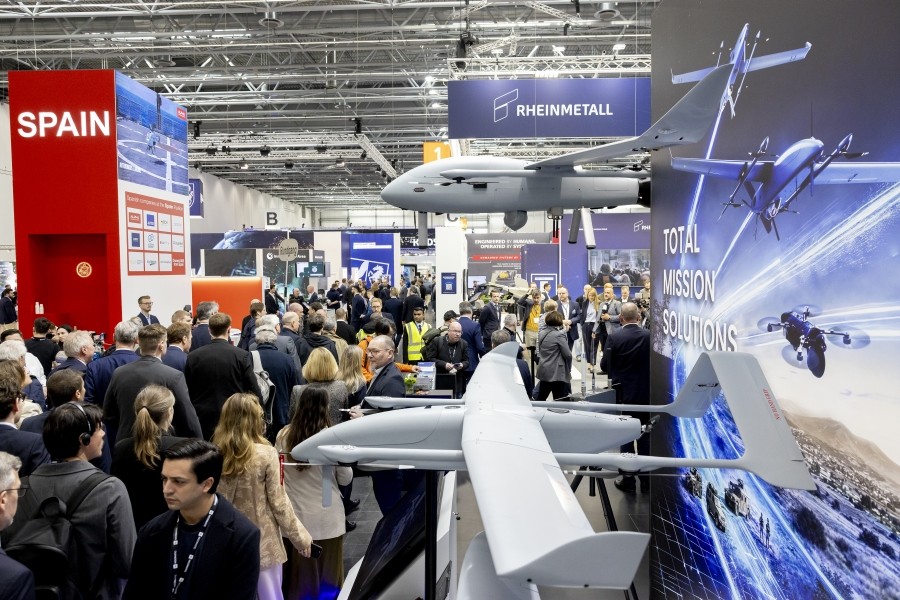
XPONENTIAL Europe brings together autonomous systems, drones and robotics, showcasing the full value chain of autonomous technologies
These examples show that the same technologies can be used in very different fields. How important is this multi-use approach for the development of the industry?
The multi-use approach is crucial because many technologies are not limited to a single field of application. Sensors, robotics, autonomous platforms, artificial intelligence and secure communications systems can be used in logistics, agriculture, disaster response, industry and the protection of critical infrastructure.
Innovations often emerge in one particular environment and are later adapted for other purposes. In this way, technology can open up new markets and applications that were not even central to its original development.
This requires experience from different fields to be brought together. Users need to articulate their specific requirements, companies need to identify new applications and research and policymakers need to support the development. This is how individual technologies can become solutions with relevance beyond a single industry. This kind of cross-sector exchange is what XPONENTIAL Europe enables like no other event.

Malte Seifert, Director XPONENTIAL Europe
What role can a trade show play in such a dynamic industry?
A trade show provides the space for these different perspectives to come together in practice. Developers can discuss their solutions with users, start-ups can connect with established companies and investors can gain direct insight into new technologies and their potential applications.
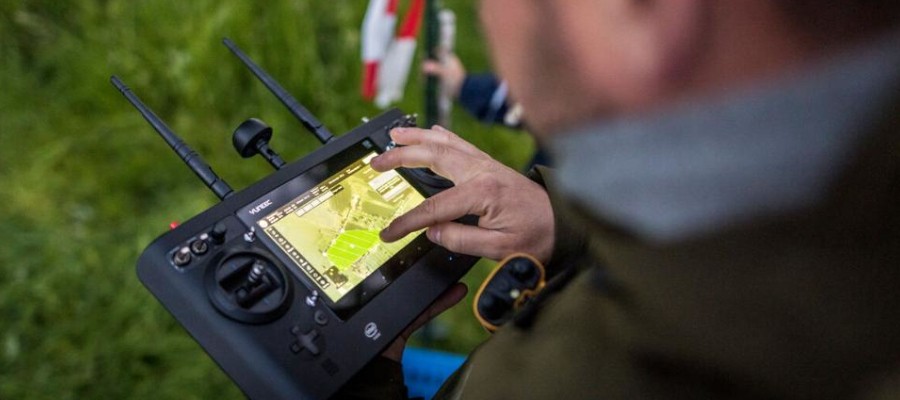
For XPONENTIAL Europe, the link between technology and practical application is key. Alongside new approaches and research findings, the event also showcases solutions that can already be deployed under real-world or realistic conditions. Live demonstrations make this progress tangible.
This creates particular value in a fragmented market. XPONENTIAL Europe not only shows which technologies are available, but also how they can be connected, further developed and applied across different fields. In this way, dialogue becomes the foundation for new partnerships and scalable solutions.
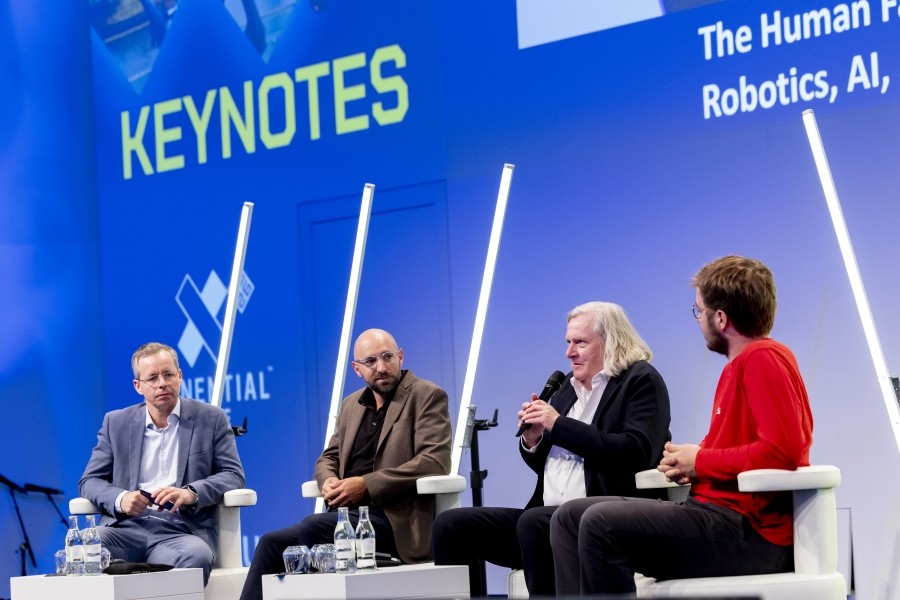
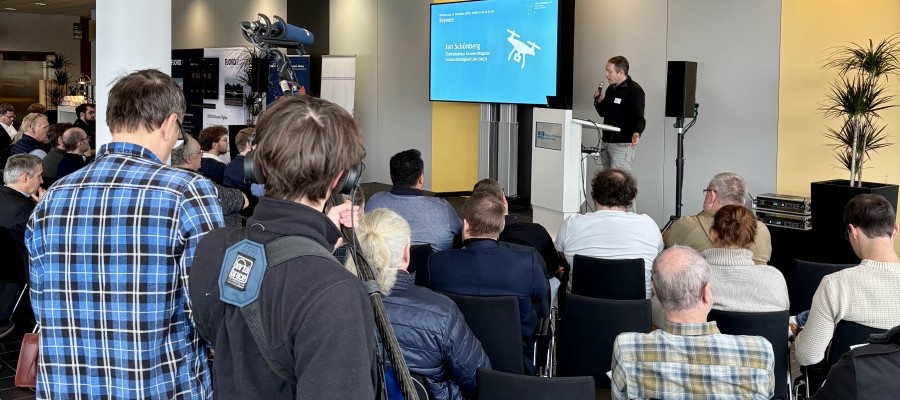
Keynotes and panel discussions explore how robotics, artificial intelligence and autonomous systems can move from technological development to practical application
XPONENTIAL Europe will expand into an additional hall in 2027. What will this change in terms of content?
The additional hall will primarily create space to reflect the development of the industry more comprehensively. In addition to established drone applications, autonomous systems for maritime operations, cybersecurity, Counter-UAS and other emerging technologies will become more visible.
This will broaden the perspective on autonomous technologies. However, the size of the event is not the decisive factor. What matters is that visitors can identify which technology fits their specific requirements, which partners can help them take the next step and how they can build resilient value chains.
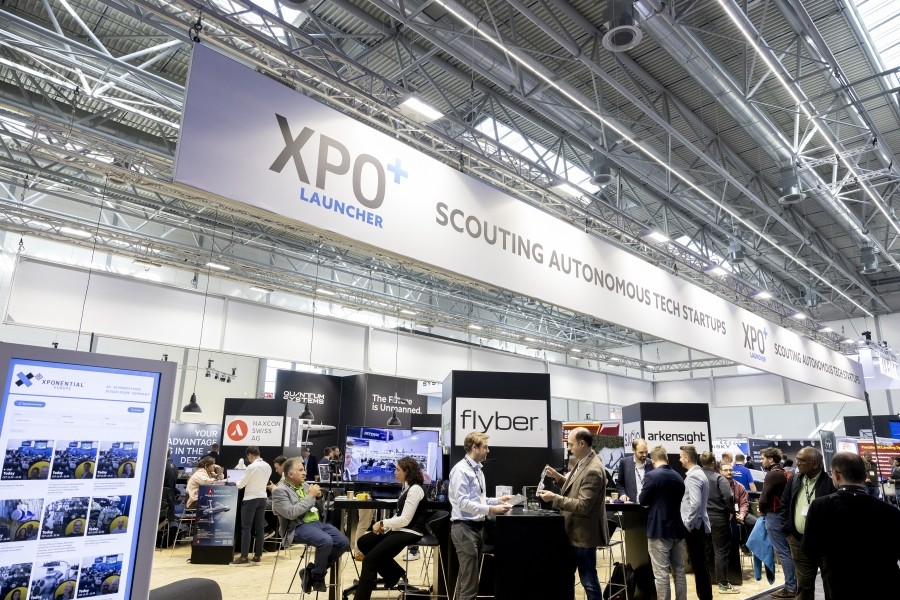
At XPONENTIAL Europe, start-ups, technology providers, investors and users come together to develop new solutions and partnerships
If you had to describe XPONENTIAL Europe 2027 in one sentence, what would you like visitors to take home with them?
I hope visitors leave with fresh ideas, valuable connections and a strong sense of belonging to a European community shaping the future of autonomy together.
AT A GLANCE
The event opens with the European Drone Forum on 15 March 2027. XPONENTIAL Europe will then take place from 16 to 18 March 2027 at Messe Düsseldorf, in Halls 1 and 4 and at CCD South.
Further information: www.xponential-europe.com
Ticket shop: www.xponential-europe.com/2130
If you use Google as your search engine, you can set Drones as your preferred source so that our content appears more frequently in your search results. Add Drones as your preferred source.