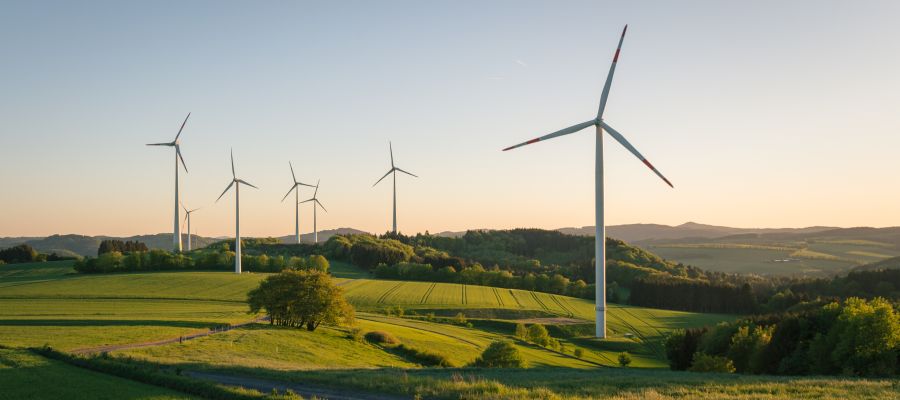

Facilities of critical infrastructure have increasingly come into the public spotlight. At the same time, their monitoring is undergoing a profound digital transformation. The times when technical personnel had to abseil from wind turbines under considerable risks or conduct time-consuming solo flights with individual drones are coming to an end. In their place, swarm intelligence is increasingly taking over, which is much more than just a technical gimmick.
For operators of power plants, pipelines, or wind farms, the transition from manual to automated data collection marks the beginning of a new era. The synchronized and infinitely reproducible digital capture of data from multiple perspectives forms the basis for highly precise digital twins. This development not only guarantees increased operational safety but also enables faster insights and more robust decision-making, which were previously unattainable.
Cooperative perception
More News



The key advantage of this multi-agent approach is the ability to overcome the limitations of conventional drone inspections. While traditional unmanned aerial vehicles rely on sequential operations and inherently can only capture one viewpoint at a time, modern swarm designs break this restriction. The future of industrial monitoring is thus defined by cooperative perception. Rather than relying on a single, highly complex, and often error-prone drone, groups of five to ten specialized drones are employed. These drones operate in complete synchrony and deliver data from multiple angles, which, for example, leads to significant time savings when inspecting 120-meter-long rotor blades at offshore facilities. A swarm accomplishes these tasks in a fraction of the time that a single UAV would require for the same level of detail.
If you use Google as your search engine, you can set Drones as your preferred source so that our content appears more frequently in your search results. Add Drones as your preferred source.