



The integration of drone swarms into shared airspace presents operators with complex regulatory challenges. Since there are no specific EU directives for swarm operations, companies must independently validate their operational concepts in accordance with SORA 2.5 and U-Space frameworks. This article analyzes the necessary safety demonstrations, the role of digital twins in risk mitigation, and the critical information security requirements under EASA Part-IS.
Admittedly, this is still a bit of a pipe dream. After all, aside from light shows, drone swarms have not yet become a real issue in the skies. But that is likely to change in the future. And with it come both regulatory and organizational questions. For example, how to deal with what is known as “Swarm Space.” That is, the coordinate space within which the swarm moves as a technically and operationally integrated system.
To date, the relevant European directives do not provide for specific regulations governing the operation of drone swarms. Essentially, therefore, the regulations are left to the individual discretion of the authorities responsible for issuing operating permits. If these authorities accept the operational concept and the risk assessment (SORA), a permit is granted in accordance with the
requirements of the “Specific Category.” This approach presents operators with complex challenges that concern both regulatory compliance and the comprehensive assurance of general operational safety.
Precise Definition of Operations
A central element of operational reality is the precise definition of the operational geography. During the approval process, applicants are required to submit a comprehensive justification based on a SORA for each identified area. This explicitly concerns the delineation of restricted areas, buffer zones, and dedicated contingency areas. The required operational volume must therefore be substantiated through planning and justification at every stage.
During operational audits for swarm operations, national aviation authorities focus primarily on SORA compliance, seamless remote identification via Remote ID, geofencing systems, and the reliability of the communication architecture. This is perhaps the most critical point for all those who wish to rely on the relevant PDRA-08. This “Pre-Defined Risk Assessment” clearly illustrates the complexity of the issue. What sets swarm operations apart from—and fundamentally differs from—traditional, isolated drone missions is that the operational safety of swarms is fundamentally based on seamless communication within the swarm itself. At the same time, the overall system must be capable of dynamically integrating external infrastructure and continuously adapting to a changing operational network. For example, when a U-Space is to be used or traversed.
Multitasking Structure
The regulatory framework of the European U-Space accounts for this multitasking structure by legally defining a drone swarm as a single coordinated operation (SCO). For technical implementation within the U-Space framework, this means that every swarm must be capable of performing a completely seamless handover to different U-Space Service Providers (USSPs). Only in this way can the uninterrupted integration of the command-and-control (C2) infrastructure, as well as the continuous provision of services such as flight tracking and tactical conflict resolution by the USSP, be ensured at all times.
As soon as operators conduct flights within the specific assurance and integrity levels (SAIL) ranging from SAIL I to SAIL VI, the requirements for demonstrating operational safety increase dramatically. Operators must demonstrate strict compliance with the predefined operational safety objectives (OSOs) for command, control, and communication (C3). While certain performance criteria—such as the tolerable latency of the overall system—remain within the design and responsibility of the respective operator, even these criteria, which are verified under the operator’s own responsibility, must strictly fall within the safety limits mandatorily established by the relevant aviation authorities.

The issue of data security and cyber resilience is a crucial criterion when it comes to the operation of drone swarms (Photo: kasinv – Adobe Stock)
“Digital Twin”
To obtain the stringent approvals required for flights beyond visual line of sight (BVLOS), regulatory authorities require validation of safety concepts at the highest level of documentation. In this context, digital twin technology has emerged as one of the leading methods for transparently providing the required safety demonstration. Nevertheless, the “digital twin” must not be misunderstood as a universal solution in operational risk management; it is merely one of many tools that can assist in the development of safety demonstrations. A prominent example of this technology’s potential is an AI-supported model developed with financial support from NASA. This system clearly demonstrates how predictive maintenance concepts and complex simulations for BVLOS flights can be used to significantly improve the validity of safety demonstrations.
Taking it a step further and considering (partially) autonomous multi-agent systems, their ultimately not fully predictable behavior poses a key challenge for all stakeholders. Although there is currently no legal requirement for a virtual audit trail as a mandatory risk mitigation measure, the use of modern monitoring systems is fully recognized by law to ensure the necessary transparency and accountability to regulatory authorities. As part of pre-deployment tests, digital twins enable a precise evaluation of the performance of unmanned swarm systems under varying environmental conditions, thereby ensuring predictable mission outcomes. During the mission, real-time simulations assist mission control in monitoring the continuous progress of the operation within the predefined operational parameters. Despite this contribution to ensuring runtime compliance, these systems have no inherent regulatory status. Consequently, they are not capable of autonomously enforcing automatic return-to-base protocols. Such safeguards must be implemented by operators as additional, independent layers of protection within the system architecture.
Protecting System Boundaries
Another legal pillar is the regulation under EASA Part-IS. This explicitly requires aviation organizations to protect the integrity and confidentiality of those information systems that are influenced or affected by the operation of unmanned aircraft systems (UAS). Although Part-IS does not currently require tamper-proof AI decision logs for digital twins, such generated documents will already have the status of admissible evidence in the legal context of the year 2026. The focus here is on establishing a comprehensive information security management system (ISMS) designed primarily to effectively secure system boundaries against threats posed by cyberterrorism.
With the incorporation of SORA 2.5 into EASA’s “Acceptable Means of Compliance” and “Guidance Material,” the risk-based approach for operations in the “specific” category and the design of the 24 Operational Safety Objectives (OSOs) have been fundamentally refined. For missions with a high SAIL level, operators must provide strict evidence that the potential consequences of a loss of control remain spatially confined to the approved operational and ground risk volume (containment). Specific tactical maneuvers by swarms, such as the automated retrieval of a drone that has strayed from the formation, are not explicitly regulated in current legal provisions. While operators may implement such procedures as voluntary mitigation measures, they do not constitute a legal obligation. Instead, overarching conflict management is firmly integrated into the SORA mitigation measures (OSOs and collision risk assessments) as well as into the U-Space regulations. It is also noteworthy that neither U-Space nor SORA 2.5 mandatorily prescribe autonomous conflict avoidance (deconfliction) or automated responses that outperform human reaction times. The legal requirement is limited to ensuring that the defined safety objectives are verifiably met through recognized procedural or technical methods. SORA 2.5 also does not prescribe a rigid safety architecture (“Safety Core”) or precise mathematical thresholds for collision probabilities, thereby granting operators a relatively high degree of flexibility.
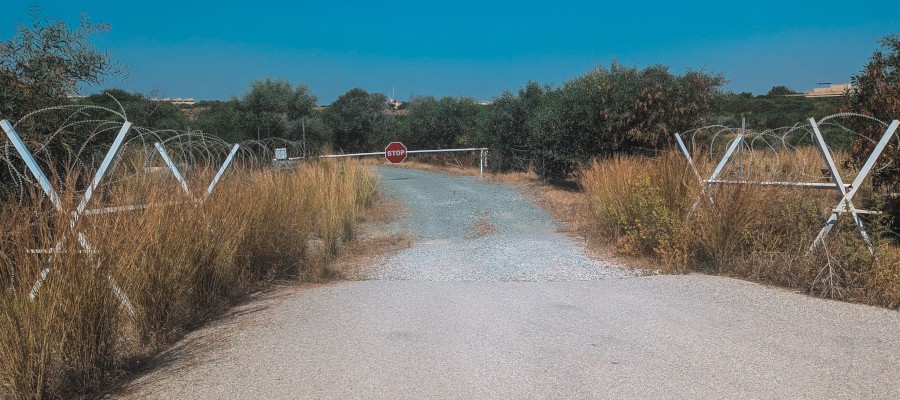
Operational concepts typically provide for buffer zones between the approved flight area and restricted areas. With regard to large drone swarms for light shows, the entire process requires a significant amount of planning and lead time to obtain an operating permit (Photo: george – Adobe Stock)
Information Security in U-Space
In addition to purely flight safety aspects, UAS operators must mandatorily integrate compliance with the European General Data Protection Regulation (GDPR) as a fixed prerequisite for the processing of personal data within the scope of their operating authorizations under the European Drone Regulation (EU) 2019/947. However, EASA has chosen not to introduce a dedicated data protection compliance gate. The specific information security requirements for U-Space will take effect with the second part of Part-IS as of February 22, 2026.
The use of high-resolution sensors, such as 360-degree LiDAR systems, exacerbates data protection concerns in practice. For example, it is legally required to implement the principle of “Privacy by Design” as soon as personal data—such as faces or license plates—is collected. Since the supervisory authorities have not mandated any specific technical control mechanisms or methods—such as on-screen or sensor-based blurring directly on the device (edge-based blurring)—a regulatory gap remains. Operators must close this gap on their own responsibility by implementing adequate organizational and technical measures.
More News



Standardized Compliance Services
The ongoing digitization of EASA processes—reflected in offerings such as eSORA and the Drone Rule Navigator—is leading many UAS users to outsource the preparation of SORA 2.5 risk assessments and the associated documentation to specialized consulting firms. At the same time, as SORA 2.5 and U-Space regulations are consolidated, operators are beginning to standardize their internal processes for technologically demanding missions. A typical example of this is coordinated inspections of bridge structures involving multiple aircraft. Although standardized compliance services and consistent workflows are increasingly being established through eSORA, EASA still does not have a real-time SORA dashboard at the fleet level. SORA thus continues to function solely as a safety assessment tool prior to a mission.
In summary, it is evident that the European regulatory framework is moving unequivocally toward risk-based and software-supported operations through the implementation of SORA 2.5 and the U-Space safety requirements. In conjunction with the European Commission’s Drone Strategy 2.0, a defined framework for authorization processes is emerging that establishes flight safety, information security, and societal acceptance as fundamental prerequisites for the scalable deployment of drone swarms in Europe.
Lead photo: Richard Carey – Adobe Stock
If you use Google as your search engine, you can set Drones as your preferred source so that our content appears more frequently in your search results. Add Drones as your preferred source.

-City-outdoor-3.jpg)