NATO Initiative “Science for Peace and Security” Tests Drones
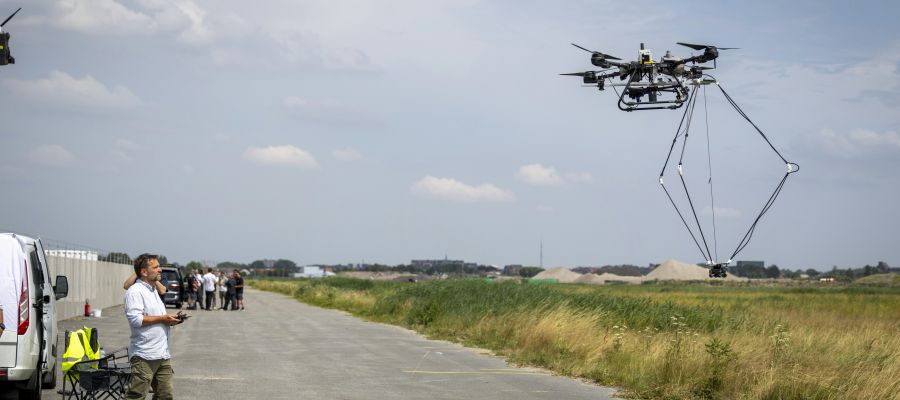

As part of the NATO Initiative “Science for Peace and Security” (SPS), international research teams, professionals from the defense alliance, and representatives from several member states gathered in mid-July at the UxS test site “Unmanned Valley” in the Netherlands. The highlight of the event was live demonstrations of new application scenarios for uncrewed aerial and ground systems. Additionally, the final part of the SAPIENCE Challenge competition took place in the two days prior.
How can uncrewed, (semi-)autonomous systems be utilized for security-related missions? Possible answers to this important question were provided in various practical demonstrations. For instance, results from the MINESEYE project were presented, which seeks new and particularly reliable methods for drones to assist in the identification and classification of unexploded ordnance and munitions remnants. This is an extremely important capability, especially in light of the war in Ukraine, but also considering previous military conflicts, as it has the potential to save many lives.
Navigation Without GNSS Connection
The demonstrations marked the beginning of a two-day workshop focused on autonomous decision-making processes, modern sensors for environmental detection, and reliable navigation under conditions of electronic warfare and without active GNSS connections. Systemic vulnerabilities and future tasks were also identified and analyzed to leverage synergies among the various SPS research projects.
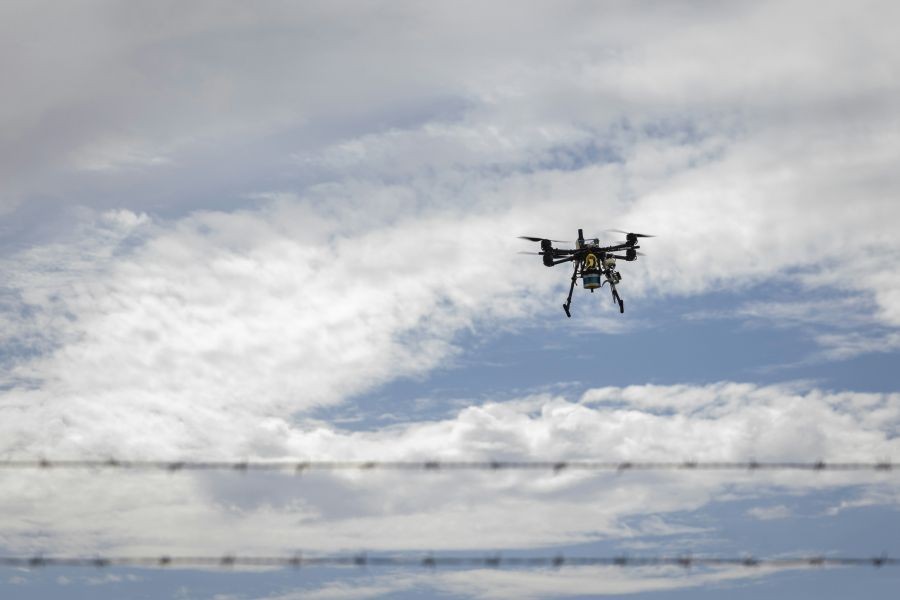
At the SAPIENCE Challenge, student teams from Europe and the US competed against each other
Previously, the third and final part of the SAPIENCE Challenge competition took place in “Unmanned Valley.” Funded by the NATO “Science for Peace and Security” program, student teams from City St George’s, University of London (England), the University of Alabama (USA), Delft University of Technology (Netherlands), and the University of Klagenfurt (Austria) competed against each other. The overarching goal of the “Sense & Avoid – a cooPeratIvE droNe CompEtition” was to develop concepts and technologies to deploy a group of autonomously operating drones for rescue and relief efforts in the aftermath of natural disasters and accidents, entirely independent of global satellite navigation systems. In various operational scenarios, the aircraft acted fully autonomously, communicating with one another, self-assigning tasks within the swarm, and avoiding obstacles and collisions without human intervention. Furthermore, the systems independently evaluated the prepared situational profiles based on sensor data to locate survivors and allocate relief goods according to urgency.
The Win Went to London
While the kickoff in London focused on indoor scenarios, the second phase in Huntsville, Alabama, shifted outdoors. The final event in the Netherlands aimed to achieve a seamless transition between indoor and outdoor searches. Ultimately, the team from City St George’s, University of London emerged as the overall winner of the three competitions.
More News
Images: NATO
If you use Google as your search engine, you can set Drones as your preferred source so that our content appears more frequently in your search results. Add Drones as your preferred source.