
In recent years, a particular expression has begun to circulate with increasing frequency in procurement discussions, regulatory consultations, and cross-border industrial partnerships: „Non-China“. Although rarely codified in formal aviation policy, the term functions as an emerging industrial filter. What was once a market defined primarily by technical performance is now equally shaped by considerations of origin, supply chain exposure, data governance, and political alignment.
This development should not be reduced to momentary geopolitical tension. It reflects the institutionalization of risk within industrial decision-making. The global drone industry is undergoing a structural transformation in which trust is no longer assumed but actively constructed.
From innovation to sovereignty
For more than a decade, technological innovation served as the principal driver of competitive advantage in the drone sector. Rapid iteration cycles and performance breakthroughs determined market leadership. Innovation remains indispensable, yet it is no longer sufficient as the sole organizing principle of industrial competition. Increasingly, regulatory alignment and strategic autonomy are reshaping the landscape.
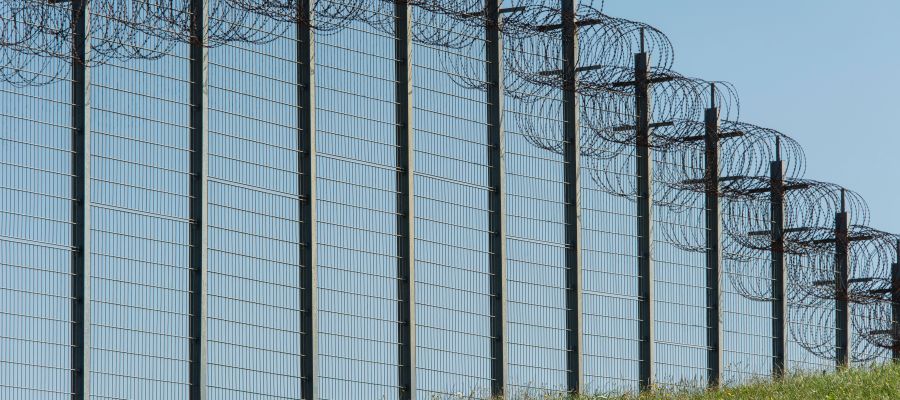
On a long-term perspective, ideological fences and technological boundaries prevent progress
In the United States, the Blue UAS framework has formalized a curated supplier ecosystem aligned with national security considerations. Within Europe, the recently introduced Trusted Drone initiative signals the consolidation of strategic autonomy within civil aviation governance. Across parts of Asia, localization incentives and supply chain screening mechanisms are becoming embedded in policy design.
What began as informal risk awareness has evolved into structured trust regimes. Drone sovereignty, once implicit, is becoming institutional.
This institutionalization operates across three interconnected dimensions. The first concerns hardware and supply chains, including the geographic origin of components and systemic manufacturing dependencies. The second relates to data and cloud governance, particularly the jurisdiction under which operational data is stored and processed. The third encompasses operational sovereignty: certification pathways, regulatory oversight, pilot qualification, and incident investigation mechanisms. The significance of initiatives such as Europe’s Trusted Drone framework lies not merely in certification refinement but in acknowledging that these dimensions must be addressed coherent…
If you use Google as your search engine, you can set Drones as your preferred source so that our content appears more frequently in your search results. Add Drones as your preferred source.