Volz servos enable rapid VTOL transition in Jetoptera’s FTC-250
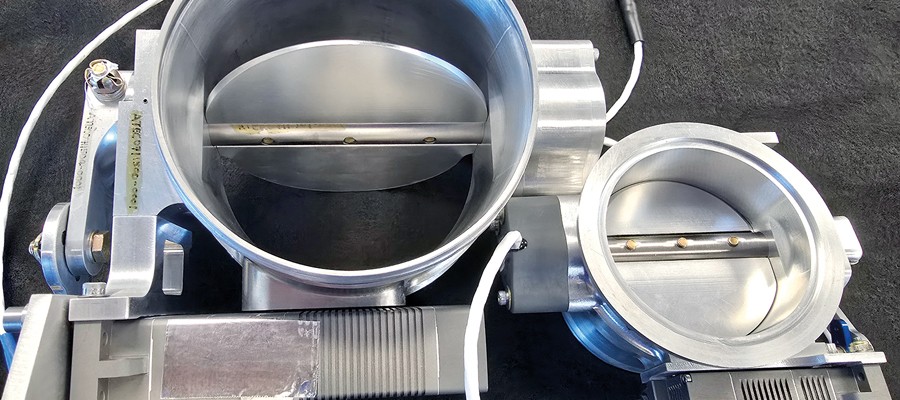

Powerful, quiet and controllable thrust in VTOL: Jetoptera’s FTC-250 powertrain is based on a tech conceived long ago that in recent years overcame limitations of enabling technologies: Fluidic propulsion using compressed air with Coandă-type thrusters. Summarized: Jetoptera controls the air distribution downstream of the compressors to control the flight. This means that the Volz servos, which feature opening and shutting valves and rotating thrusters, are the main way the aircraft is controlled in flight.
So, Volz Servos is at the technical heart of Jetoptera’s propulsion system. Without this reliable, high-bandwidth actuation, Jetoptera’s Fluidic Propulsion Concept would simply not be controllable.
Jetoptera’s advantage comes from using fluid dynamics instead of blades to generate quiet, efficient VTOL thrust. An unconventional propulsion system that has to be controllable, safe, and fast-responding in real flight. That’s where Volz servos deliver the precision actuation:
- Operate butterfly valves that precisely meter compressed airflow to each thruster
- Rotate rear thrusters (≈100° range) to enable transition between vertical and horizontal flight (and back) within six seconds
- Shut off forward thrusters during wing-borne flight
- Actuate high-speed relief valves (HSVs) to prevent compressor stall
- Provide redundant actuation via duplex servo architectures for safety
„This fluidic propulsion is a really powerful system and we are proud that Jetoptera chose Volz for actuators. A reliable redundant duplex design and high-torque, rugged construction are a matter of course in aviation“, says Volz CEO Phillipp Volz. „But what really matched with Volz and Jetoptera was the fast response of about 50 ms control loop response, the minimal EMI and cabling and the digital bus control with telemetry.“
This digital command interface with telemetry feedback of the Volz actuators was a key fact for Jetoptera: „We’re not driving them with traditional, analog, PWM signals – driving them with a single digital bus is optimal for reduced cabling and EMI shielding needs“, explains experienced aerospace engineer Gene Katz, consultant to Jetoptera, in a comprehensive technical article at uncrewed-systems.com by Rory Jackson. “Plus, with the telemetry feedback, we get positive information for precise command and control and, overall, their control loop response time is excellent: the quality of each valve’s flow control is proportional to the speed of its servo. We don’t get rotary or prop inertia problems, so we have test data proving we can do 50 ms signal responses and control changes in VTOL, compared with the 500–1000 ms VTOL flight responses of conventional electric quadrotors.”
Photo: Jetoptera
The Drones PR portal features news and reports from companies, universities, and associations. The respective organisations are responsible for the content of their press releases.