Millions in funding for fawn rescue
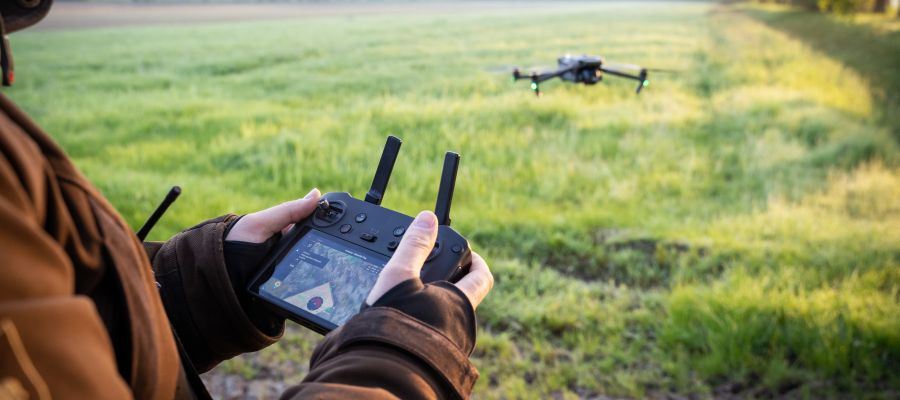

For fawns and other young animals seeking refuge from predators in tall grass, spring and autumn mowing pose a deadly threat. As in previous years, the Federal Ministry of Agriculture, Food, and Regional Identity has therefore launched a funding program for the purchase of drones equipped with thermal imaging cameras. New this year: for the first time, the subsidized UAS may also be used to fight animal diseases.
Drones with thermal imaging technology currently represent the most effective and time-saving method for wildlife rescue. For several years, the German Federal Government has therefore supported animal welfare organizations and hunting associations in using modern UAS technology to survey mowed areas. In 2026, the Federal Ministry of Agriculture, Food, and Regional Identity is providing a total of 2.1 million euros for this purpose. Applications can be submitted until June 30, 2026. To reduce bureaucratic hurdles and enable faster processing, the ministry is this time relying on fixed-amount funding of 3,000 euros per device.
Effective search using thermal sensors
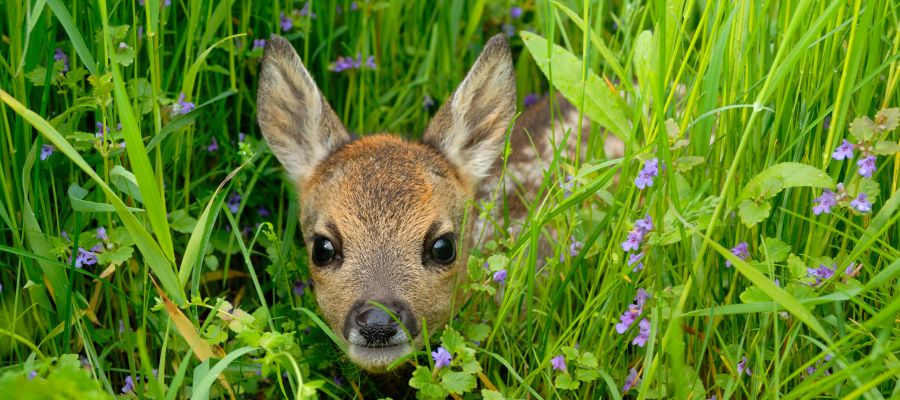
Especially in spring, fawns seek shelter in tall grass, making them virtually invisible to farmers during mowing. Since the young animals do not flee from danger in their first few weeks of life, but remain motionless on the ground, mowers pose a deadly threat. „Wild animals are often not visible from the driver’s cab of large tractors. This proves fatal for many fawns“, explains Alois Rainer (CSU), Federal Minister for Agriculture, Food, and Regional Identity. „With our million-euro funding, we are providing effective help and thereby also promoting animal welfare. I strongly advocated for continuing this funding this year despite the tight budget situation. A huge thank you also goes to the volunteers and the hunting and game management associations who rescue the fawns on site – you are indispensable!”
Animal disease control
The target group for this funding includes registered district hunting associations, district-level hunting associations, and specialized fawn rescue organizations at the regional or local level. A significant change in the current guidelines concerns the scope of application for the funded technology. In the future, the devices may be used not only for wildlife rescue but also to support the control of animal diseases. This requires explicit authorization from the responsible animal disease control authorities.
Professional preparation as a success factor
Successful UAS deployment requires not only high-performance technology but also thorough organizational preparation. The online portal Drohnen-Camp (Drone Camp) supports associations and volunteers with a structured information platform. Francis Markert, co-founder of Drohnen-Camp, emphasizes that fawn rescue is not a spontaneous flight but requires careful training and legal compliance. Mandatory requirements include registration for operators, a valid EU certificate of competence, and appropriate liability insurance. Coordination with farmers and clear procedures during operations are crucial for the success of rescue efforts. Interested associations should use the coming weeks to finalize their applications and operational plans well before the start of the mowing season.
The continuation of this funding program ensures sustained demand in the mid-range segment of drones equipped with thermal sensors. For manufacturers and retailers, this translates into stable sales opportunities in a specialized market increasingly characterized by professional volunteer structures. Furthermore, the expansion of drone applications for animal disease control demonstrates a trend toward multifunctionality, which further strengthens the acceptance of unmanned systems within government agencies.
At the same time, the increasing professionalization of fawn rescue is driving demand for specialized training programs and software solutions for operational planning. This presents new opportunities for service providers in the drone sector to create added value beyond mere hardware sales and to deepen the integration of drones into agricultural and governmental processes.
Images: Adobe Stock / Countrypixel and Adobe Stock / Ana Gram