While some Western armies struggle to steer toward an unmanned military future, Ukraine has, out of necessity, become a driver of innovation. Both technologically and tactically. Drone pilots like Mischa and his unit persistently target the Russian attackers’ supply logistics behind the front lines with small strikes. At the same time, Ukrainian long-range drones damage Russian oil refineries.
In Kupiansk, a city in the Kharkiv Oblast in eastern Ukraine, Mischa stands at the entrance of the bunker under a camouflage net. Behind him, a dark tunnel stretches under a strip of forest. Looking up the steps, the horizon ends in a radiant blue sky, streaked with clouds. A good view for a drone pilot. That applies to the 38-year-old himself. „But also for the enemy“, he explains. In his hand, he holds a scanner.
Three small antennas on it scan the sky, searching for radio frequencies that control the drones. If one of the flying objects is close enough, Mischa can see on the screen what the enemy on the other side of the front line sees. Now only a black-and-white noise flickers. „All clear, nothing in the sky“, says Mischa.
Preparing the transport drone for launch
Then he rushes up the stairs. Ulyana follows behind. Both hurry to a nearby group of bushes. There, under the tree crowns, stands a powerful drone. A transmitter is loaded on it. The two grab it and carry the UAS to a grassy area directly in front of the bunker. With quick hands, the duo makes the drone ready for launch. Then they sprint back into the bunker. Not to be visible for too long. Two minutes later, they sit next to their comrade Mykola in a cramped underground concrete capsule. Several screens are lined up before them. Mischa starts the drone. On the screen, the camera shows fields, forests, and meadows near the contested city of Kupiansk. „We are about 15 kilometers away from the Russian lines“, explains Mischa.

The work of UAS pilots requires full concentration
A few hundred meters away, another transport drone takes off. „A mother drone“, comments Mischa. In another bunker, another drone team is seated. The „Vampyr“ carries a small kamikaze drone toward the Russian positions. Mischa’s drone, in turn, amplifies the radio-frequency signals used to control the FPV drone. The mother drone flies just close enough to the Russian units to stay out of range of fire. Then the small drone, equipped with an explosive charge, is released. „This way, the FPV drone achieves a greater range, allowing it to strike deeper targets in the rear“, explains Mischa. The FPV drone is piloted by Ulyana, who wears a VR headset.
Ukraine has a few cards up its sleeve
The drone backpack system is a good example of the often pragmatic ingenuity of the Ukrainian defenders. They not only have to confront Russian invaders but also listen to the U.S. President and various TV commentators claim that their cards are too weak to win. However, at present, the Ukrainian army indeed has a few trump cards. Their long-term, step-by-step tactics are paying off. With countless airstrikes, the defenders are gradually dismantling the Russian army’s rear-area supply infrastructure. Fuel depots, supply trucks, radio stations, munitions depots, artillery, and air defense systems are all being targeted. The result: Russia has to continuously withdraw its logistical facilities.
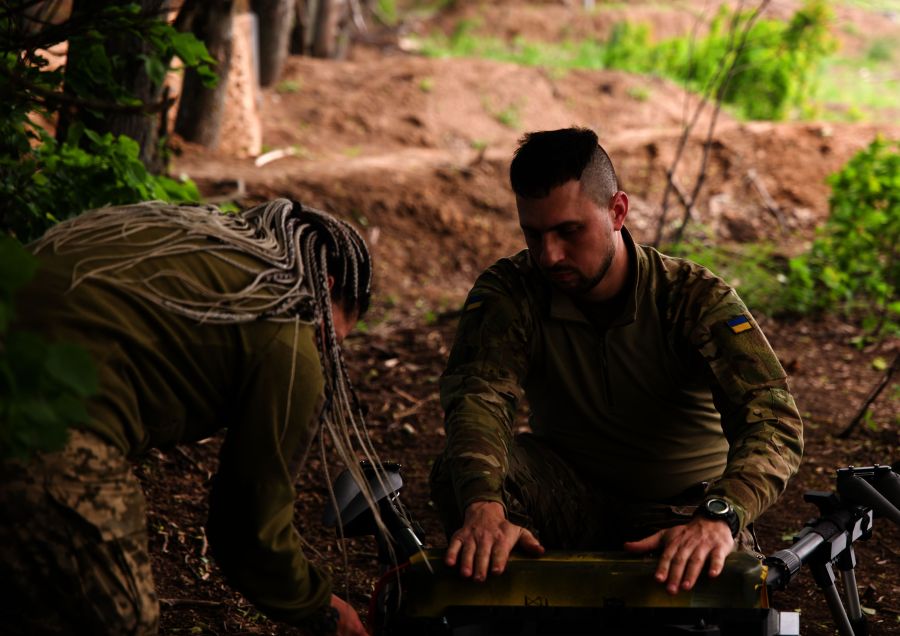
Mischa monitors the transport drone carrying a transmitter to boost the control signals for an FPV kamikaze drone
The development of drones has become a decisive factor in the war. Many observers see Ukraine at an advantage here. A recent introduction is the „Behemot“, a medium-range kamikaze drone with a range of over 290 kilometers. It flies extremely low, making it difficult for Russian air defense to shoot down. The weapon carries two warheads: 40 kilograms in the nose and 35 kilograms in the tail. According to Ukrainian sources, it is already in mass production. The „Nemesis“, a heavy attack and mine-laying drone, has a range of up to 30 kilometers. Its special advantage is that it uses Starlink satellite links rather than traditional radio frequencies, which Russian jammers cannot block.
Decentralized production infrastructure
While Russian drone development is rigid and centralized, manufacturers and developers scattered across Ukraine are currently building an innovation advantage. This makes them interesting partners for German investors as well. Elon Musk’s decision to deny Russian forces access to his Starlink satellites further complicates the situation for Moscow’s troops.
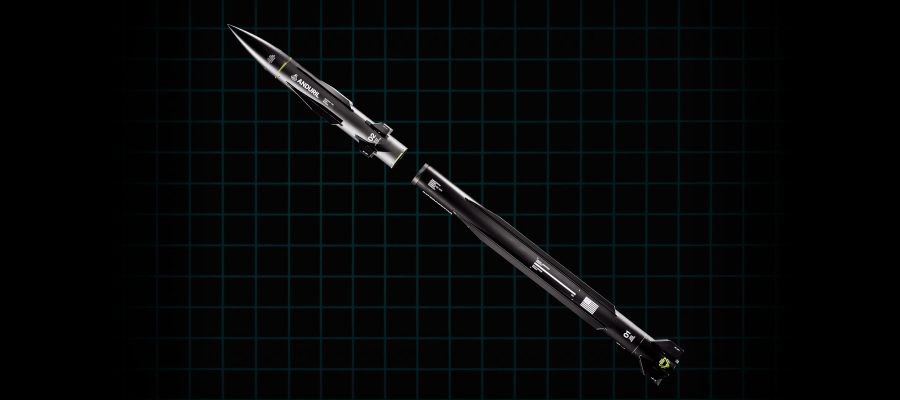
The list of Ukrainian long-range drones is extensive: „Liutyi“ is regarded as the crucial backbone of Ukraine’s deep strikes. The missile drone „Palianytsia“ flies at speeds of up to 500 kilometers per hour and is primarily used for attacks on military airfields. The „Scythe“ has a range of up to 950 kilometers. It is a pragmatically designed flying system with a propeller and a plywood body, and its mass deployment overwhelms air defenses. The Aeroprakt A-22 is a modified light aircraft capable of covering over 1,000 kilometers with a large payload. Then there is the long-range weapon „Flamingo“. The cruise missile can strike targets at a range of up to 3,000 kilometers. Additionally, there is an increased use of unmanned ground vehicles as weapon platforms or material transporters. Since the beginning of the Iran war, Ukrainian air defense drones have become sought after even in the Gulf states: just like in Ukraine, they hunt down Shahed drones there.
Refineries damaged by drone attacks
The long-range weapons aim to dry up Putin’s source of income: Russia funds its war of aggression primarily through the sale of oil and gas. At least 24 of the 33 largest Russian refineries are said to have been damaged by drone attacks. The strikes target the expensive crude oil distillation processes. As a result, Russia has lost up to 37 percent of its refining capacity, leading to losses in international sales. Fuel shortages have repeatedly occurred in Russia. Recently, a refinery in Moscow was affected. For the ruler in Moscow, the fact that his own capital is no longer safe and that civilian airports must repeatedly suspend operations represents a significant loss of face.
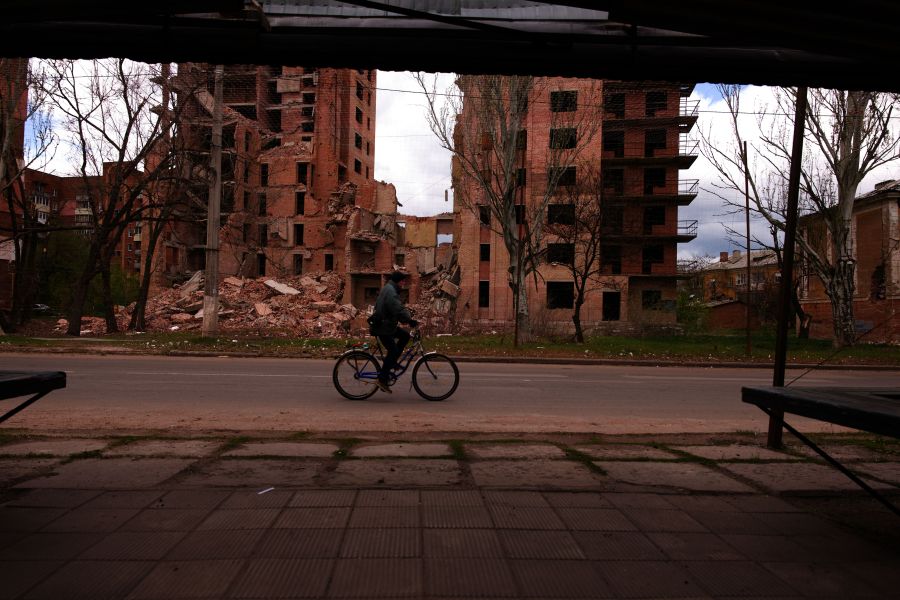
Sloviansk is among the cities in the Donbas that Russia aims to capture. To do this, the aggressor is advancing under immense losses
Meanwhile, the Russian economy is faltering, and public debt is rising. According to estimates by the Federal Intelligence Service, the war of aggression against the neighboring country now accounts for almost half of the state budget. Putin hoped for a quick victory over Ukraine in February 2022. By now, the Russian population is also feeling the consequences of the long-standing war.
Cities turned into ruins
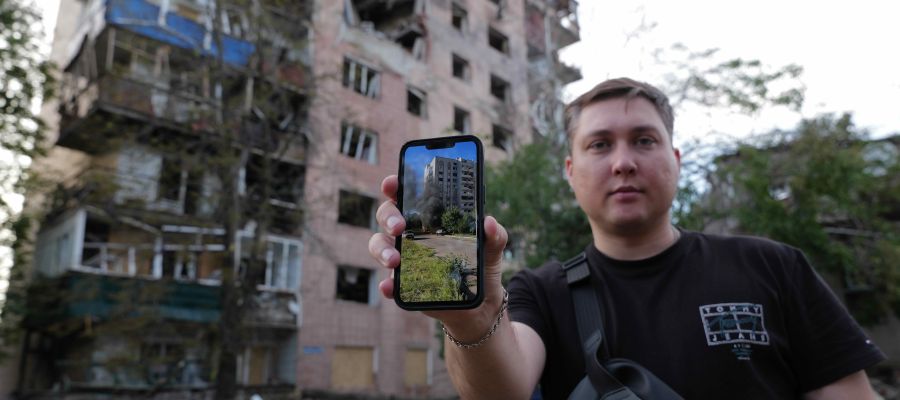
„In the Donbas, the Russians are advancing at a snail’s pace“, explains Mischa. But there is no joy in his voice. Mischa fled with his mother from the Russian occupation of Crimea. „I know what it means to lose your home“, he says. Bakhmut, Chasiv Yar, Pokrovsk, Kostiantynivka, Vovchansk – these names conceal some of the cities that Russia has turned into fields of ruins. The residents were forced to flee. In frontline areas, Ukrainian reports indicate that around 1,200 kilometers of roads are protected by net tunnels. They are supposed to shield against attacks by kamikaze drones. Behind the front line stretches a veritable death zone that extends 20 to 25 kilometers deep into the hinterland.
The capture of Kostiantynivka, Sloviansk, and Kramatorsk is likely the target Russia will aim for in its next offensive. To achieve this, Putin sacrifices up to a thousand soldiers every day: severely wounded or killed. „It’s unbelievable how brutally Putin lets his army proceed. He is indifferent to his own losses. The losses of our people do not matter to him either. It pains me what the Russians are doing to our Ukraine“, says the drone pilot.
More News

Race of drone developers
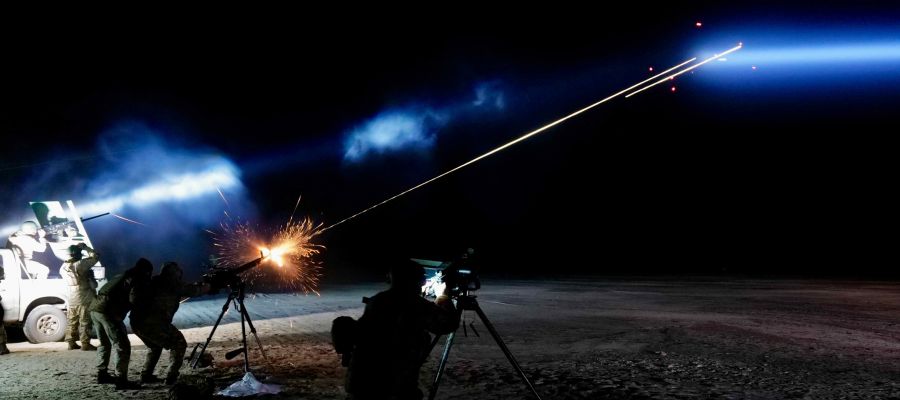
Ukraine’s successes are met with even greater brutality from Putin. Heavy attacks with drones and rockets on Kyiv are just a few examples. Mischa knows that Russian drone developers are certainly not standing still. Recently, Ukrainians shot down an optimized Shahed drone that had a ready-to-launch missile on board. If either of the warring parties manages to develop an affordable, easily transportable, and efficient laser weapon for drone interception, it would have far-reaching consequences.
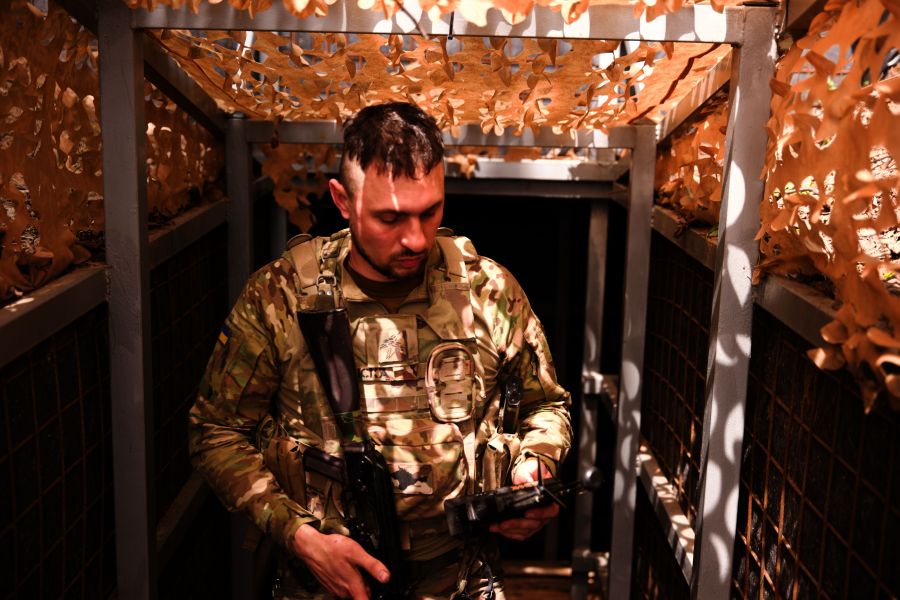
The scanner indicates when a drone is in the air. At least when it is controlled by radio waves
Ulyana removed her VR goggles. Her face looks tired. She had just guided a drone to its target: a Russian position in a wooded area – similar to their own. It was the second hit on the same target. Is it destroyed? The position is well-secured by earth and trees. „Hit after hit until the task is complete. We are unyielding. That is part of our identity as Ukrainians. Putin has underestimated it. He cannot break us.” The nearby Kupiansk is a good example for Mischa. Russia had declared it captured. It is now entirely back in Ukrainian hands.
If you use Google as your search engine, you can set Drones as your preferred source so that our content appears more frequently in your search results. Add Drones as your preferred source.