X-MAS Drones: How UAS are supposed to help in Christmas tree cultivation
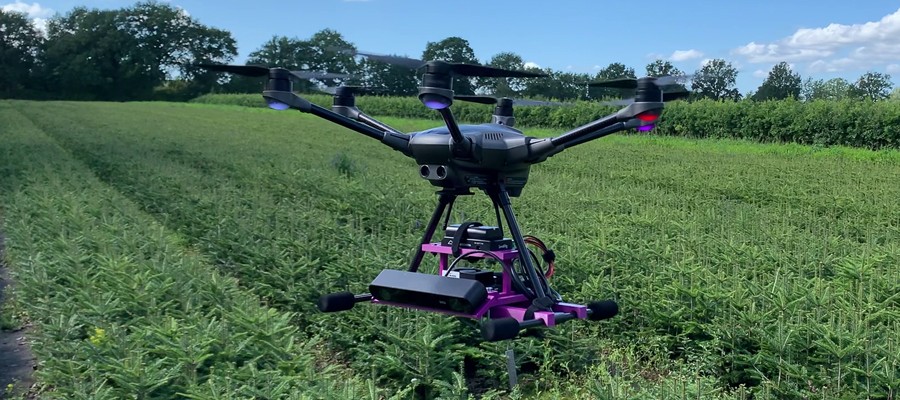

Those who cultivate Christmas trees to sell as holiday decorations need a lot of space and patience. After all, it takes about ten to fifteen years for a seedling to grow into a tall fir tree measuring 1.80 to 2 meters. However, only a few people realize that this process is quite labor-intensive and requires a significant number of staff. The X-MAS Drones project focuses on how drones and artificial intelligence can help make the entire process more efficient and sustainable.
For most people, the festively decorated Christmas tree is part of beloved holiday traditions. What decorates living rooms and shopping centers for a few days or weeks has been cultivated painstakingly over years. Because to get well-grown and vibrantly green firs and spruces in sufficient quantities, a considerable amount of resources must be invested. In an era of growing ecological awareness and heightened customer price sensitivity, Christmas tree producers are seeking ways to reduce costs and improve efficiency. Opportunities that drones could offer.
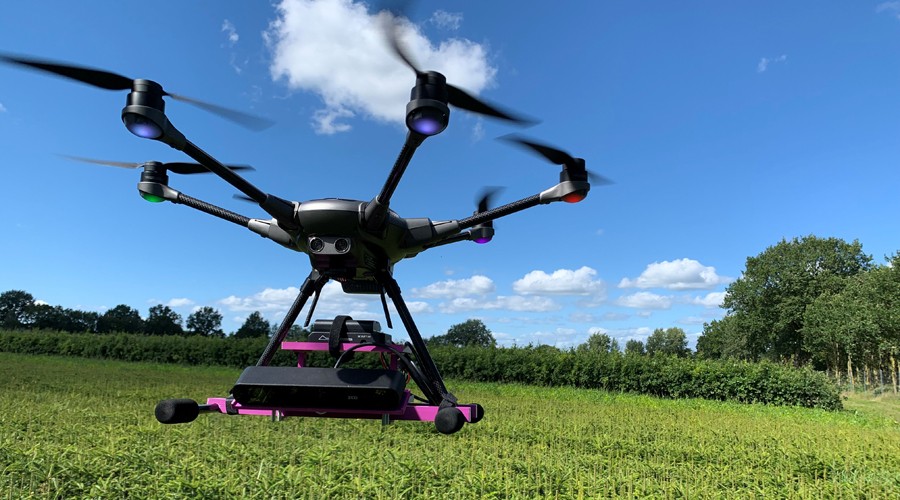
Crop control and inventory monitoring are essential steps in the cultivation of future Christmas trees to ensure yield and quality.
Make cultivation more efficient
Under the direction of Prof. Dr.-Ing. Stephan Hußmann from the West Coast University of Applied Sciences in Heide, it is now planned to test over the next three years how Christmas tree cultivation can be made more sustainable and efficient using artificial intelligence and UxS technology. The project, funded with nearly 500,000 euros from the European Innovation Partnership (EIP) „Productivity and Sustainability in Agriculture Schleswig-Holstein“, involves not only the West Coast University of Applied Sciences but also several cultivation farms and the Schleswig-Holstein Chamber of Agriculture.
As part of „X-MAS Drones – Drone-Based Cultural Activities with Christmas Trees using AI Processing“, an initial GPS-based survey of the Christmas trees will be conducted with UAS assistance. The precise location data will then be transmitted to mowing robots to automate undergrowth maintenance. This approach aims to improve soil protection with fewer personnel required. In turn, this positively impacts nitrogen retention in the soil, reducing the need for fertilizers in an ideal case. At the same time, more climate-damaging CO2 is sequestered, and soil erosion is prevented.
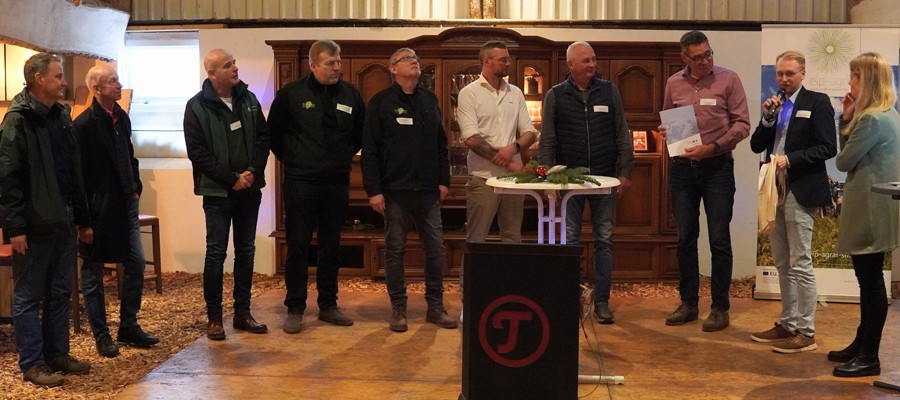
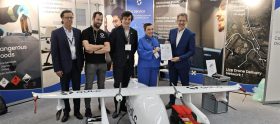
Beginning of December, the funding notice was handed over to the project partners, who will jointly advance the research project X-MAS Drones over the next three years (Image: MLLEV/Natascha Haag)
Situational intervention
With regular drone flights, growth control should also be optimized and situational intervention enabled if signs of deficiency or pest infestation are detected at certain locations. Specialized AI software is to be used to accelerate the analysis of the image data without the need for qualified personnel. Ideally, this approach not only reduces fertilizer or pest control agent use but also allows for preventing other specimens from becoming infected early, which could ultimately negatively impact yield. Additionally, it may be easier to identify from above whether individual specimens are obstructing growth or if the stand needs to be thinned to ensure quality features such as shape and density in future Christmas trees. Therefore, it will be interesting to see how the combination of unmanned aerial and ground systems, together with AI-based software solutions, can help improve efficiency in Christmas tree cultivation.