Fully automated bird’s nest monitoring with drones
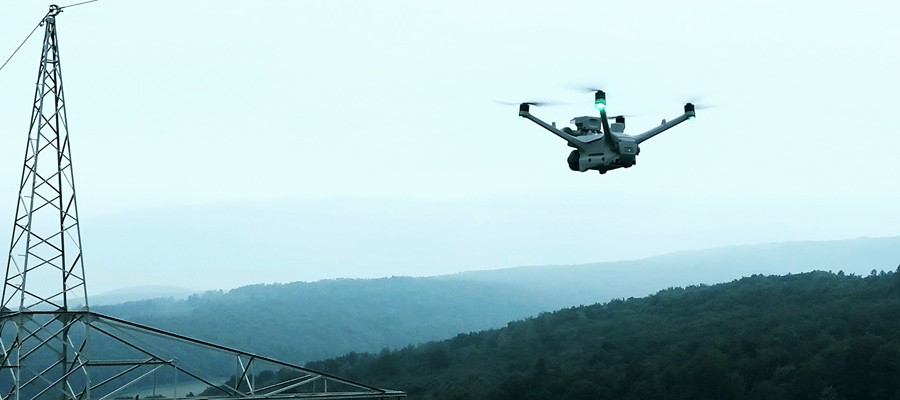

Both the EU Bird Protection Directive and the provisions of Section 39 of the Federal Nature Conservation Act are intended to protect wild animals from human interference. What helps endangered species on one side can, on the other side, hinder important infrastructure projects. To prevent nesting birds from delaying construction of a high-voltage power line in the Weser Uplands, the 60-kilometer-long route is inspected every two days with full automation, assisted by drones.
That decentralized UAS stationed in drone hangars have great potential for the smooth operation of linear infrastructure is not a new realization. Regular flights over railway tracks, pipelines, or high-voltage power lines allow for early detection of risks and the implementation of appropriate countermeasures before more significant damage, lengthy outages, and costly repairs occur. Until now, the focus has primarily been on wear and tear or damage caused by weather conditions. In the Weser Uplands, other potential „disturbances“ are currently in the spotlight.
A construction halt is imminent
Since the masts of high-voltage power lines are popular spots for birds to build nests at lofty heights and away from most predators, they raise their young. What is essentially no difficulty for the operators of the routes can quickly become a real problem during construction and modernization projects. Once a clutch is located at the site, work must often be halted in accordance with § 39 of the Federal Nature Conservation Act and the EU Bird Protection Directive. And this can be the case for weeks, until the fledglings leave the nest.
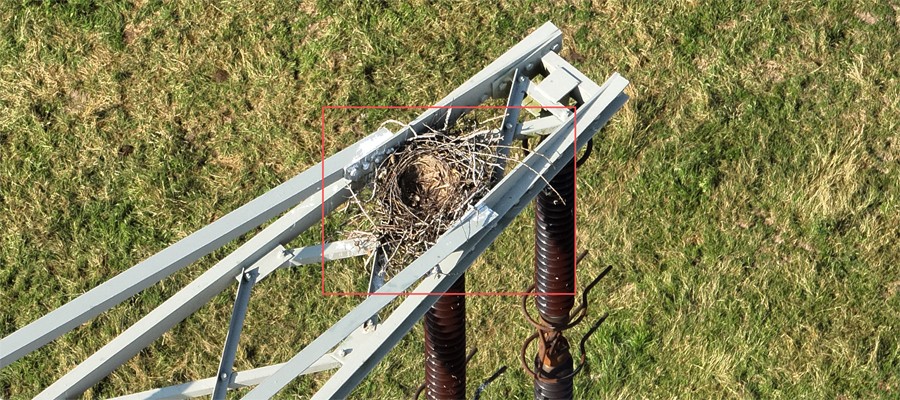
Once a nest is first occupied and a clutch is inside it, months of construction stoppages may follow
Since a regular inspection of the masts would be simply too labor-intensive, FlyNex and U-ROB, in collaboration with the company Omexom, which specializes in the construction of energy supply systems, came up with an idea. Along a 60-kilometer-long 380-kV high-voltage power line in the Weser Uplands, 140 power masts are currently fully automatically inspected by drone every two days — a schedule and route length that, according to the consortium, have been implemented this way for the first time in Germany. The system is based on five strategically positioned DJI Dock 2 units, ensuring seamless coverage of the entire route. The drones stationed at each deployment site perform automated flights beyond visual line of sight (BVLOS), monitored by the U-ROB team from a central control station. The FlyNex mission planning software serves as the central end-to-end platform for coordinating all subprocesses, from route definition and data collection to reporting.
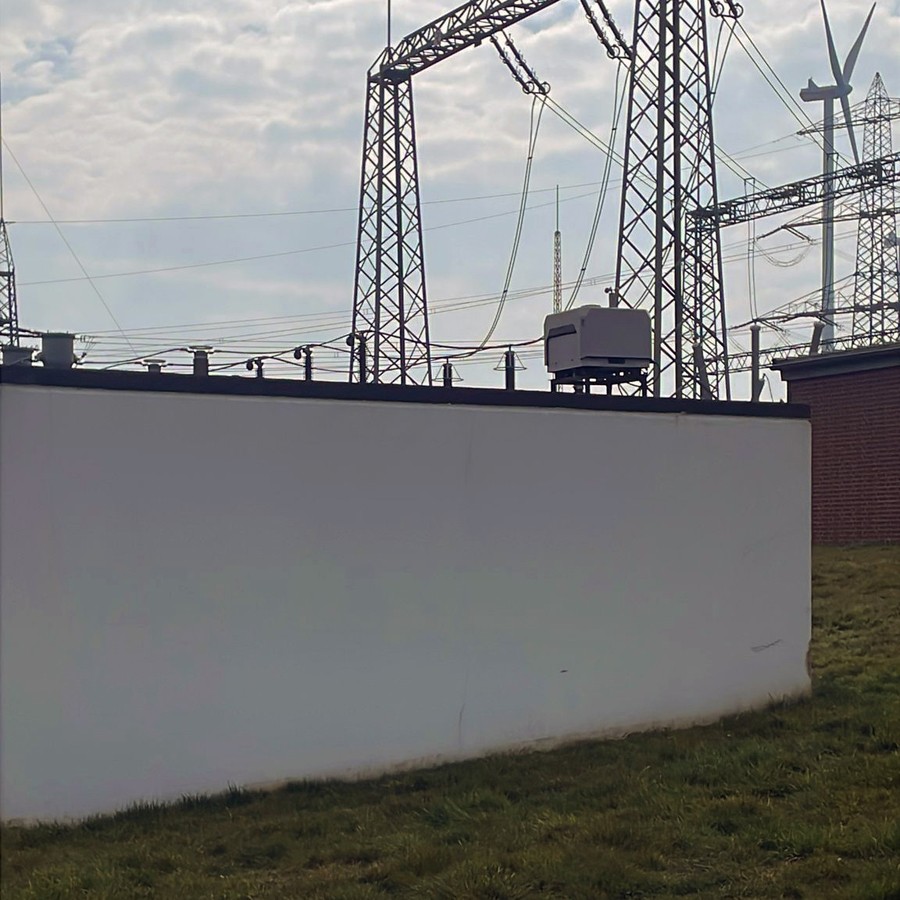
With five DJI Dock 2 systems, all 140 power poles along a 60-kilometer stretch can be efficiently surveyed in terms of time and cost every two days
„Groundbreaking for the industry“
In order to derive a standard procedure from the pilot project, the collected image data will be used for training the new FlyNex Custom AI – a specialized AI solution that enables significant time savings in data analysis and the subsequent decision-making process through automated analysis. Starting next year, evaluation and reporting will also be fully automated, and potential nesting sites will be identified in real time. This allows early detection of nest building and the avoidance of costly construction delays during the breeding season, from March to September. „This solution demonstrates impressively what is already possible with modern drone technology today. The combination of high frequency, extensive range, and full automation is groundbreaking for the industry,” says Thilo Gronholz, Sales Director at Omexom Germany.
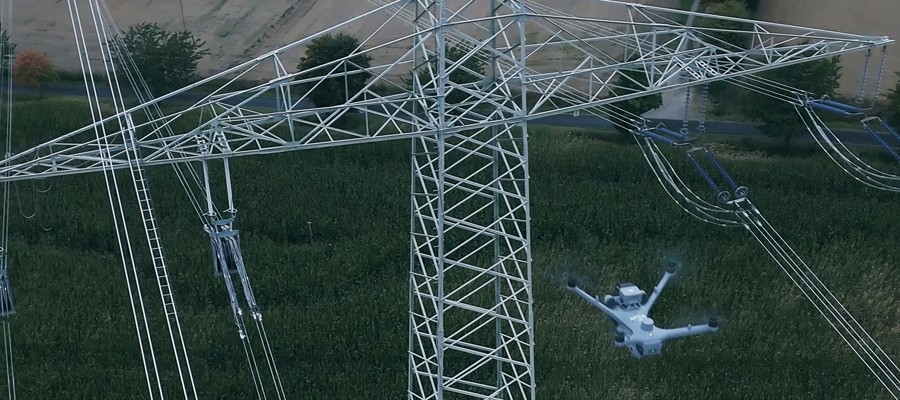
Not only the flight, but also data analysis is already being carried out almost entirely automatically