Aviation law lags behind technology
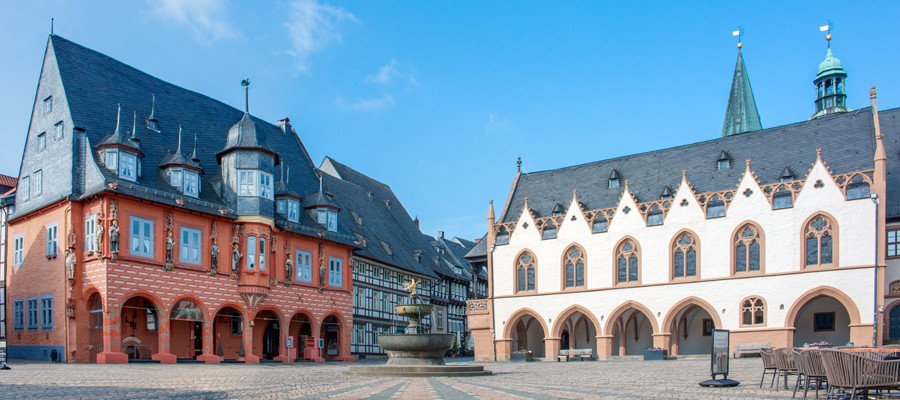

Every year in the final week of January, experts from public administration, authorities, ministries, and the judiciary gather in Goslar for the German Traffic Law Conference (Deutscher Verkehrsgerichtstag). While the focus traditionally lies on road traffic, rail, maritime, and aviation transport are included in the program on a rotating annual basis. In 2026, discussions centered on how drones could be better integrated into the existing legal framework. The outcome: concrete demands addressed to the EU and national lawmakers.
With the rapid spread of automobiles in the mid-20th century, growing discrepancies between existing traffic laws and technological advances became increasingly apparent. The German Traffic Law Conference was established in Goslar as a forum to address these issues with broad participation from legal practitioners.
A similar situation appears to be emerging regarding the integration of uncrewed systems into the overall mobility ecosystem. Here, too, it can be observed that technological reality has significantly outpaced the regulatory framework – and that the German Academy for Transport Sciences is striving to close this gap.
Shared airspace
For this reason, the organizing association of the German Traffic Law Conference placed the topic „How many and what kind of drones can the airspace accommodate?” on the agenda for its 64th edition. The discussions within Working Group VIII aimed to develop recommendations on how lawmakers could adequately address the interests and specific characteristics of both manned and unmanned aviation within a shared airspace while maintaining a high level of aviation safety.
The thematic framework was established through three presentations. Corinna Bleienheuft of the Federal Bureau of Aircraft Accident Investigation (BFU) in Braunschweig addressed the fundamental question of how drones can be integrated into existing airspace structures. She emphasized the need to harmonize the internal relationship between national regulations and European requirements in order to eliminate existing ambiguities and a lack of precision. In addition, communication and coordination processes between manned and unmanned aviation, as well as between the respective traffic management organizations, must be designed to ensure safety and reliability.
Dr. Judith Reuter, Head of the Aviation and Northern German Cooperation Division at the Hamburg Ministry of Economic Affairs and Innovation, described from the perspective of a regulatory and enforcement authority both the opportunities and the challenges posed by European regulations. While these rules open up many freedoms and areas of discretion, even authorities that choose not to actively exploit them must nevertheless develop and maintain the necessary expertise and capacities over the long term. Furthermore, the successful integration of drones into the lowest layers of airspace requires careful balancing of competing interests – particularly over urban areas, where airspace is already heavily used. Personnel must be planned for and appropriately qualified to address all of these regulatory options and requirements.
„Government Authority Privilege“
In his presentation, Dr. Oliver Heinrich addressed the question of how the provisions of Section 21k of the German Air Traffic Regulation (Luftverkehrsordnung, LuftVO) – often referred to as the „government authority privilege“ – should be applied and interpreted in operational practice. Under the LuftVO, the operation of UAS by or under the supervision of public authorities does not require approval and may take place without applying the restrictions of Sections 21h and 21i, even over so-called geographical zones, provided the operation serves the fulfillment of official duties.
While current guidance from the Federal Ministry of Transport limits the application of Section 21k LuftVO to state organizations with specific responsibilities for the „protection or restoration of public safety and order“, the aviation law expert from the Cologne-based law firm BHO Legal argued in favor of a broad interpretation of the term „authority“. Such an interpretation, he maintained, would be consistent with existing law and would also yield significant efficiency gains.
In the subsequent discussion, the majority of the approximately 50 members of Working Group VIII at the 64th German Traffic Law Conference followed this line of reasoning. In jointly formulated recommendations to lawmakers, the authors call for the Air Traffic Regulation to be interpreted or amended so that all public authorities can benefit from simplified rules for UAS operations. In addition, it is deemed essential to emphasize the obligation of governmental operators to comply at all times with the safety objectives set out in Regulation (EU) 2018/1139.
Electronic visibility
Another recommendation of the German Traffic Law Conference is that, in light of increasing UAS traffic, binding structures for planning, monitoring, and collision avoidance must be implemented. Accordingly, lawmakers are urged to swiftly transpose the European U-Space requirements set out in Implementing Regulation (EU) 2021/664 into national law. The EU legislator, in turn, is called upon to introduce mandatory electronic conspicuity for UAS. „Geofencing“ could also serve as a measure to enhance safety. Finally, existing EU rules on aircraft right-of-way and collision avoidance – currently tailored to the needs of manned aviation – should be refined to better reflect the specific characteristics of uncrewed aircraft systems.