New national drone testing centre to help unlock Britain’s £45bn drone economy
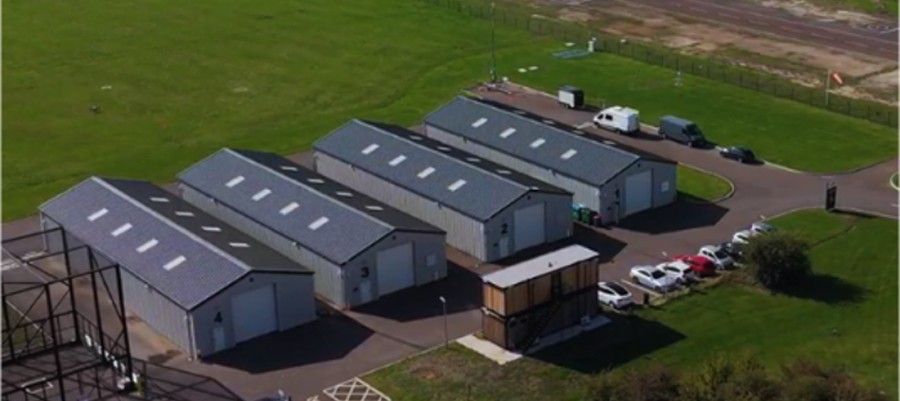

The Satellite Applications Catapult today announced investment in a new national drone testing facility at Westcott Venture Park in Buckinghamshire, backed by £2.25 million from Buckinghamshire Council. The facility will help solve one of the biggest practical barriers facing the UK drone industry: the shortage of accessible places for companies to prove their technology is safe.
Announced at the DroneX trade show in London, the National Autonomy and Drone Innovation Centre (NADIC) will expand the Catapult’s existing Drone Test and Development Centre at Westcott.
The centre’s capabilities will include:
– Position, navigation and timing (PNT) testing facilities that allow companies to assess how systems perform when satellite navigation signals are unavailable, disrupted or manipulated, helping improve resilience across aviation, maritime, defence and logistics applications.
– A Satellite Communications Integration & Test Lab enabling drone and autonomous systems to be validated across satellite, terrestrial and hybrid communications networks, supporting reliable long-distance and beyond visual line of sight (BVLOS) operations.
– A Remote Operations Control Centre where operators can train, simulate missions and validate remote command-and-control procedures under realistic operating conditions.
– A Windshaper system capable of generating precise, repeatable indoor wind conditions, allowing technologies to be tested consistently and safely without being affected by weather conditions.
– A robotic arm that allows automated, repeatable drone testing while reducing manual handling and improving consistency.
– A motion platform that can recreate operations on moving vessels, vehicles and uneven terrain, allowing companies to test systems against challenging real-world scenarios.
The robotic arm, motion platform, and control room are expected to be operational from this autumn, with the full facility anticipated in the second half of 2027.
NADIC is designed primarily for small and medium-sized companies and component builders. These are the firms developing the navigation, sensing, communications and autonomy systems the wider sector depends on, and which face the evidence burden earliest as their equipment must be proven safe before operators will design it in.
Bringing space and connectivity expertise into drone testing
Flying beyond visual line of sight depends on satellite communications that do not drop out and on PNT data that can be trusted, particularly in locations where terrestrial network coverage is limited.
NADIC sits alongside the Catapult’s Future Networks Development Centre, also at Westcott, which works on resilient communications combining satellite and terrestrial networks. Bringing that expertise together with drone testing reflects the Catapult’s wider role in applying space technology and data across UK industry.
The problem it addresses
The Government has set a target of routine drone flight beyond the pilot’s line of sight by 2027, and forecasts value the UK drone economy at up to £45 billion by 2030.
But almost every commercial drone flight in the UK remains an exception rather than the rule, with individually authorised and time-limited trials. Companies must demonstrate with evidence that a specific operation is safe, and access to facilities capable of producing that evidence to the standard a regulator recognises remains limited, particularly for smaller companies.
The Civil Aviation Authority acknowledged the challenge in its Airspace Architecture Concept of Operations, published in July, which stated that today’s bespoke approvals “are not designed to support the volume of operations needed for widespread commercial use.”
John Abbott, Chief Executive Officer at the Satellite Applications Catapult, said:
“Britain is very good at proving that drones can work. What we have never built is the shared infrastructure that turns a promising system into a proven one. Companies come to us with technology that works and a gap in their evidence, and there has been nowhere accessible for many of them to close it.
“A company should be able to arrive with a system, establish its operational limits under controlled conditions, and leave with data that goes straight into a regulatory application. This facility offers a serious step forward for the sector.”
Steven Broadbent, Leader of Buckinghamshire Council, said: “This is about investing in Buckinghamshire’s future economy and making sure residents benefit from the skilled jobs, training opportunities and wider prosperity that successful innovation sectors can bring.
“The Buckinghamshire Growth Fund was created for exactly this purpose – to invest in projects that bring long-term value to our economy, communities, businesses, residents and I am delighted that this first major funding decision does exactly that.
“This is not simply investment in individual organisations, it is investment in Buckinghamshire’s ability to compete nationally in the industries that will shape future growth. It’s important to note that this funding is dedicated to economic growth and investment activity and is not money diverted from day-to-day council services.”
About the Satellite Applications Catapult
The Satellite Applications Catapult is an independent innovation and technology company, created by Innovate UK to grow the UK economy by supporting our best companies to accelerate the invention and adoption of space data and technology. Based in Harwell, Oxfordshire, the Catapult was established in May 2013 as one of a network of centres to accelerate the take-up of emerging technologies and drive economic impact for the UK. We are a not-for-profit research organisation which is registered as a private company limited by guarantee and controlled by its Board. See www.sa.catapult.org.uk for more information.
If you use Google as your search engine, you can set Drones as your preferred source so that our content appears more frequently in your search results. Add Drones as your preferred source.
The Drones PR portal features news and reports from companies, universities, and associations. The respective organisations are responsible for the content of their press releases.