Preserving Architectural and Natural Monuments
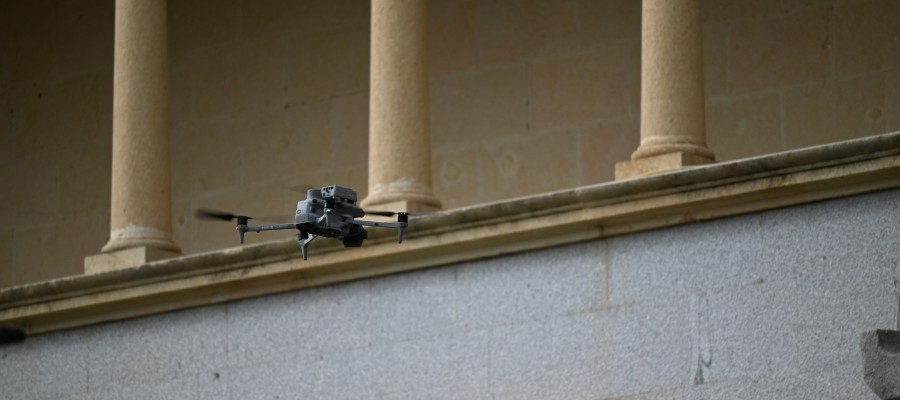

Since 1985, the historic center of Segovia has been part of the UNESCO World Heritage list. However, the diverse architectural heritage is not only a magnet for tourism; its preservation and maintenance present ongoing challenges that local authorities are tackling with the help of drones. Therefore, this city of about 50,000 inhabitants in the Spanish region of Castile and León was an ideal setting for awarding the winning projects of the World Heritage 3D Conservation Initiative by DJI Enterprise.
Winding alleys, dense buildings, and numerous testaments to the past. A tour through the historic center of Segovia, located about 90 kilometers northwest of Madrid, quickly reveals the advantages of unmanned aerial systems (UAS) for preserving medieval cities and centuries-old structures. Where otherwise elaborate scaffolding would need to be erected, or costly helicopter operations organized, drones, modern sensors, and innovative software solutions can create a high-resolution 3D model in just a few hours. This includes impressive structures such as the Roman aqueduct, the fairy-tale fortress, or the large Gothic cathedral.
Early Damage Detection
Uncrewed aerial systems can detect potential cracks in masonry or weather-related damage early on, and they can also generate informational materials for tourists and valuable data for scientific research. Additionally, local police can utilize drones to maintain an overview during large events or peak tourist seasons and monitor hard-to-see areas in the streets or along the historical city wall. This enhances safety and can help prevent vandalism and other criminal activities.
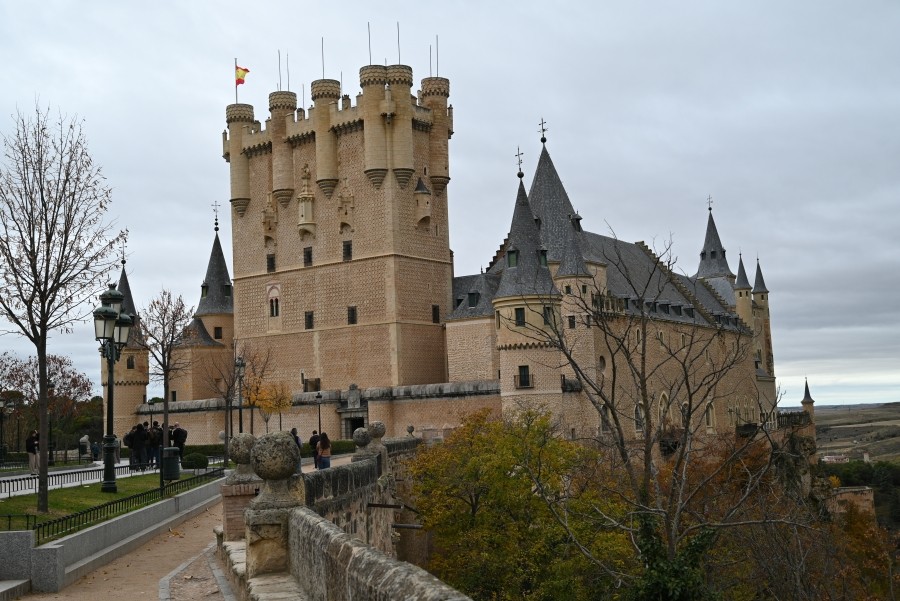
The Alcázar of Segovia is said to have inspired Walt Disney’s fairy tale castles
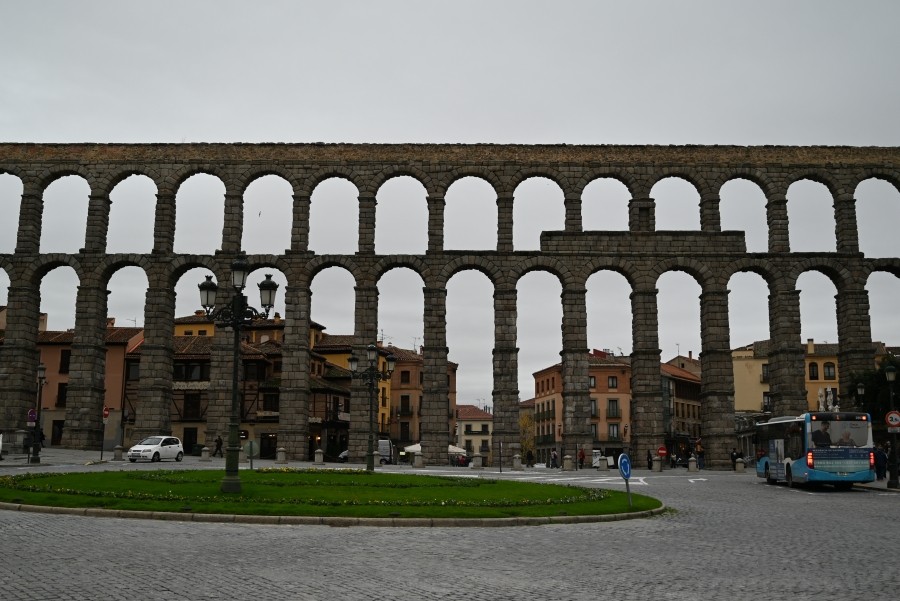
The approximately 2,000-year-old Roman aqueduct of Segovia measures nearly 29 meters at its highest point
In essence, using UAS to preserve and maintain cultural and natural monuments does not fundamentally differ from using drones for the planning, inspection, and protection of modern buildings. However, for historical or other uniquely significant sites worldwide, an additional factor comes into play. Besides the proverbial wear and tear of time, human-made causes such as wars, climate change, and profit-driven exploitation of natural resources increasingly threaten many places that are worth protecting and preserving.
“Virtual Flyovers”
DJI Enterprise‘s World Heritage 3D Conservation Initiative explores how modern drone technology can showcase and motivate people worldwide to document special places. The goal is to create photogrammetric recordings of significant structures or natural landscapes, which are then transformed into high-resolution three-dimensional datasets using DJI’s software solutions Terra and Modify. Finally, “virtual flyovers” were generated with the 3D model viewer solution DJI Reality and evaluated by an expert jury. While the technical and craft parameters were ultimately decisive, the cultural value of the competition entries was also considered. This was an advantage for those who documented one of the 21 UNESCO World Heritage Sites that were among the 473 submissions from 32 countries.
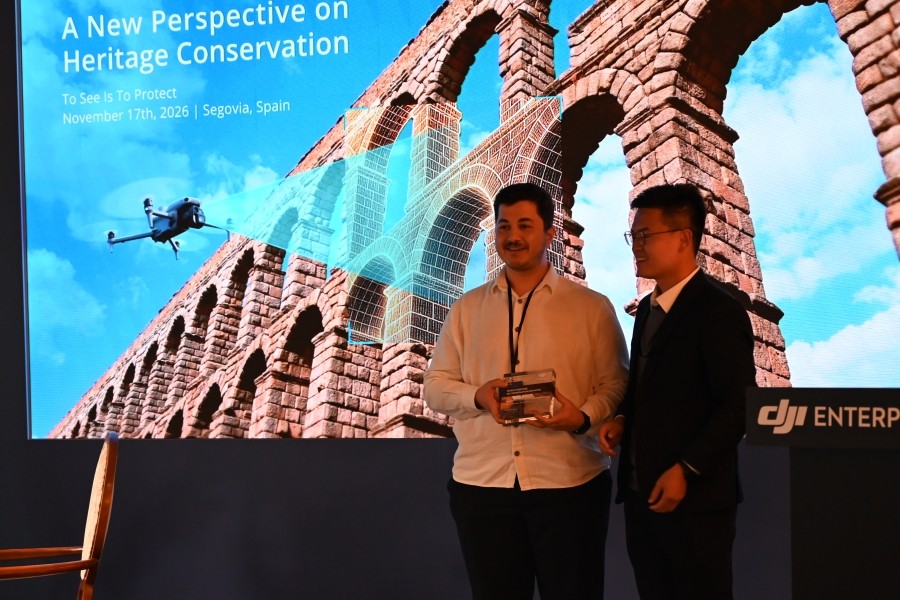
Enes Ertan Kulaksic (left) was awarded for his portrayal of the unique volcanic landscapes of Cappadocia in Turkey
A UNESCO cultural and natural heritage site is also Cappadocia in Central Anatolia, known for bizarre rock formations that resemble chimneys or smokestacks. These formations are of volcanic origin and have been exposed over millennia through erosion. Just as naturally as they were formed, they will also eventually disappear. Temperature differences, water, and wind take their toll on the porous natural stone. The inspiration for a team led by Enes Ertan Kulaksic was to preserve this unique landscape for posterity, leading to his entry being awarded in the “Natural Heritage International” category.
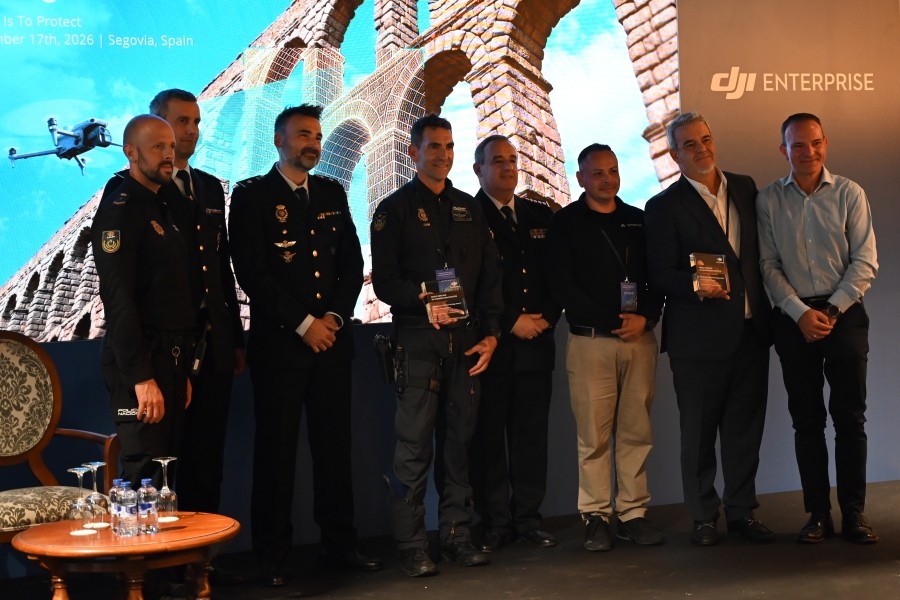
Together with the Spanish National Police, DJI distributor MCR Info Electronic created a high-resolution 3D model of the Las Ventas bullring
In addition to its documentary purpose, the project, awarded in the “Cultural Heritage International” category, also aims at practical benefits. A joint team from MCR Info Electronic, the master distributor for DJI Enterprise products in Spain and Portugal, and the Spanish National Police submitted a 3D representation of the Las Ventas bullring.
The “Plaza de Toros de Las Ventas in Madrid” is the largest bullring in Spain. To better ensure the safety of the nearly 25,000 spectators during major events, in case of natural disasters, or mass panic, existing protection and emergency concepts are being developed using a 3D twin of the arena.
If you use Google as your search engine, you can set Drones as your preferred source so that our content appears more frequently in your search results. Add Drones as your preferred source.